Last updated on August 13, 2026
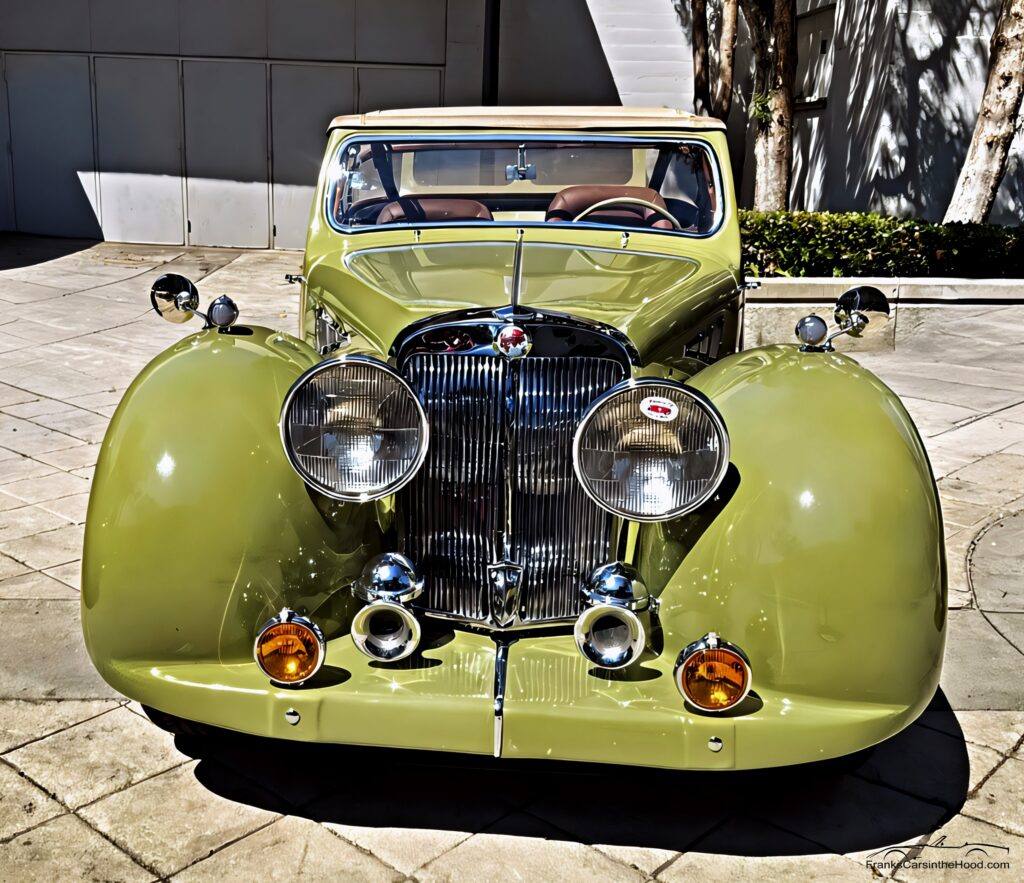
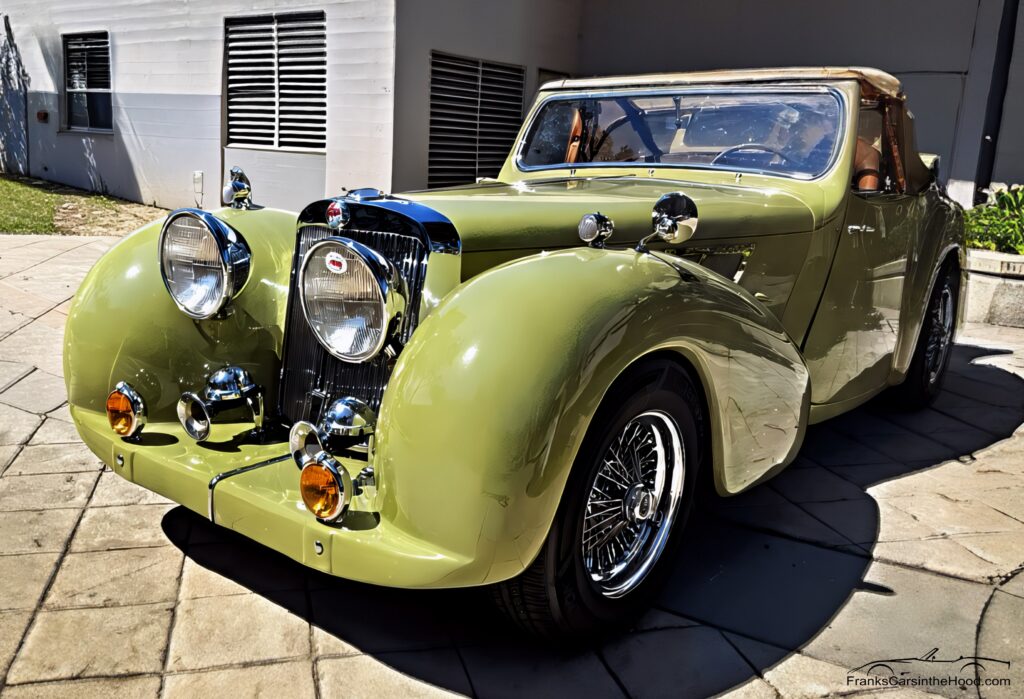
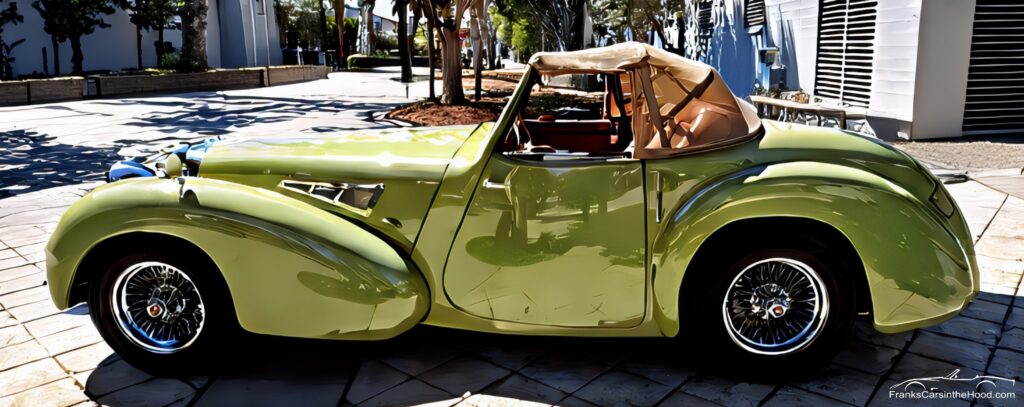
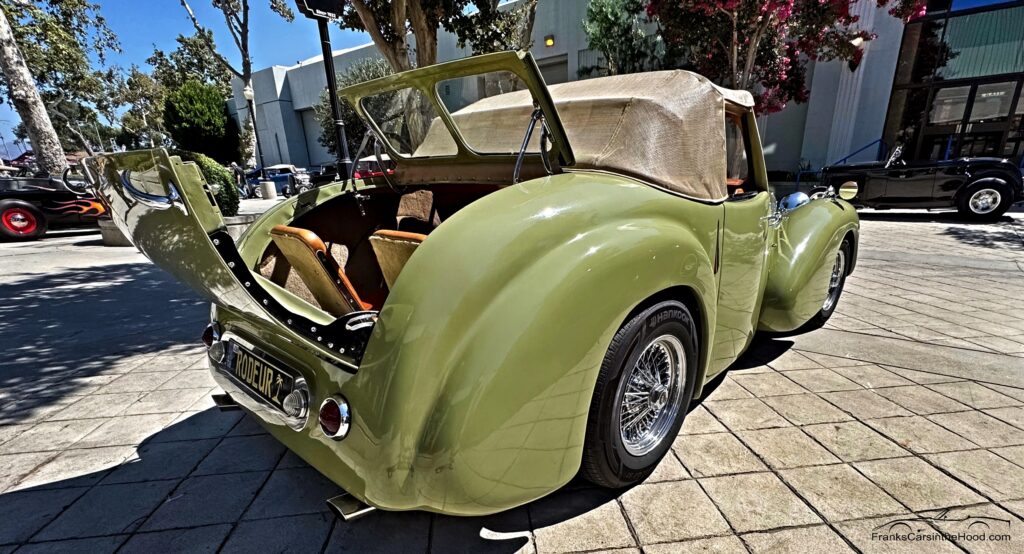
Today’s car is a 1946 Triumph 1800 Roadster, reimagined and built by Gilles Beaudoin, which I photographed at the 60th Anniversary LA Roadster Show and Swap at the Pomona Fairplex in Pomona, California. Finished in sage green with a saddle brown leather interior and tan mesh convertible top, its distinctive Triumph body remains immediately recognizable, but beneath it is a thoroughly reengineered street rod powered by a Ford 289 cubic inch V8. From its drivetrain and suspension to its steering, brakes, body details, and interior, Gilles transformed nearly every aspect of the original Roadster while preserving the unmistakable character of Triumph’s unusual postwar design.
The story of the Triumph 1800 Roadster begins in 1944, when the Standard Motor Company acquired the Triumph name and what remained of the company after its Coventry factory had been destroyed during World War II. Standard’s managing director, Sir John Black, saw an opportunity to revive Triumph as a sporting marque and wanted a car that could compete with Jaguar. Rather than bring back a prewar Triumph, the company started fresh, and by 1946 the new Triumph 1800 Roadster was ready to re-introduce the Triumph name to the postwar world.
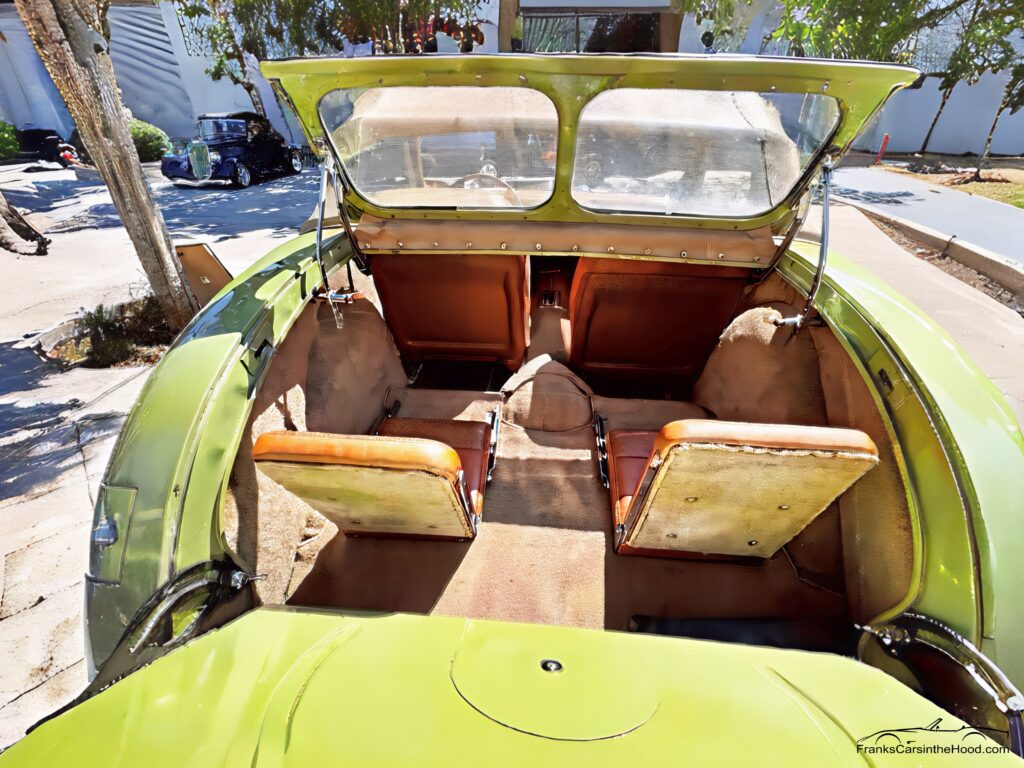
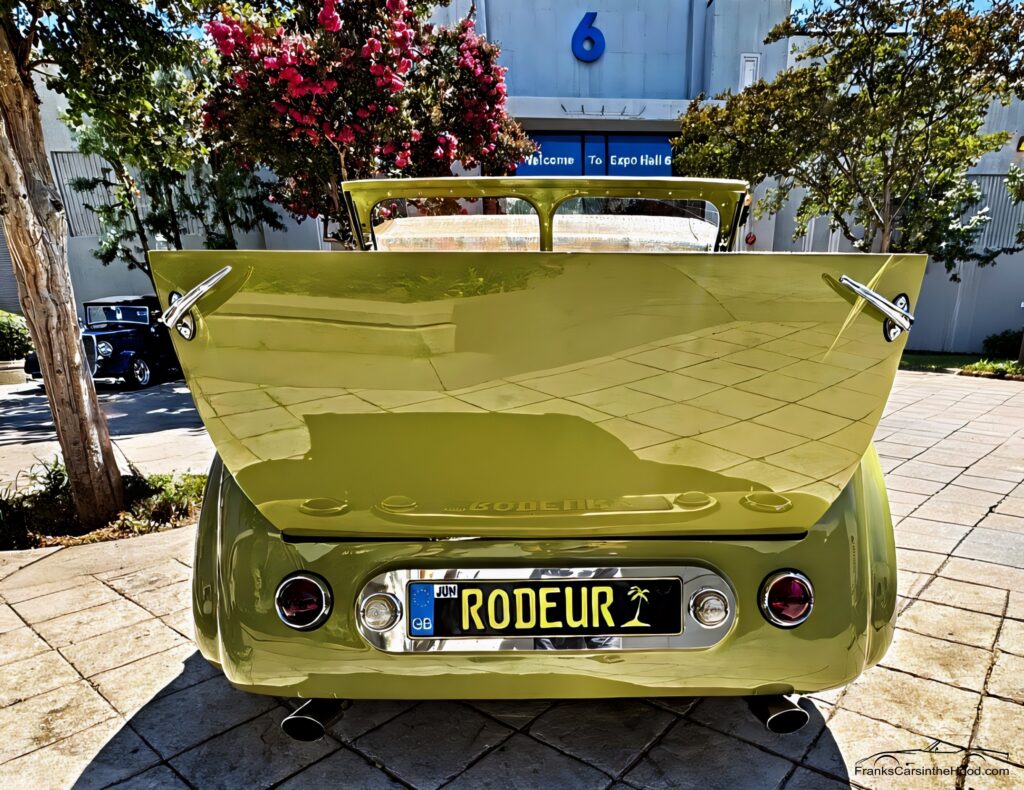
Styling for the new Roadster was entrusted to Frank Callaby, working with Arthur Ballard, while Ray Turner designed the tubular steel chassis. With steel still in short supply after the war, most of the body was constructed from aluminum panels over an ash wood frame, with steel used for the large front fenders (wings). Callaby gave the Roadster an unmistakably prewar appearance, with a long hood, upright grille, freestanding headlights, sweeping fenders, rear-hinged doors, and seating for three across the front. Its most unusual feature was at the rear, where the trunk opened to reveal a two-passenger rumble seat (dickey seat), complete with its own folding windshield.
Powering the original 1800 Roadster was a 1,776 cc overhead-valve inline-four originating in Standard’s prewar Flying Fourteen and also used in Jaguar’s 1.5-liter sedan, equipped with a single Solex carburetor and producing approximately 65 horsepower. Power was sent through a four-speed manual transmission with synchromesh on the top three gears. The Roadster rode on a 100-inch wheelbase with independent front suspension using a transverse leaf spring, a live rear axle with semi-elliptic leaf springs, and four-wheel hydraulic drum brakes. With a curb weight of approximately 2,540 pounds, 0–60 mph is approximately 24 to 34 seconds, with a top speed of approximately 75 mph.
The Triumph 1800 Roadster remained in production from 1946 through 1948, with just 2,501 examples built before it was replaced in 1948 by the Triumph 2000 Roadster.
Gilles Beaudoin took his 1946 Triumph 1800 Roadster in a very different direction. In place of the original 65-horsepower four-cylinder is a Ford 289 cubic inch V8 upgraded with an Edelbrock camshaft and lifters, roller rockers, and a 600 CFM carburetor. A dual exhaust system with glasspacks gives the Roadster a sound its designers could never have imagined. Behind the V8 is a Ford C4 three-speed automatic transmission connected to a Ford 8.8-inch limited-slip rear axle with 3.08:1 gears, shortened 2 7/8 inches.
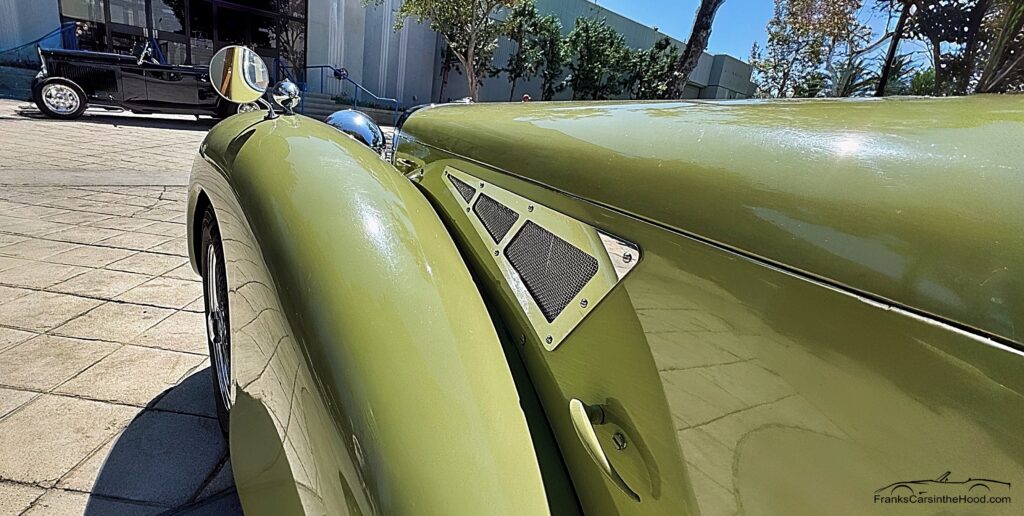
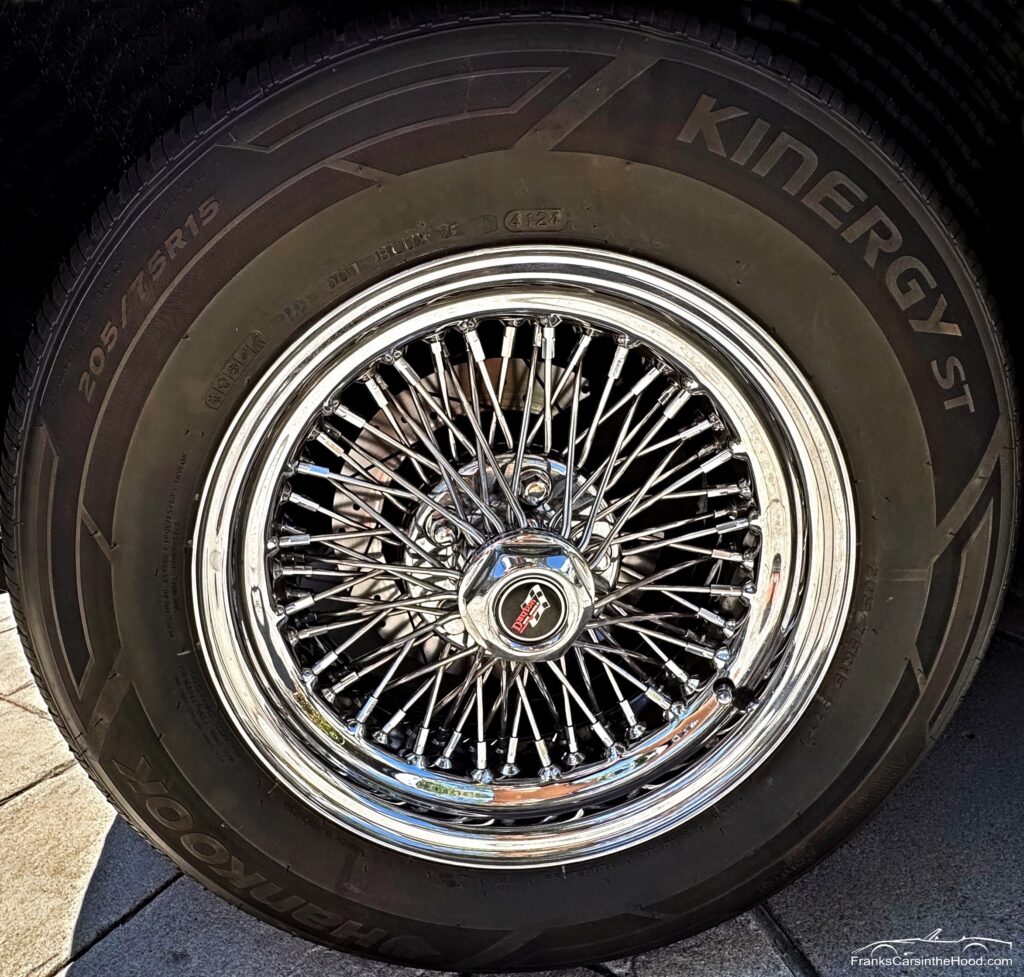
The chassis was extensively modified with a Mustang II independent front suspension with coil-over shocks, a modified M.G. rack-and-pinion steering system, and four-wheel power disc brakes. Gilles kept the distinctive Triumph shape largely intact, removing the original bumpers, fitting 1951 Pontiac taillights, and adding handmade stainless-steel side hood vents. At the rear, a personalized RODEUR plate provides a subtle connection to Club Rodeur of Quebec, Canada, identified on Gilles’s display board. Wire wheels preserve the Roadster’s period character, while a custom mesh-fabric convertible top provides protection from the sun while allowing air to flow through.
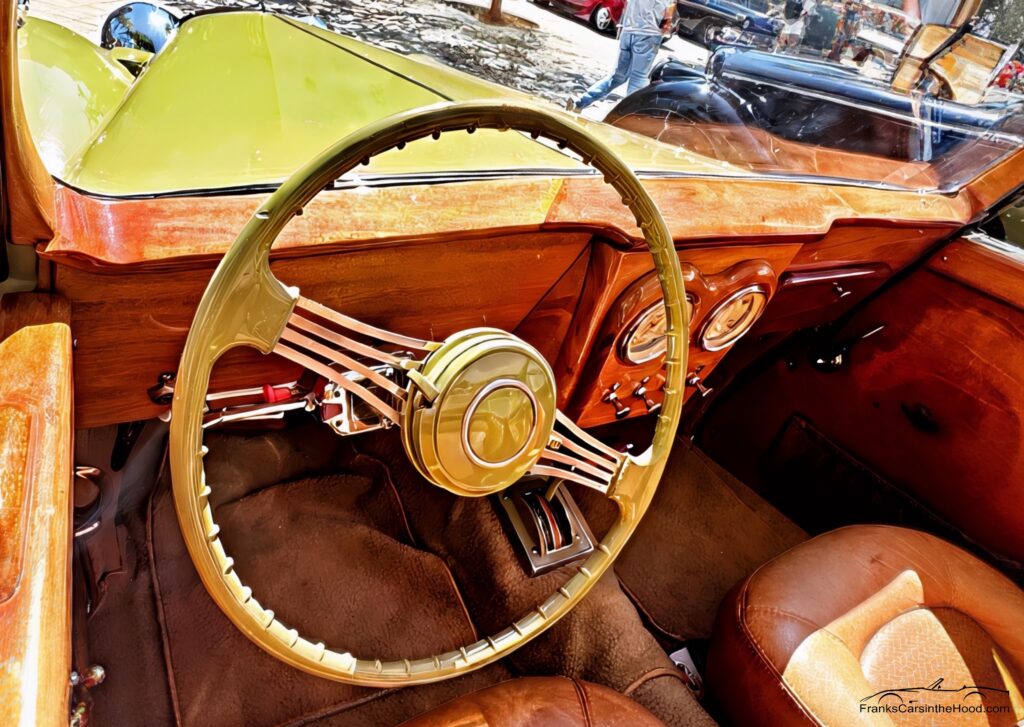
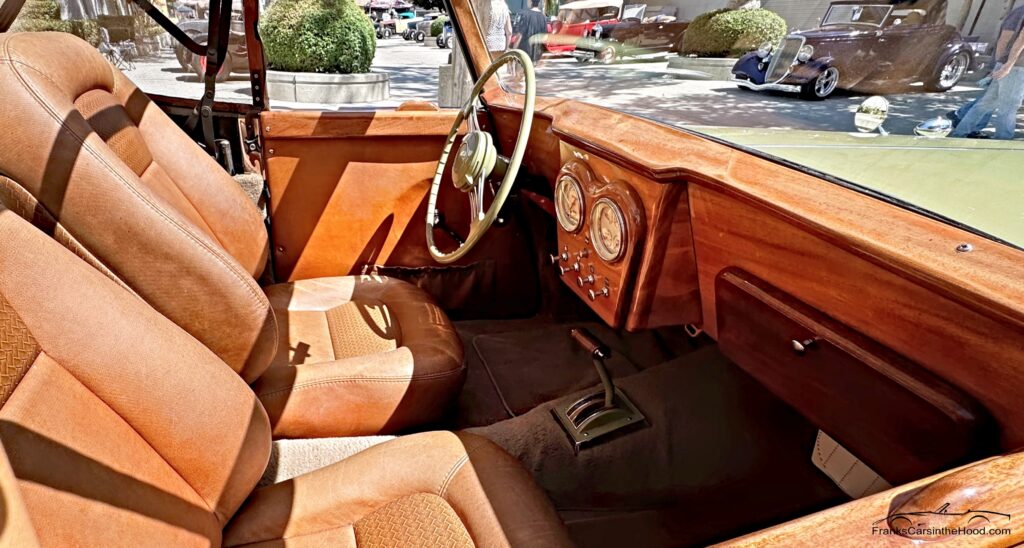
Inside, Gilles continued the transformation while retaining a connection to the Triumph’s past. The Roadster was converted from right-hand to left-hand drive, with the original 1946 Triumph steering wheel retained and now positioned in front of a custom handmade mahogany dashboard fitted with Classic Instruments gauges. Modified Jaguar power seats are upholstered in custom cowhide leather, while 1949 Ford inner door handles and window cranks add another period touch.
Gilles Beaudoin’s 1946 Triumph 1800 Roadster brings together two very different automotive traditions, the unmistakable character of a postwar British roadster and the creativity of a North American street rod. Eighty years after Triumph introduced the 1800 Roadster, Gilles has given one of the 2,501 built an entirely new personality while preserving the distinctive design that made it unique from the beginning. Whether at a British car show, a street rod gathering, a local Cars & Coffee, or winding its way through the canyons, this is one Triumph that would feel comfortable wherever it goes.
Thank you for riding along with me and for being part of the Frank’s Cars in the Hood community.
Frank.