Last updated on August 28, 2026
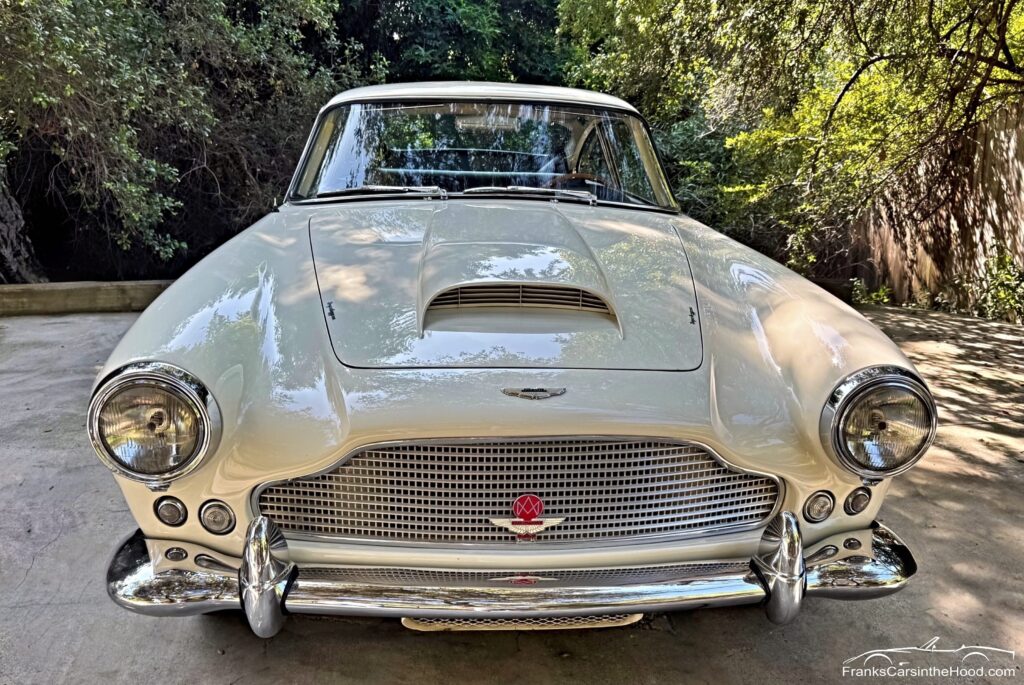
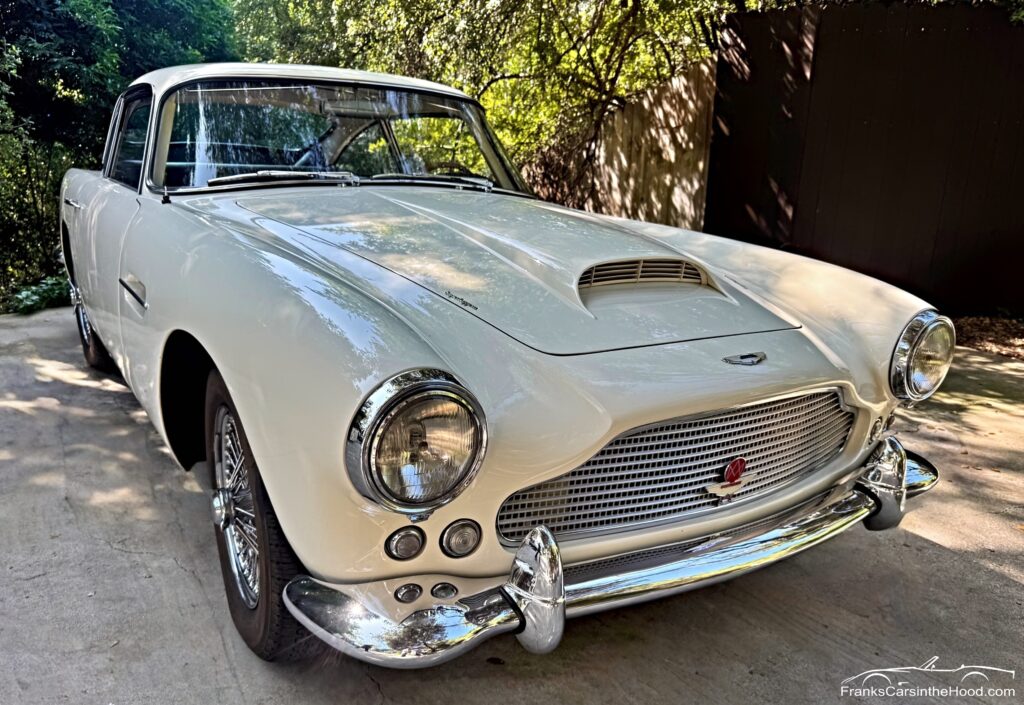
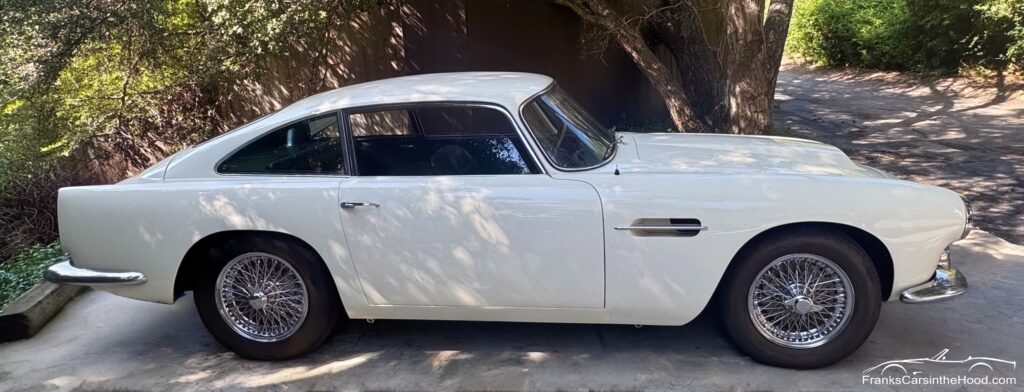
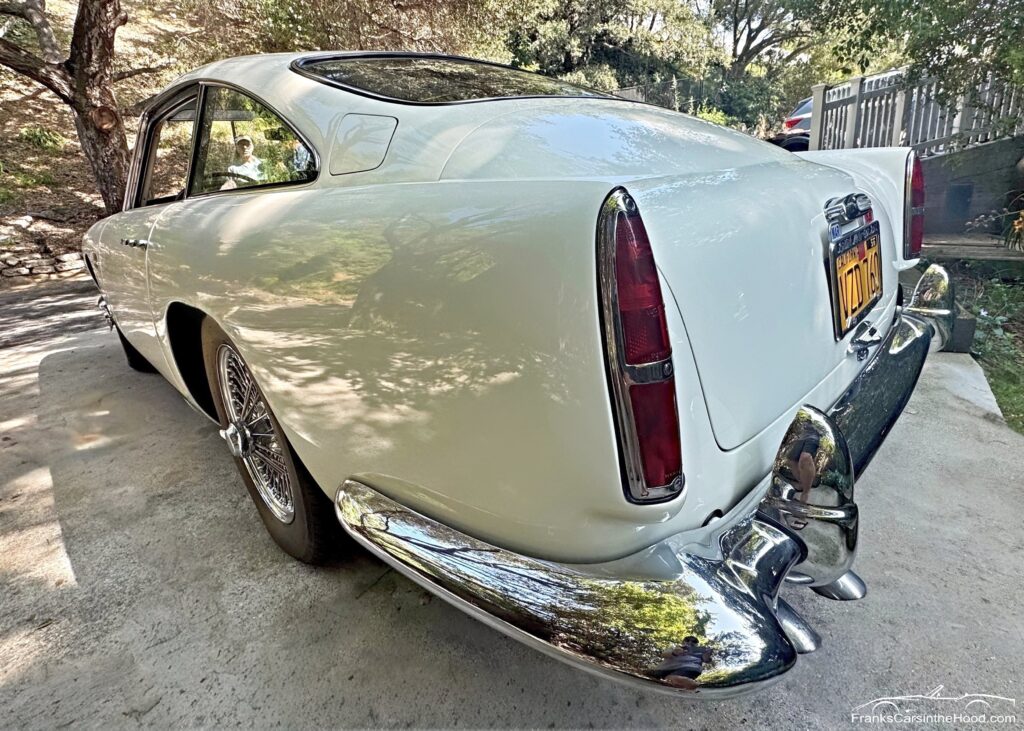
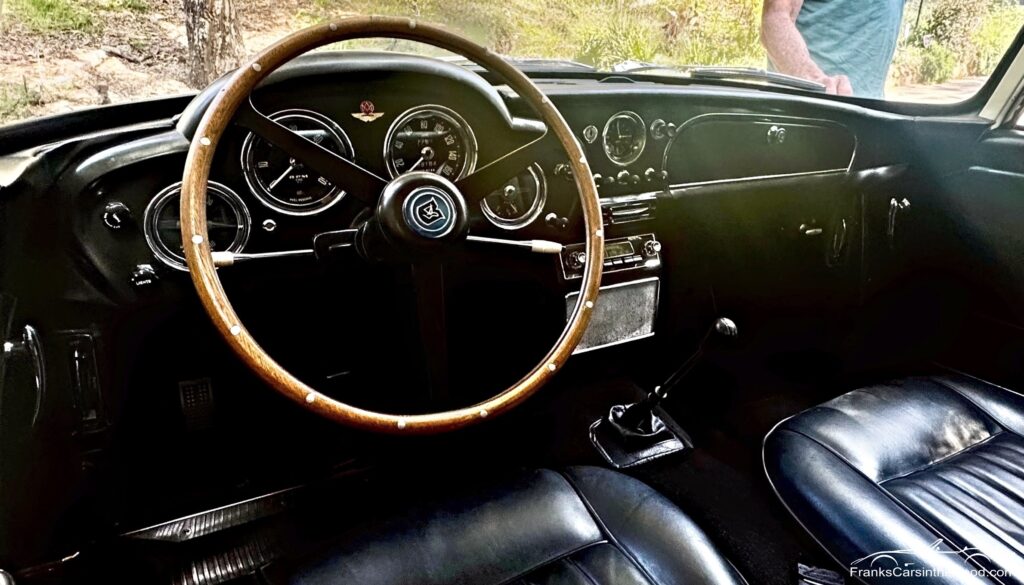
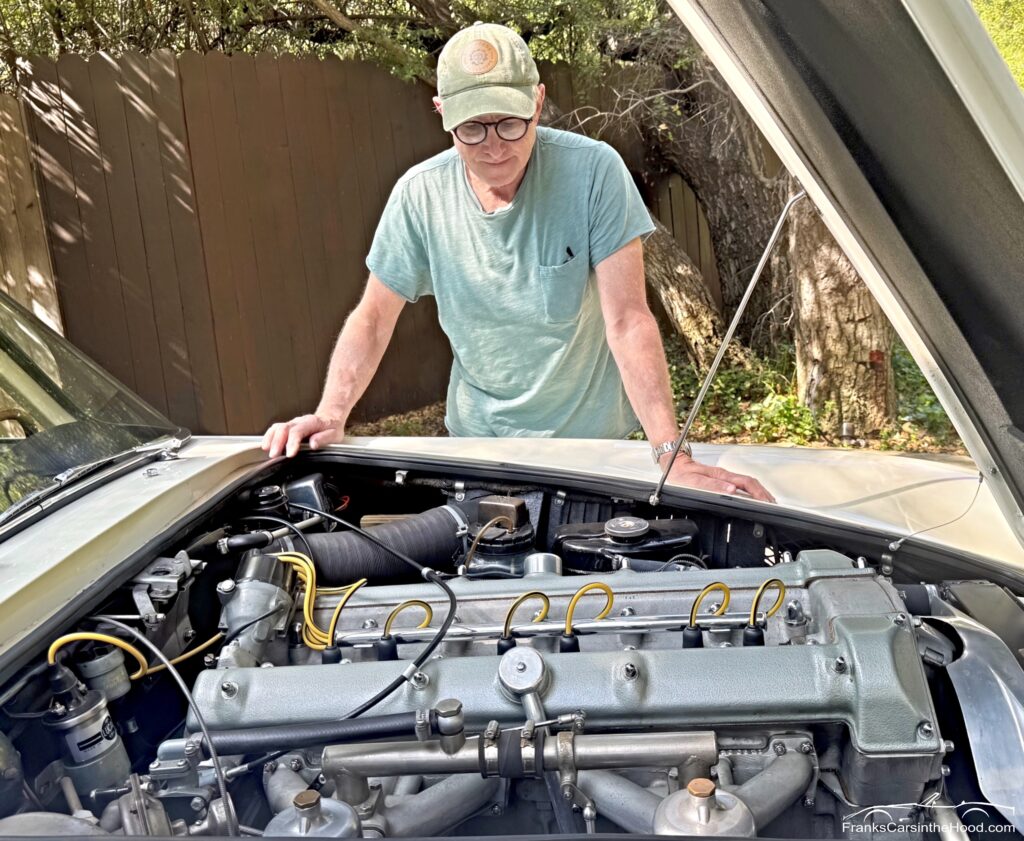
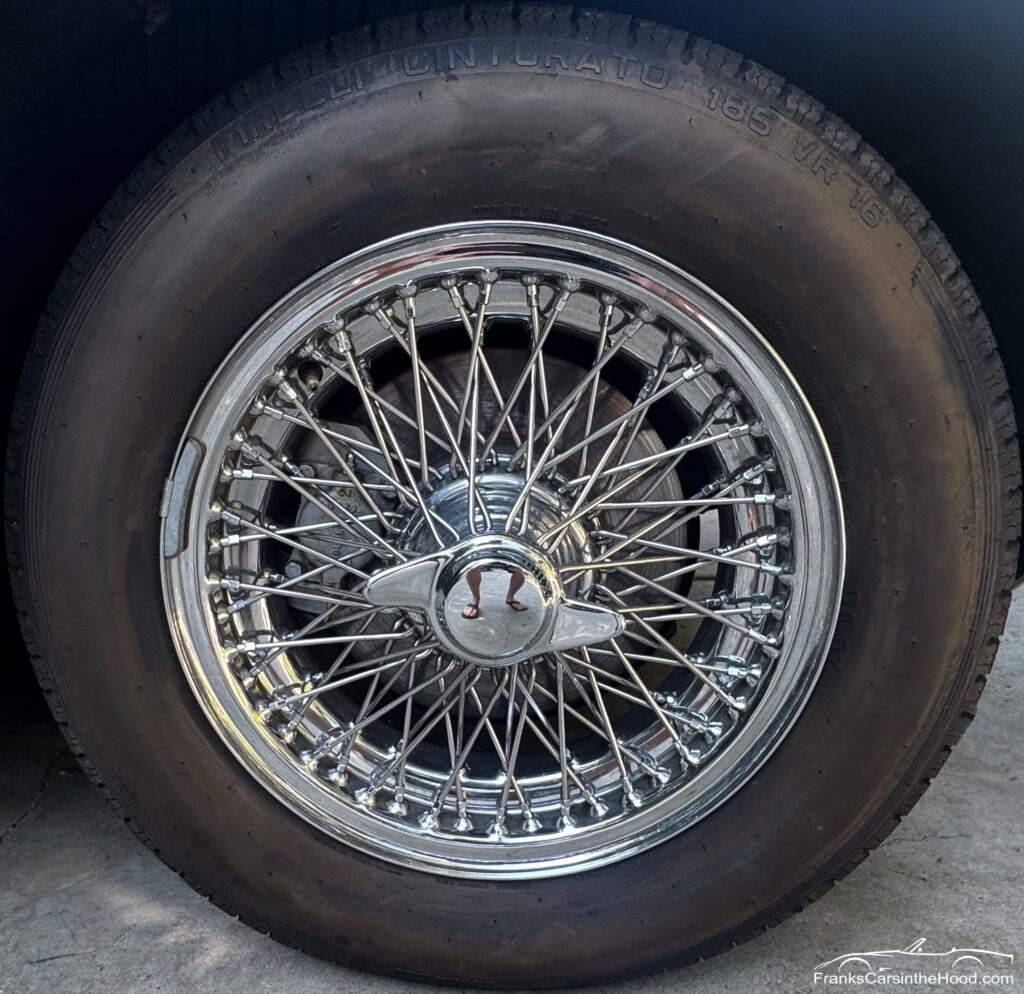
Today’s car is a 1961 Aston Martin DB4 Series II with a Superleggera (super light) body owned by Ian Wayne, which I photographed at a friend’s home following the 2026 Queen’s English All-British Car Show. Finished in Desert White with a black Connolly leather interior, the DB4 Series II represents the early evolution of Aston Martin’s grand touring lineage. Power comes from a 3.7-liter (3,670 cc) DOHC inline six-cylinder engine designed by Tadek Marek, fitted with twin SU HD8 carburetors and producing approximately 240 horsepower at 5,500 rpm and 245 lb-ft of torque at 4,000 rpm. Power is delivered to the rear wheels through a four-speed manual transmission built by David Brown and a 3.54:1 rear axle ratio. Built on a steel platform chassis with an aluminum body, the DB4 features independent front suspension with coil springs and a live rear axle with a Watts linkage, along with servo-assisted four-wheel Dunlop hydraulic disc brakes. It rides on 16-inch wire wheels.
Spending time around this DB4 with Ian, it doesn’t take long to realize that this is more than just a classic—it’s a car that reflects both the craftsmanship of its era and Ian’s meticulous care.
Ian has owned the car since 1988, 38 years, having purchased it from its second owner. The car has had just three owners from new. It was originally delivered through British Motor Car Distributors, Kjell Qvale’s dealership in San Francisco, to its first owner, James Lowe, who kept the car for approximately one year. It was then purchased by Charles “Bill” and Eleanor Harper, a husband-and-wife team of a physicist and a mathematician at NASA, who owned the car for the next 26 years before Ian acquired it.
Ian found the car through an advertisement in the Aston Martin Owners Club (AMOC) UK newsletter while it was located in Los Gatos, CA. At the time, he owned a DB5 and had planned to restore it, initially viewing the DB4 as a short-term project. But after spending time with the car, that plan quickly changed. The DB4 stayed, while the DB5 sat partially disassembled for nearly two decades before eventually being sold to a private museum in Spain.
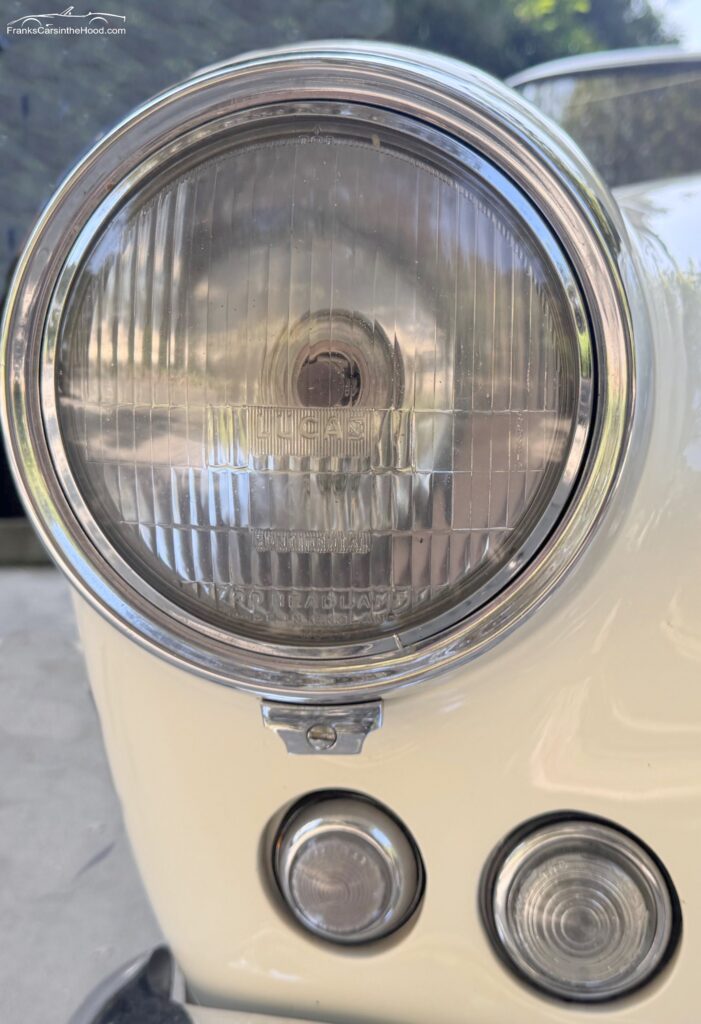
Shortly after acquiring the car, Ian undertook a comprehensive but careful refurbishment in the late 1980s and early 1990s, including an engine rebuild, repaint using Glasurit, a high-quality German automotive paint, matched to the original ICI Desert White specification, along with upholstery, electrics, and suspension work. The car was already complete and correct, allowing him to focus on refreshing it rather than over-restoring it, and it still shows today. In all that time, the car has only broken down once, when the electric fuel pump failed, a problem that was temporarily resolved with a sharp tap from a wrench to get him home, a procedure that is not uncommon, but not often discussed. The Desert White finish suits the car perfectly, highlighting the clean lines and subtle curves that define the DB4’s shape. Up close, the details stand out: the delicate grille, the purposeful stance, and an interior that feels both refined and driver-focused.
Aston Martin traces its roots back to 1913, when it was founded by Lionel Martin and Robert Bamford. The company built its early reputation on lightweight competition cars, but like many manufacturers, it struggled through the interwar years and into the post-war period. A turning point came in 1947 when David Brown purchased the company, bringing financial stability and a clear vision for the future. Under Brown’s leadership, Aston Martin shifted its focus toward refined grand touring cars that combined performance with comfort and style, a philosophy that would define the brand for decades. This new direction set the stage for the DB4, a car that marked a significant leap forward in both engineering and design and helped establish Aston Martin as a serious contender among the world’s leading manufacturers. The “DB” designation itself comes from David Brown’s initials, a naming convention that continues to this day.
The DB4 marked a significant step forward in both design and engineering. Its body was styled by Carrozzeria Touring of Milan, utilizing their patented Superleggera construction method. This system combined a lightweight tubular framework with hand-formed aluminum body panels, resulting in a structure that was both strong and relatively light. The proportions were clean and balanced, giving the DB4 a timeless shape that remains instantly recognizable today. Under the hood, the DB4 introduced an all-new engine designed by Tadek Marek, a 3.7-liter inline six-cylinder that helped establish the car as a true high-speed grand tourer.
Introduced in 1958, the DB4 represented a complete departure from the earlier DB2/4 models. By the time the Series II was introduced, Aston Martin had refined the design with a series of incremental improvements while maintaining the core character of the car. These included minor mechanical updates, improved cooling, and subtle interior changes, all of which enhanced usability and performance while preserving the balance between luxury and driving engagement that defined the DB4.
Between 1958 and 1963, Aston Martin produced approximately 1,200 examples of the DB4 across five evolving series, each bringing incremental improvements to performance and refinement. The later Series V would also introduce a convertible version, further expanding the car’s appeal. With a top speed approaching 140 mph and 0–60 mph times in the 6–7 second range, the DB4 was among the fastest production cars of its time. When new, the DB4 carried a price of approximately $9,770, positioning it as a premium grand touring car and placing it firmly among the elite European automobiles of the era.
The impact of the DB4 extended well beyond its production run. It laid the foundation for the DB5 and DB6 that followed, cars that would go on to define Aston Martin’s identity well into the 1960s and beyond. The combination of performance, design, and refinement introduced with the DB4 became the blueprint for the future Aston Martin grand touring cars.
The Aston Martin DB4 Series II is the kind of car that defines what a grand tourer should be, with incremental changes continuing through Series V. It combines performance, craftsmanship, and elegance in a way that still resonates today. It’s perfectly at home at a British car show or a Cars & Coffee gathering, but it truly comes alive on the open road or carving through canyon roads where it can be driven and appreciated as intended. It’s a rare sight, and one that’s always worth a closer look when you come across it.
Thank you for riding along with me.
Frank