Last updated on June 22, 2026
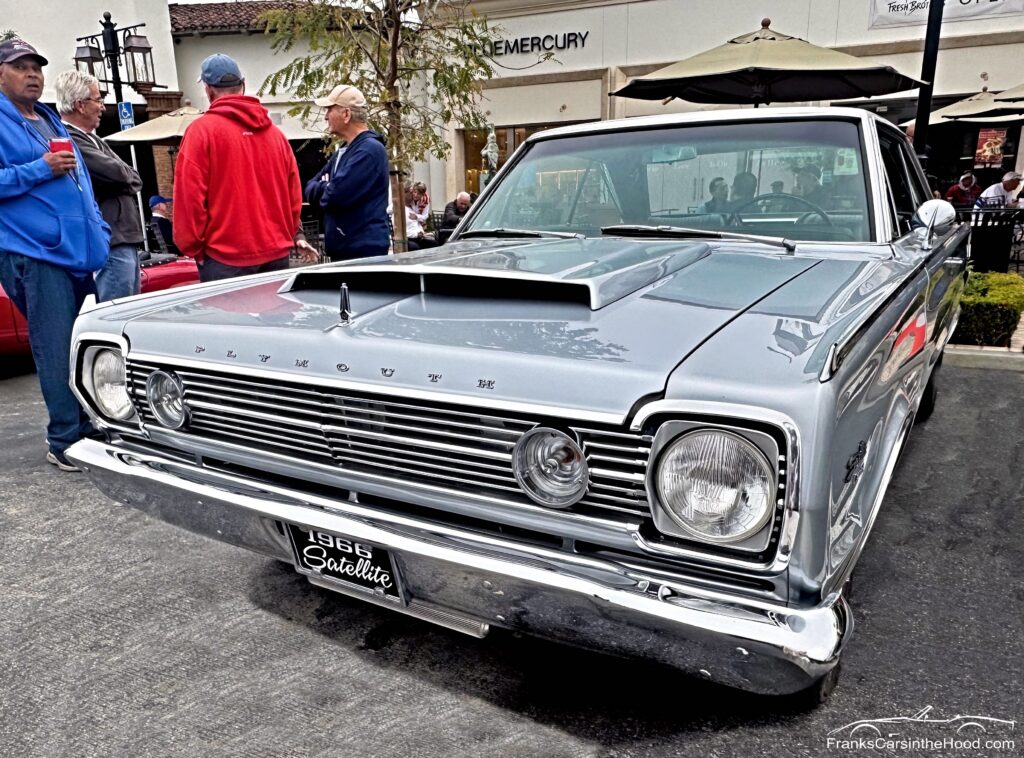
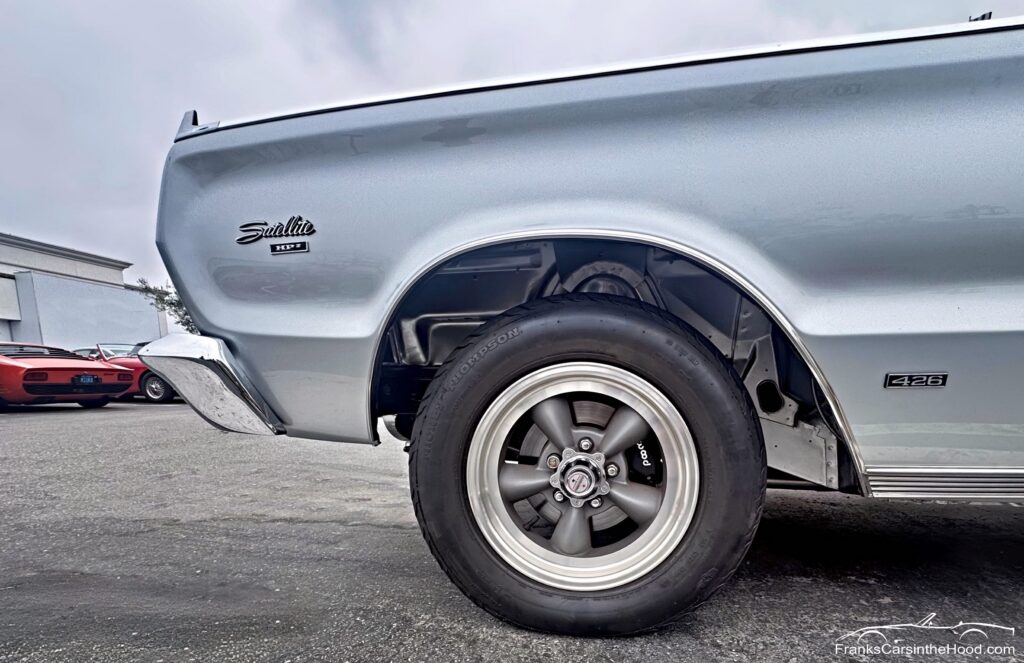
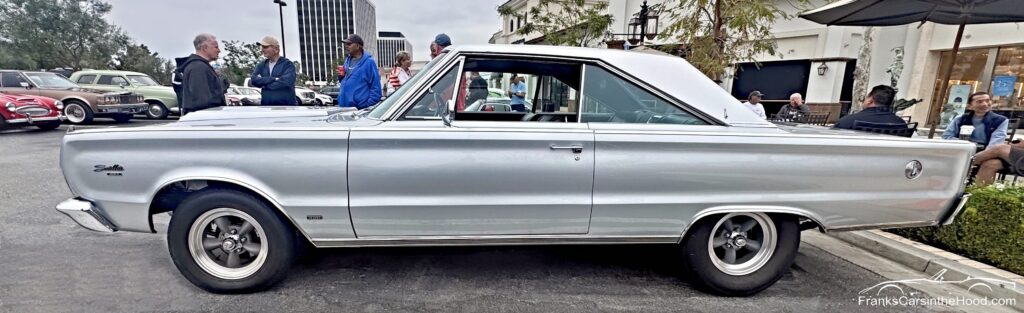
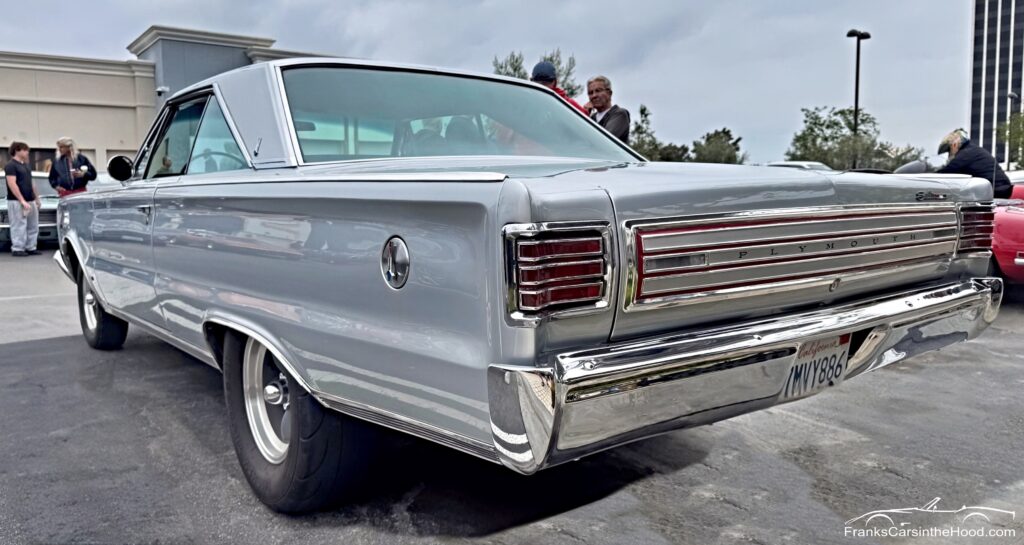
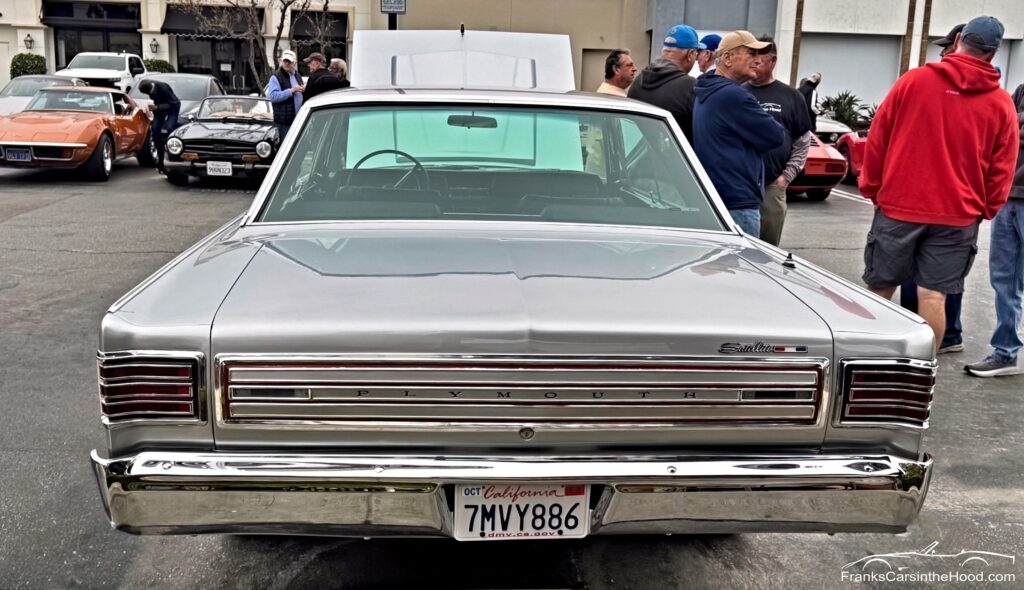
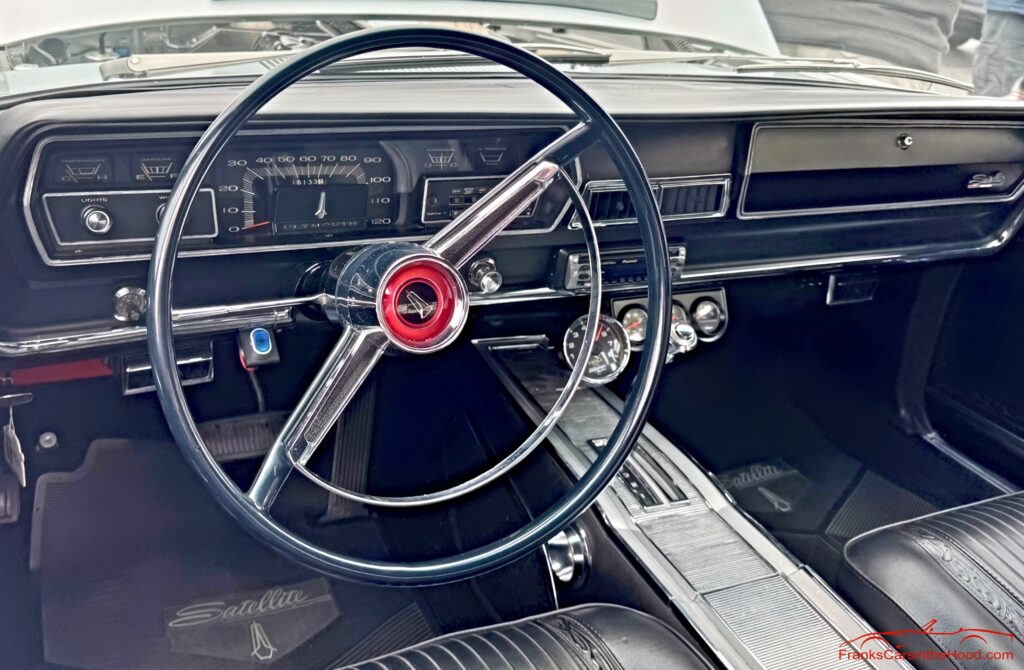
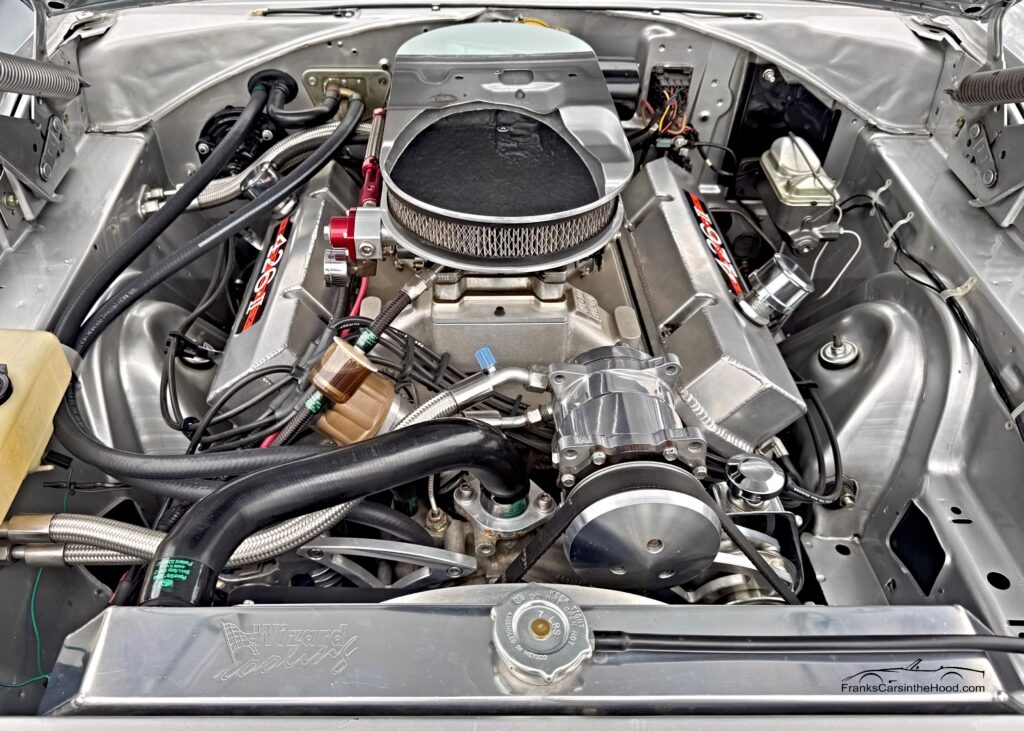
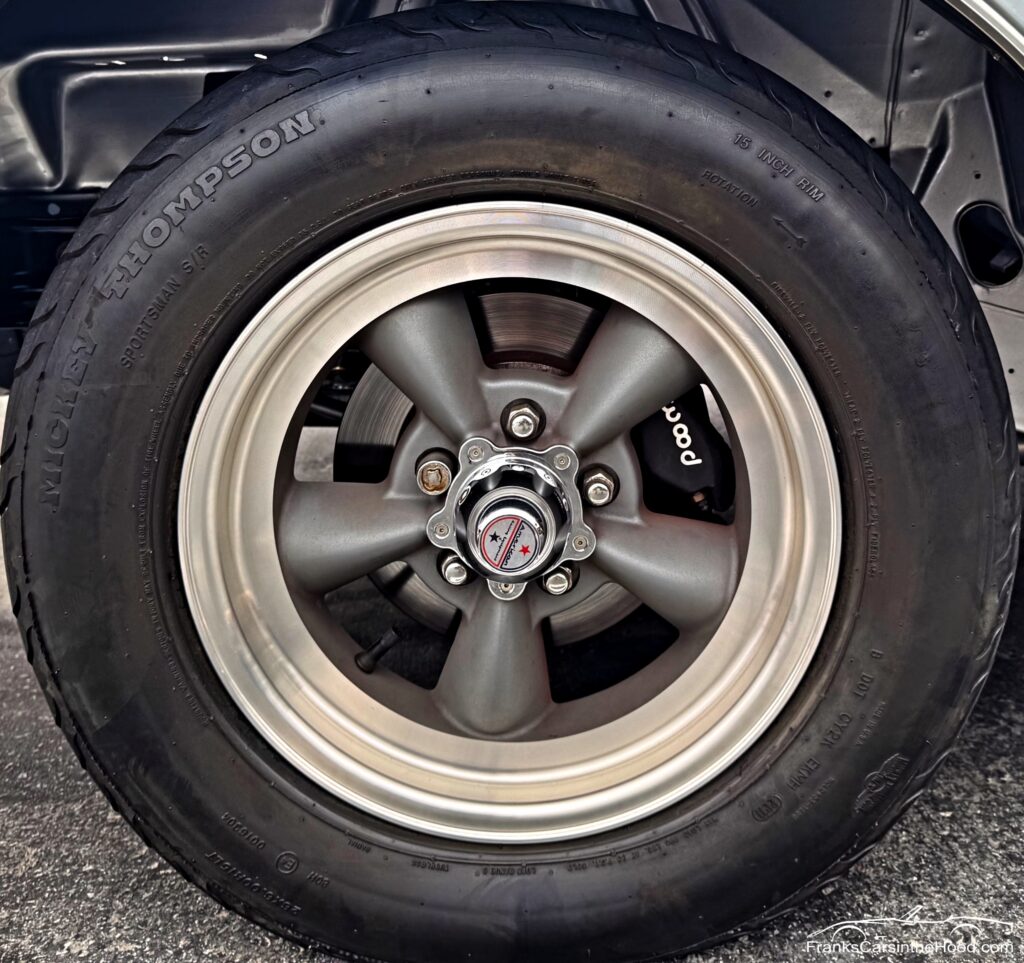
Today’s car is a 1966 Plymouth Satellite 2-door Hardtop owned by Wayne Ferrandino, which I photographed at the Million Dollar Breakfast Club in Marina del Rey, CA. Finished in a Volkswagen-derived metallic blue with a black interior, this highly modified B-body Mopar combines classic muscle car styling with modern performance upgrades. Under the hood sits a stroked 426-II Super Stock Wedge V8 enlarged to 480 cubic inches and topped with dual Edelbrock AFB four-barrel carburetors, an Indy Mod Man intake manifold, aluminum heads, and headers. Feeding a 3-inch ceramic-coated exhaust system with Flowmaster mufflers, the combination produces approximately 650 horsepower. Power is routed through a TorqueFlite automatic transmission equipped with a reverse manual valve body and an 8¾-inch positraction rear axle carrying 3.73:1 gearing. A reverse valve body changes the shift pattern from PRN321 to PRN123, requiring the driver to pull the shifter rearward during upshifts. The upgraded Mopar suspension combines front torsion bars, heavy-duty ball joints, and rear semi-elliptic leaf springs. Originally equipped with 14-inch wheels, the Satellite now rides on 15-inch wheels fitted with Mickey Thompson Sportsman S/R front tires and Mickey Thompson ET Street Radial Pro tires in the rear. Additional upgrades include Wilwood four-wheel disc brakes, power steering, and air conditioning.
To understand the Satellite, it helps to look at Plymouth’s position during the mid-1960s. Plymouth had established itself as one of Chrysler Corporation’s strongest brands, offering practical transportation, family cars, and an increasing number of performance-oriented models. As the muscle car era began to emerge, Plymouth found itself competing directly with Chevrolet, Ford, Pontiac, and Oldsmobile for buyers seeking both style and performance.
For 1965, Plymouth introduced the Satellite as the premium trim level of its intermediate Belvedere lineup. Riding on Chrysler’s B-body platform, the Satellite combined upscale trim, bucket seats, a center console, and optional high-performance engines. Positioned above the standard Belvedere models, the Satellite offered buyers a more refined driving experience while still providing access to Chrysler’s growing lineup of performance engines.
The 1966 Satellite arrived during a transitional period in Chrysler design. Under design chief Elwood Engel, Plymouth styling moved away from the dramatic fins and excess chrome of the Virgil Exner era in favor of cleaner, more formal lines. Long, straight body lines, restrained brightwork, and balanced proportions gave the Satellite an understated appearance that has aged remarkably well over the decades. The result was an attractive intermediate that combined upscale appointments with styling that remains timeless nearly sixty years later.
Plymouth produced 38,158 Satellites for the 1966 model year, including 35,399 hardtops, making it the top trim level in the company’s intermediate B-body lineup. A new Satellite hardtop carried a base MSRP of approximately $2,700 and weighed roughly 3,255 pounds. Factory performance varied widely based on engine choice, with the most powerful models capable of reaching speeds in excess of 120 mph and accelerating from 0-60 mph in the seven-second range.
Today, the car represents the perfect blend of classic Mopar styling and modern performance. The Satellite is exceptionally well detailed throughout, with a silver-painted chassis and undercarriage finished to the same high standard as the exterior.
Wayne has owned this Satellite for about five years. He purchased the car already completed and has spent his time refining it to suit his tastes.
Although it retains the clean lines of a mid-1960s Plymouth, this Satellite delivers performance far beyond anything offered by the factory in 1966. When he purchased the car, he was told it was a 10-second quarter-mile car. Equally at home cruising Southern California highways or attending local car shows and Cars and Coffee events, it may also represent the fulfillment of a youthful desire. Wayne sums it up best with a smile on his face: “It’s a scary ride.”
Thank you for riding along with me and for being part of the Frank’s Cars in the Hood community.
Frank