Last updated on May 5, 2026
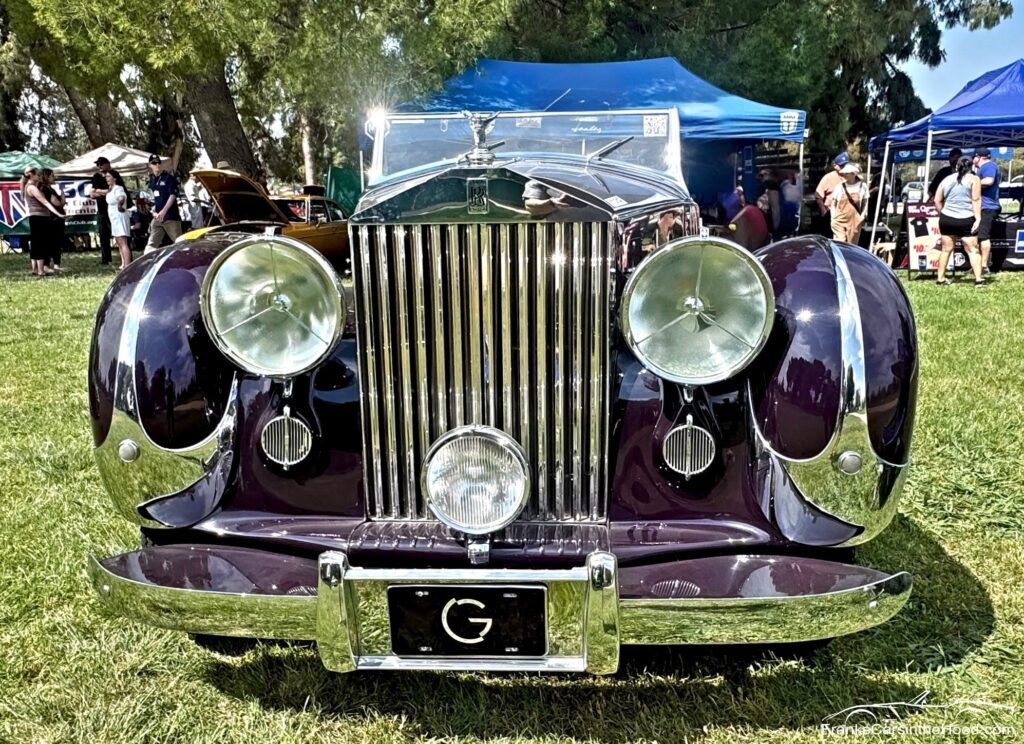
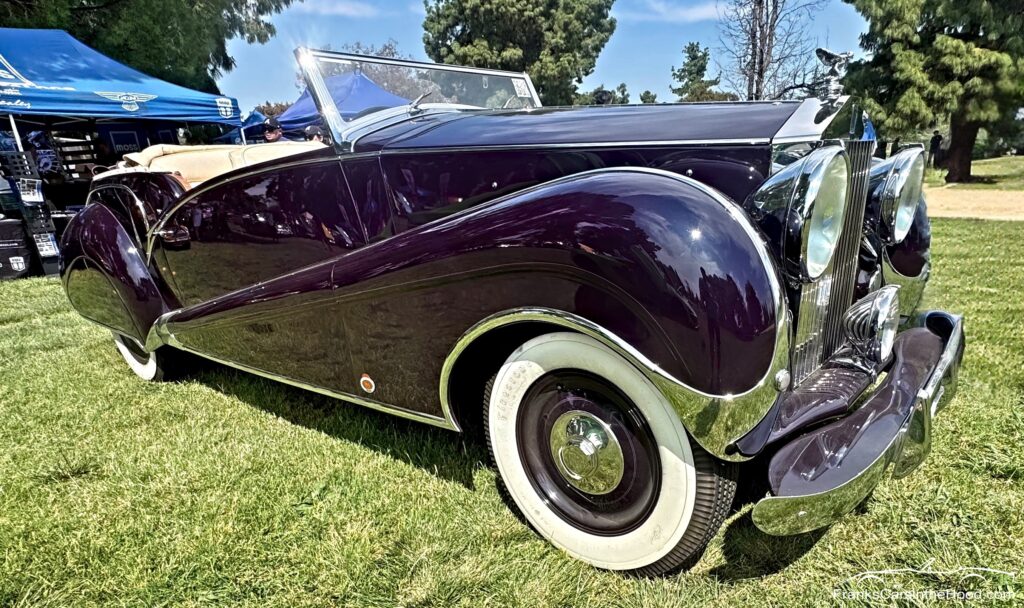
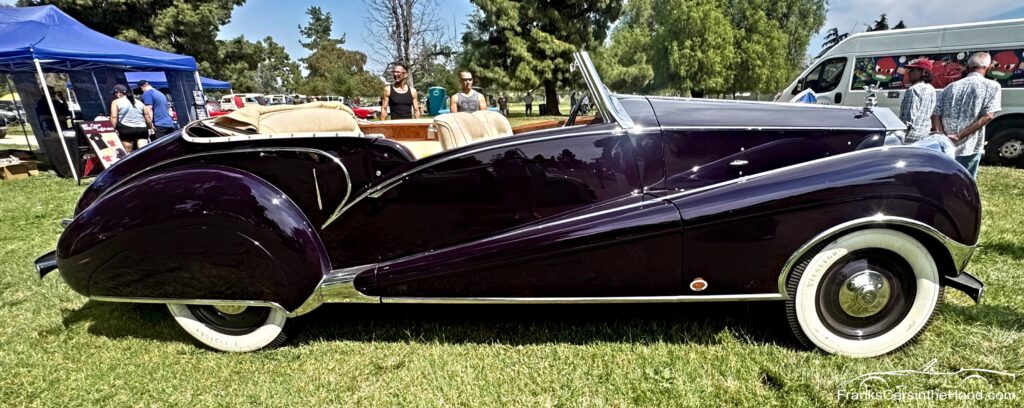
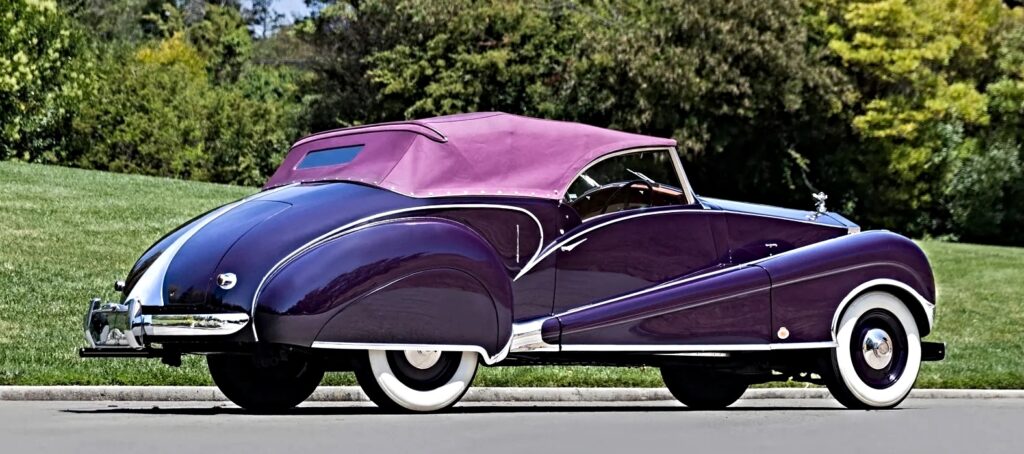
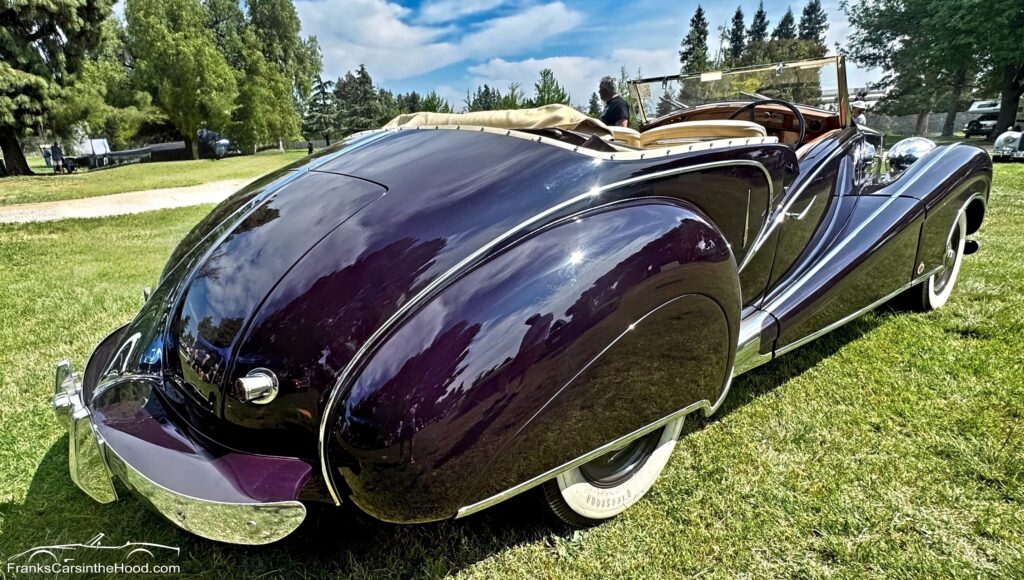
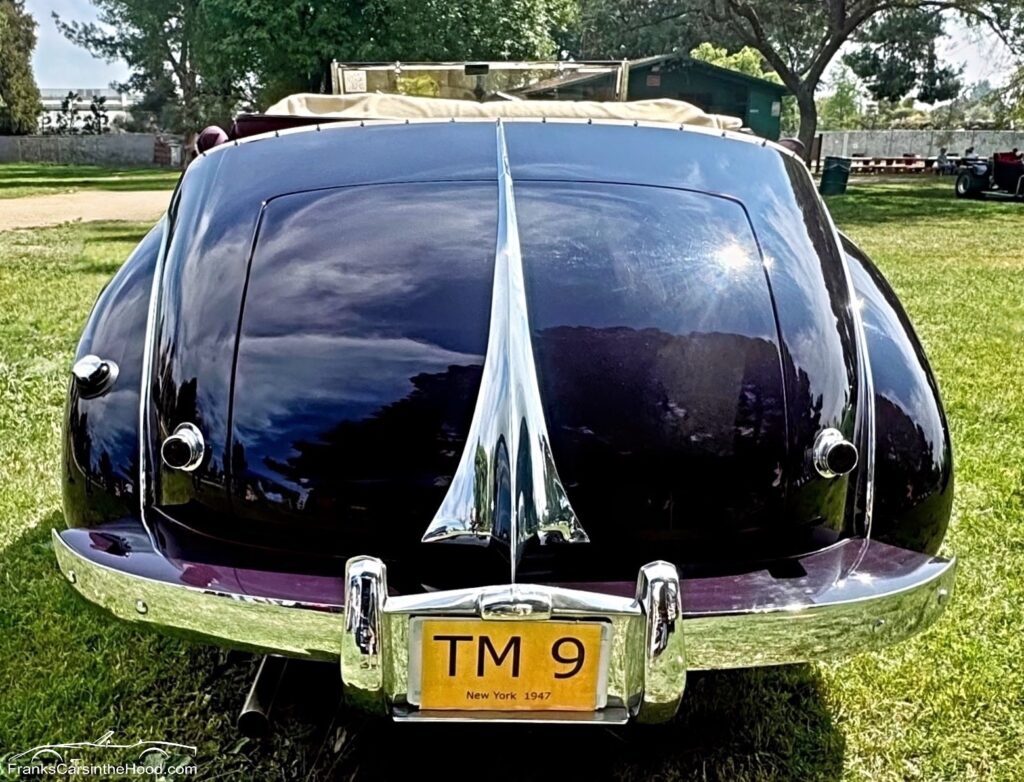
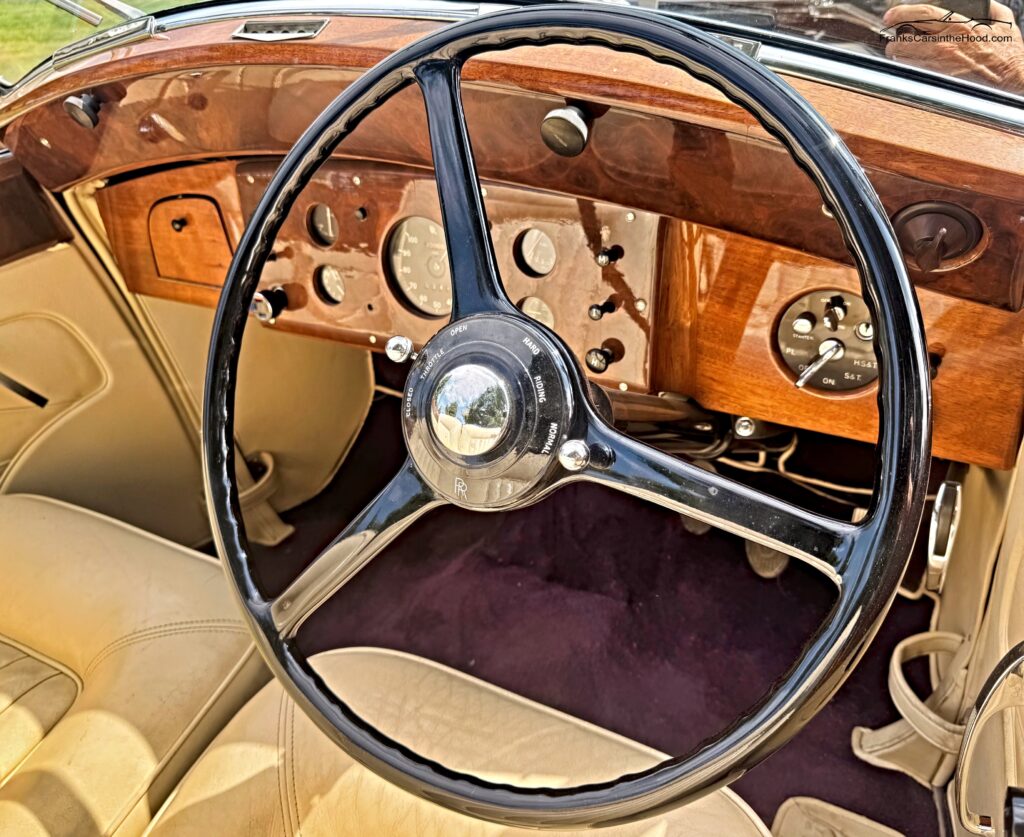
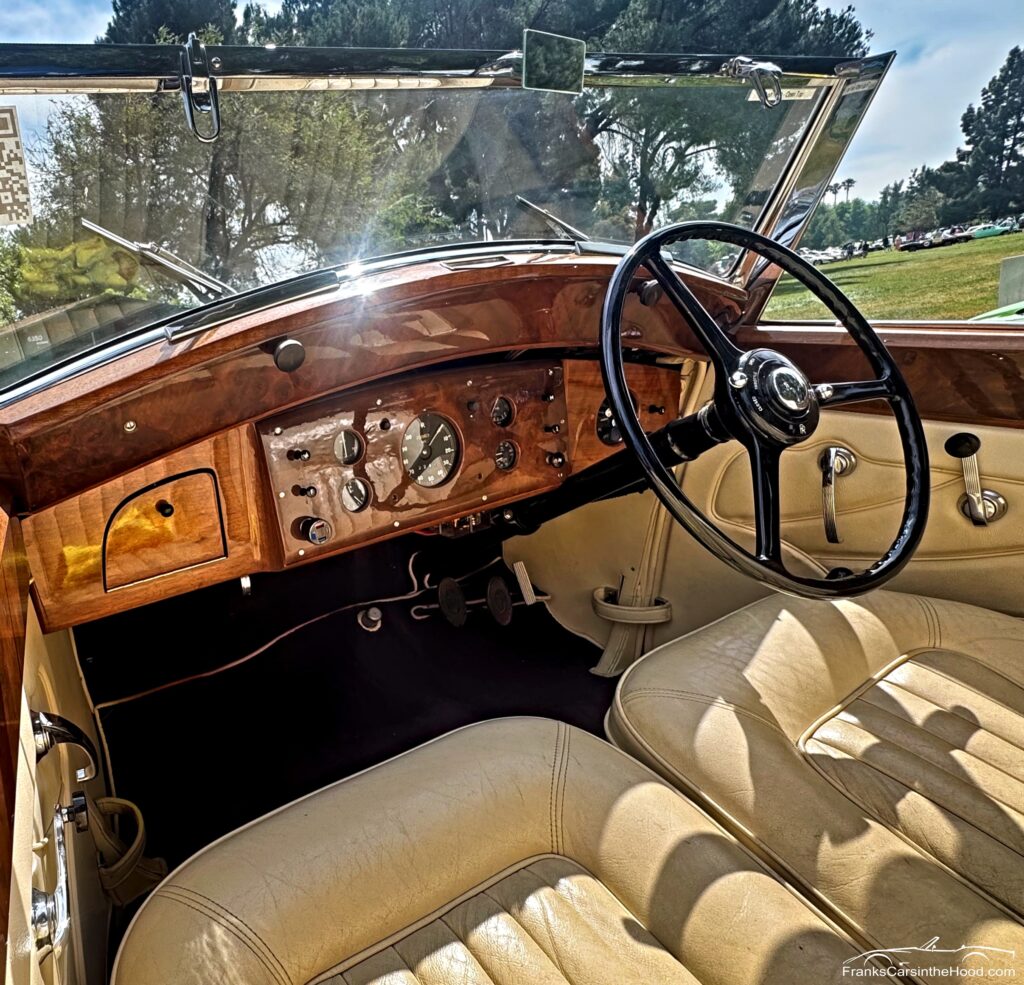
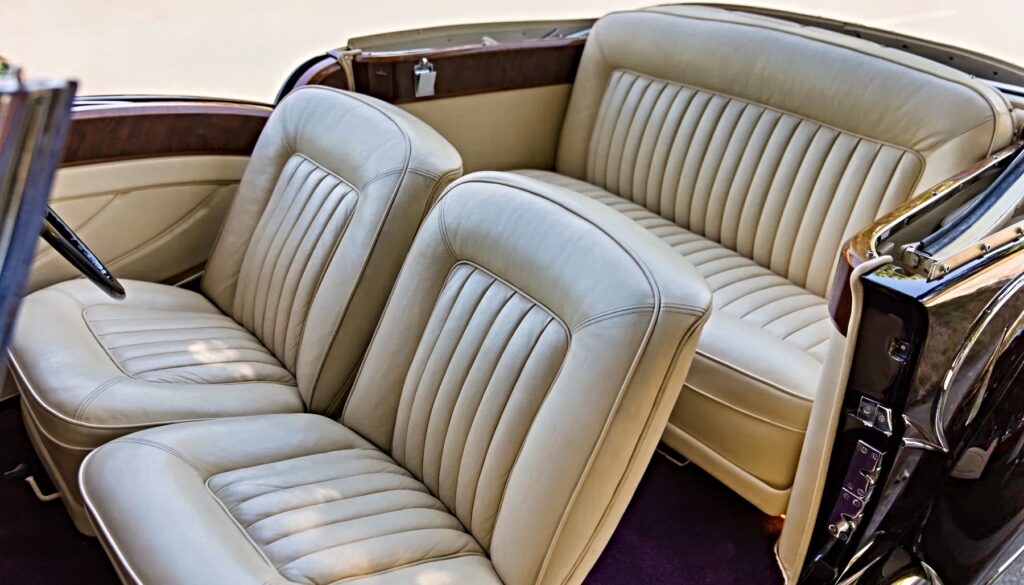
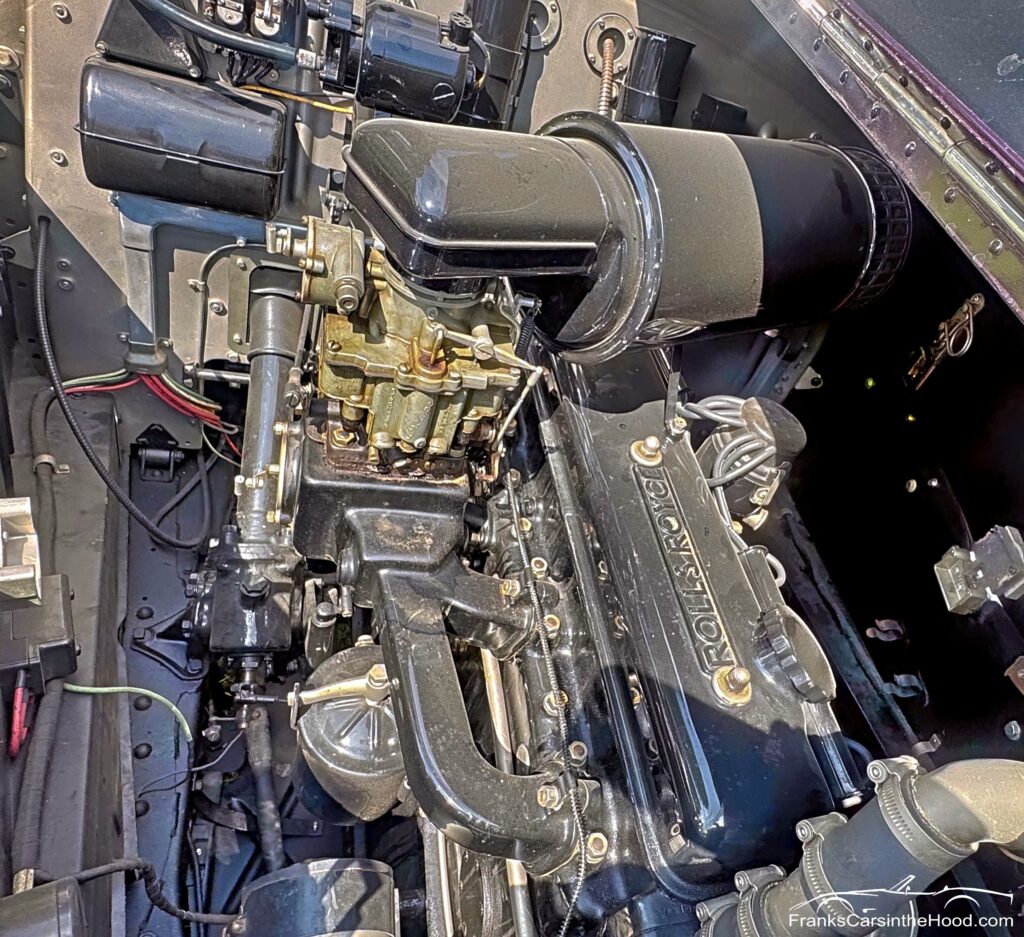
Today’s car is a 1947 Rolls-Royce Silver Wraith Inskip Drophead Coupe, one of just two built, owned by Ady of Ady Car, which I photographed at the Queen’s English All-British Car Show. Finished in a rich purple exterior over a cream leather interior with beautifully figured walnut veneer across the dashboard and trim. It is powered by a 4,257 cc (4.3-liter) F-head inline six-cylinder engine with a single Stromberg carburetor, producing approximately 125–126 horsepower, as Rolls-Royce did not officially publish output figures. Power is delivered through a four-speed manual gearbox to a live rear axle, with braking handled by four-wheel servo-assisted drum brakes. The chassis utilizes independent front suspension with coil springs and semi-elliptic leaf springs in the rear, delivering the smooth, effortless ride Rolls-Royce was known for.
Introduced in 1946, the Silver Wraith was Rolls-Royce’s first postwar model and was offered strictly as a chassis-only car, allowing buyers to select the mechanical foundation and have the body designed and built by an independent coachbuilder. The chassis was built in England and, in this case, custom-bodied in New York by J.S. Inskip—one of the final examples of American coachbuilt Rolls-Royce luxury. This example was delivered to J.S. Inskip, Rolls-Royce’s official U.S. distributor, which had absorbed much of the talent and craftsmanship of Brewster & Co., carrying forward the American tradition of custom-bodied Rolls-Royces as it was beginning to fade.
The design and construction of this car were handled by J.S. Inskip’s coachbuilding department, drawing heavily from former Brewster craftsmen rather than a single named stylist. Tommy lived large—married 13 times to 11 different women—and his taste in cars matched. While there is no documented evidence that Tommy Manville Jr. personally designed the car, clients of his stature typically influenced the overall direction and level of extravagance, and there is little doubt his personality is reflected in the final result. When the car debuted at the New York International Motor Show in 1949, it created a sensation—fitting for both the car and the man behind it.
What sets this Silver Wraith apart is its presence. Inskip moved away from the more formal British look and gave it a more expressive shape. Built on two very early Silver Wraith chassis, these cars featured sweeping, baroque curves inspired by the French designs of Saoutchik and Figoni, with flowing fenders, restrained chrome, and a distinctive dip in the beltline. The car sits long and low, giving it a sense of motion even at rest, and that deep purple finish only adds to the effect, looking black in certain light before the color comes through in the sun. It’s a design many enthusiasts consider among the most beautiful Rolls-Royces ever built.
With just two examples built and only five owners from new, this Silver Wraith has been carefully preserved while earning top honors at major concours events, including its display at the 1949 New York International Motor Show, First Prize at Hershey in 1995, and Best of Show at Greenwich in 1997. Built by former Brewster craftsmen working for J.S. Inskip of New York, these cars marked the end of American custom coachwork on a Rolls-Royce chassis. This car was commissioned by Tommy Manville Jr., while the second example followed a different path—same design, very different stories.
You can walk through a show like Queen’s English and see a lot of great cars, but every once in a while, one stops you cold. This is one of those cars. It’s the color, the scale, and the way it just glides instead of drives—it stays with you. It’s easy to picture Ady behind the wheel, just as comfortable pulling onto the lawn at a concours, showing up at Super Car Sunday, or easing into the lot at The Rock Store on Mulholland, drawing a crowd before he even shuts it down.
Thank you for riding along with me.
Frank