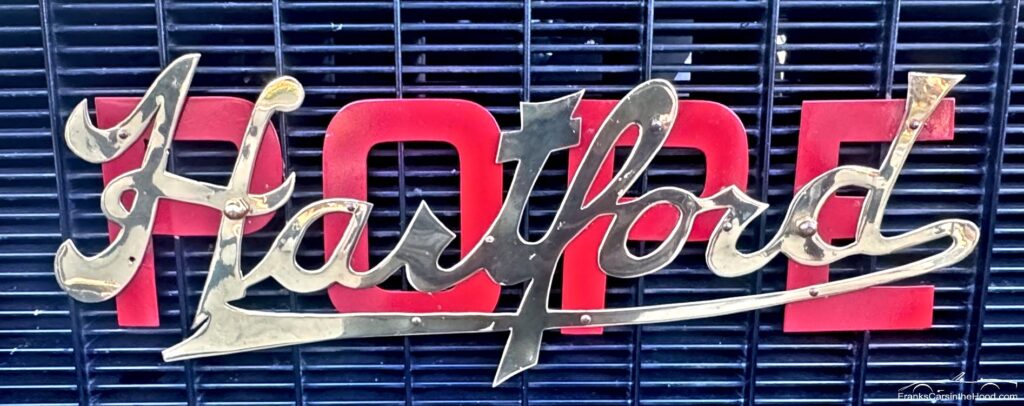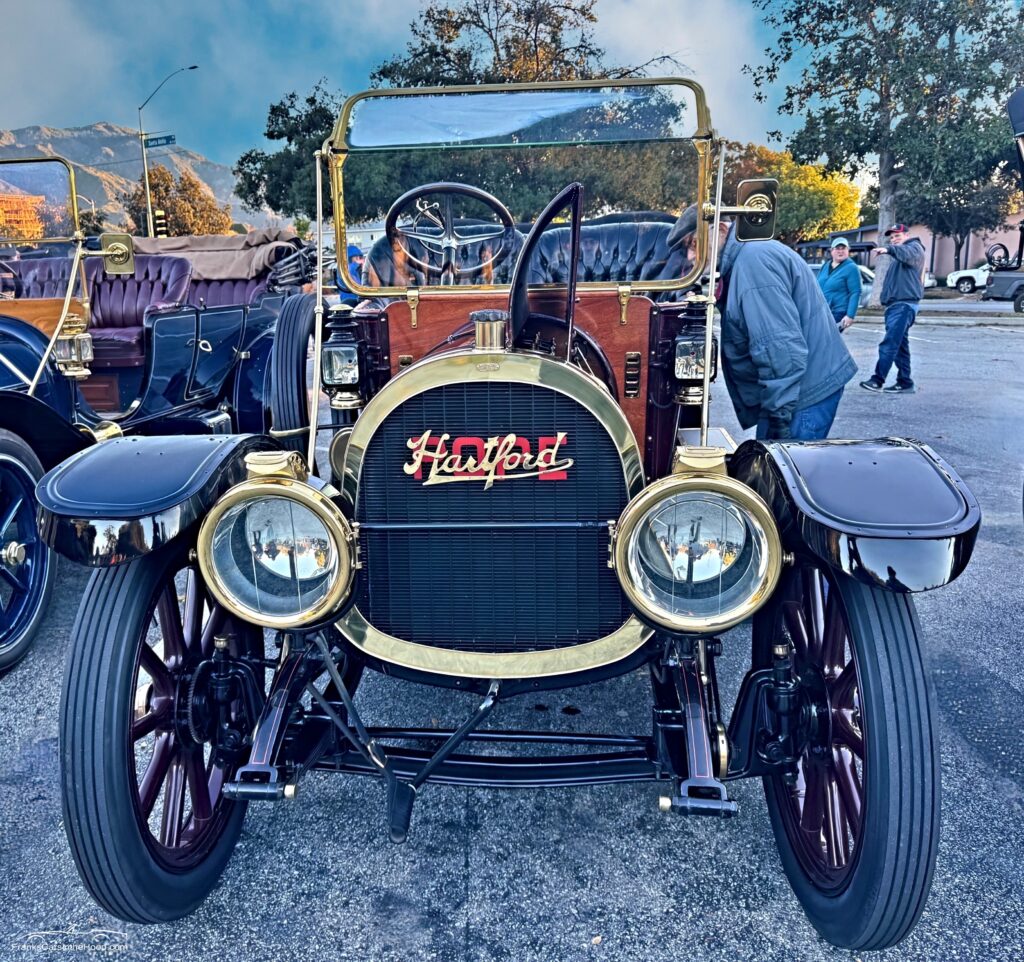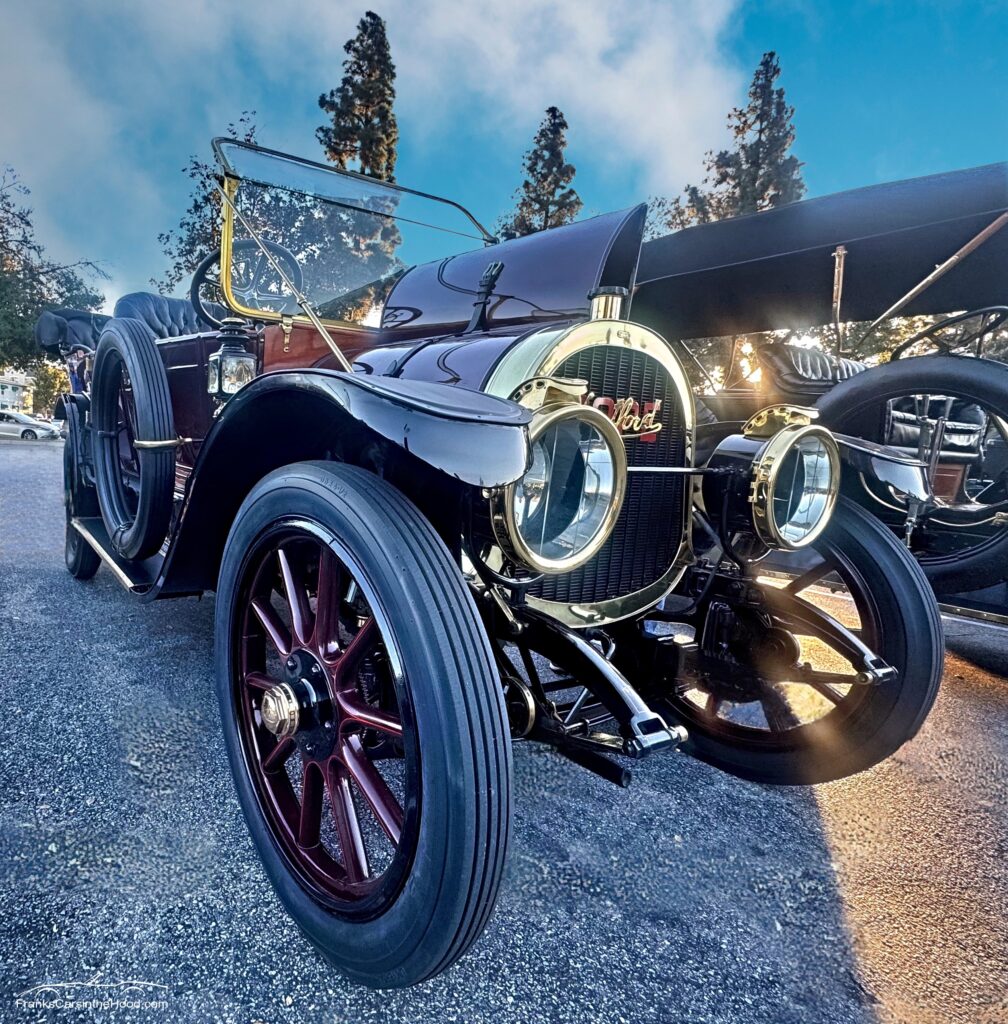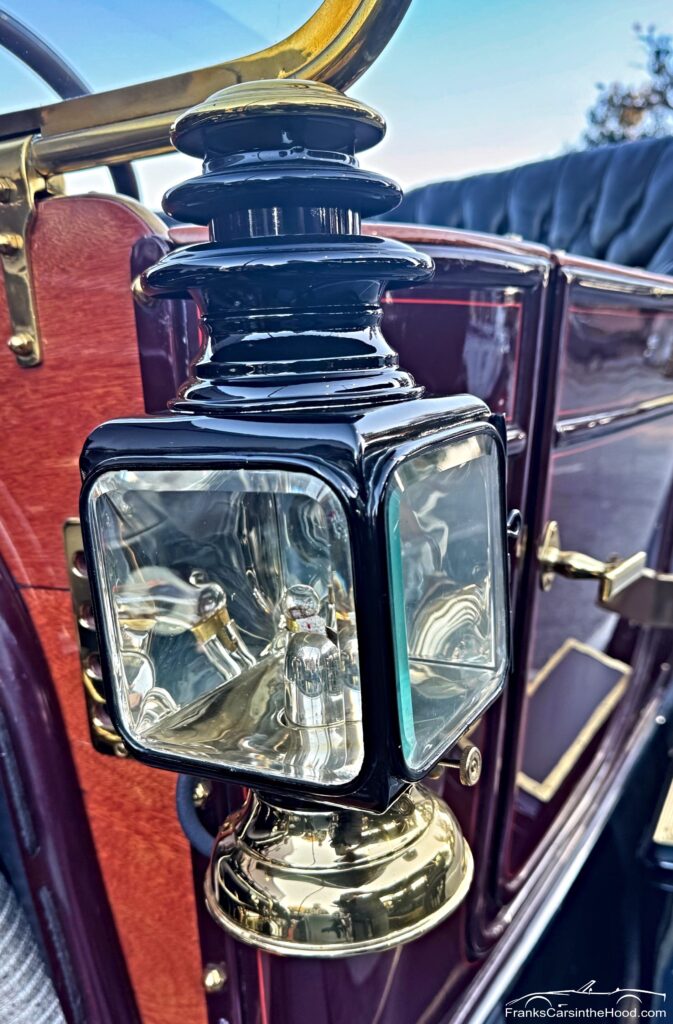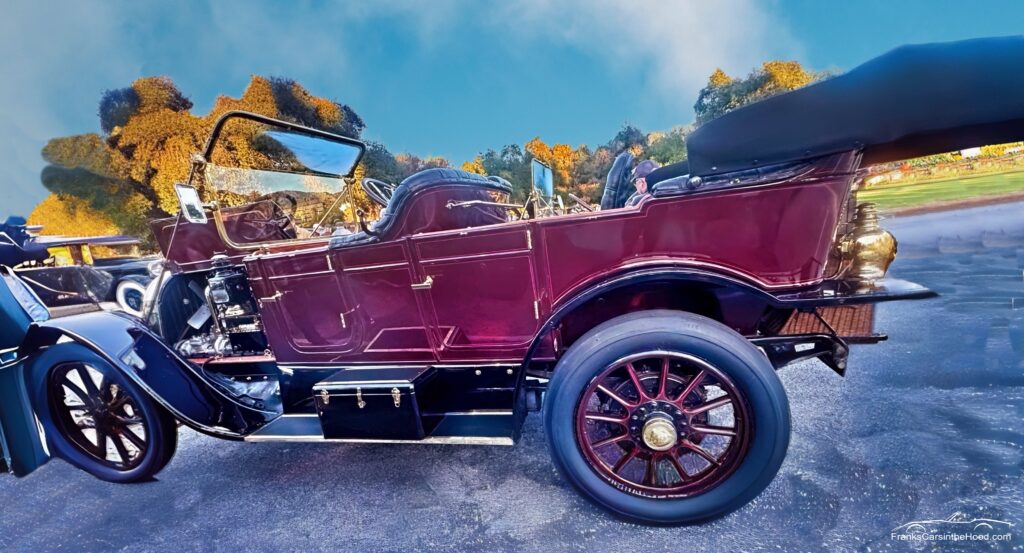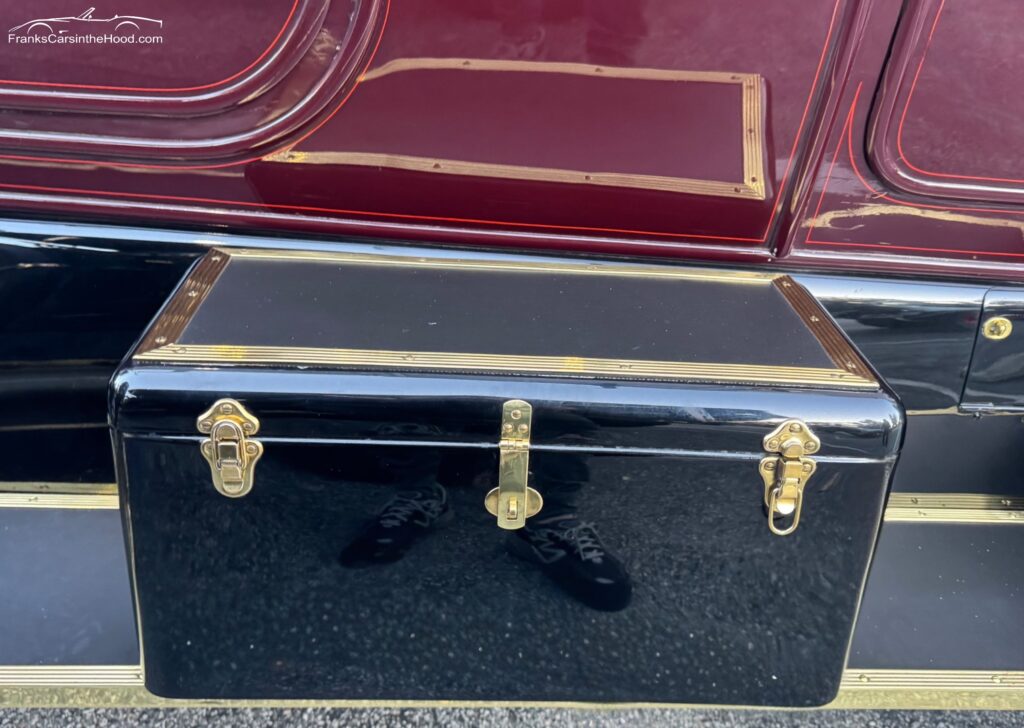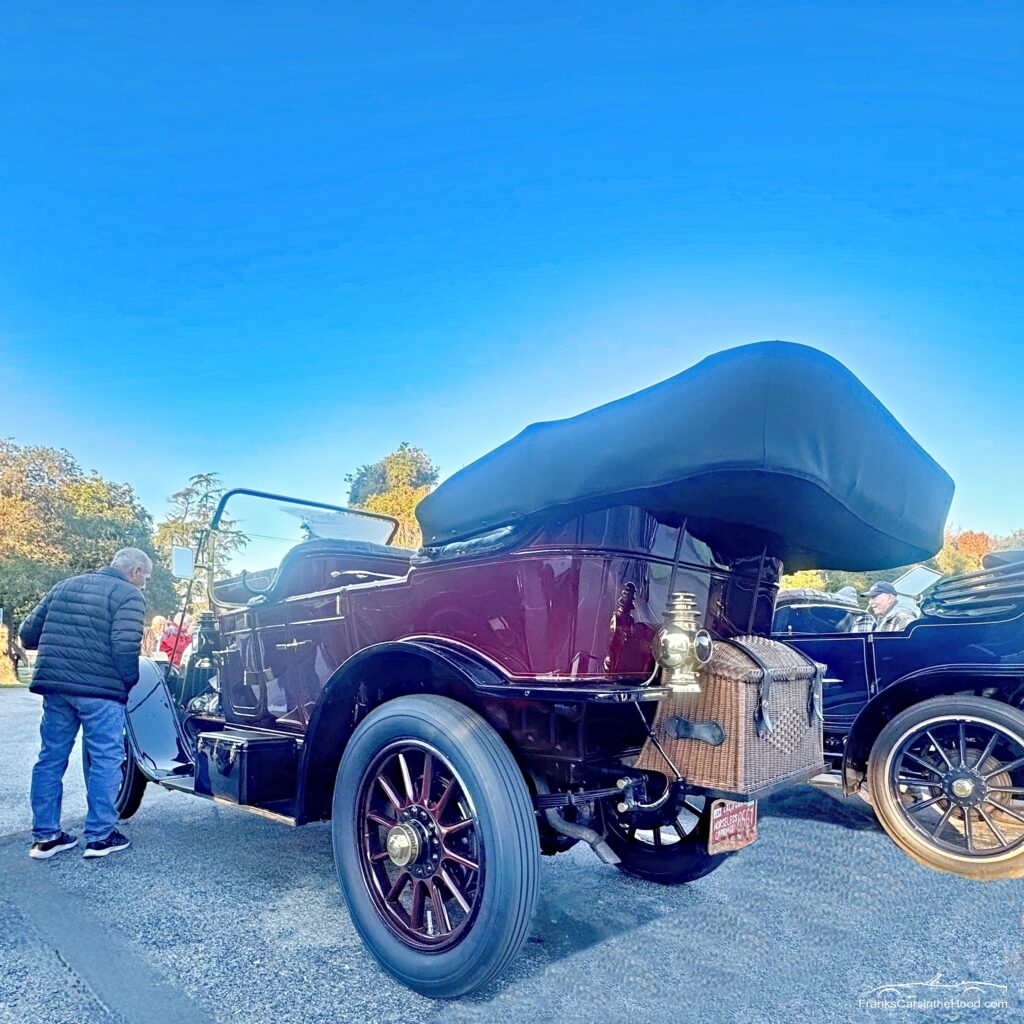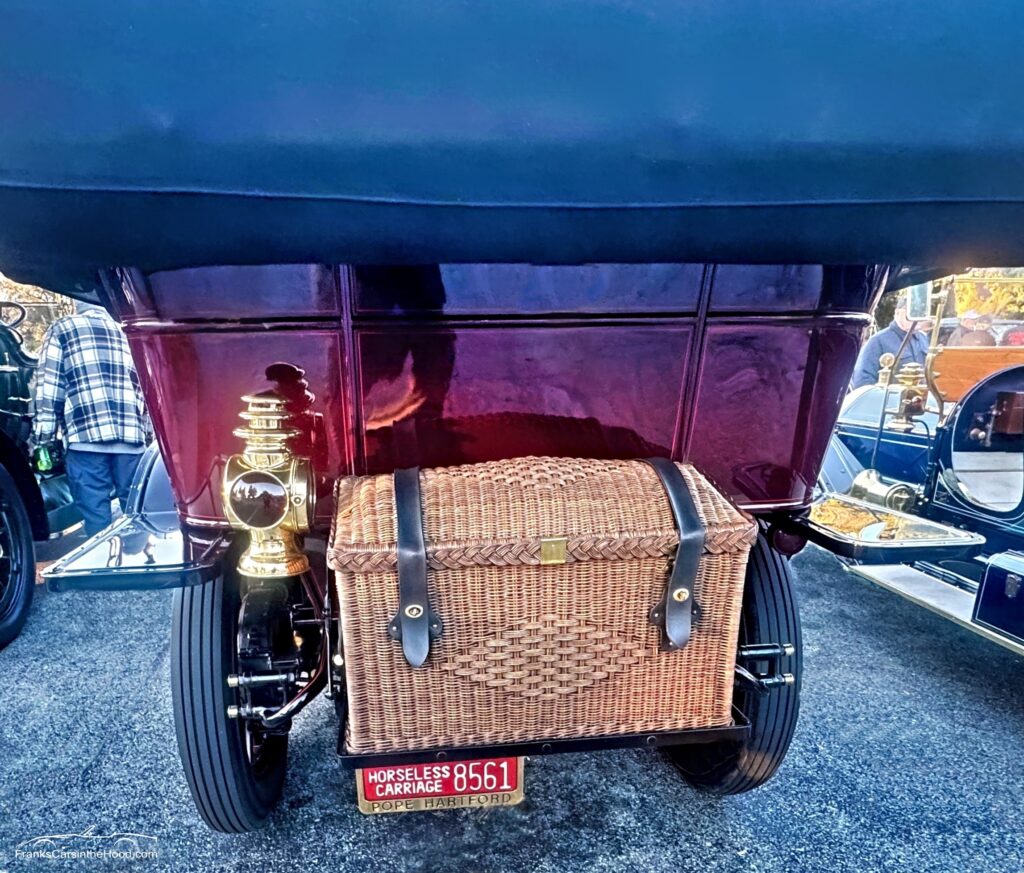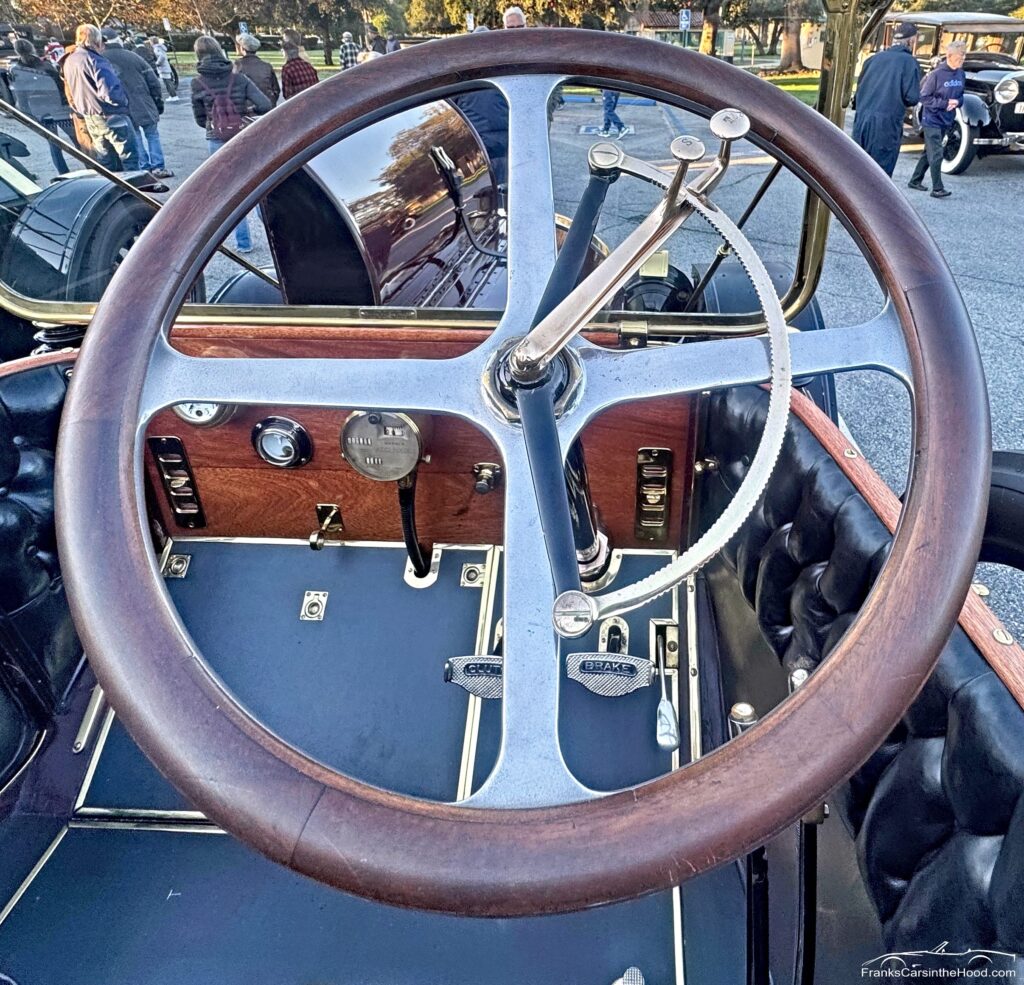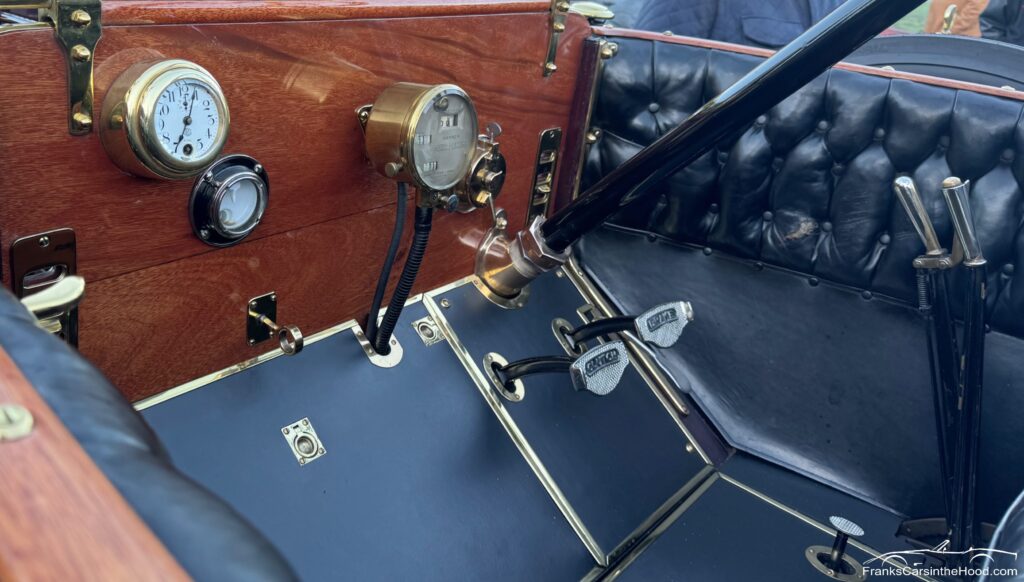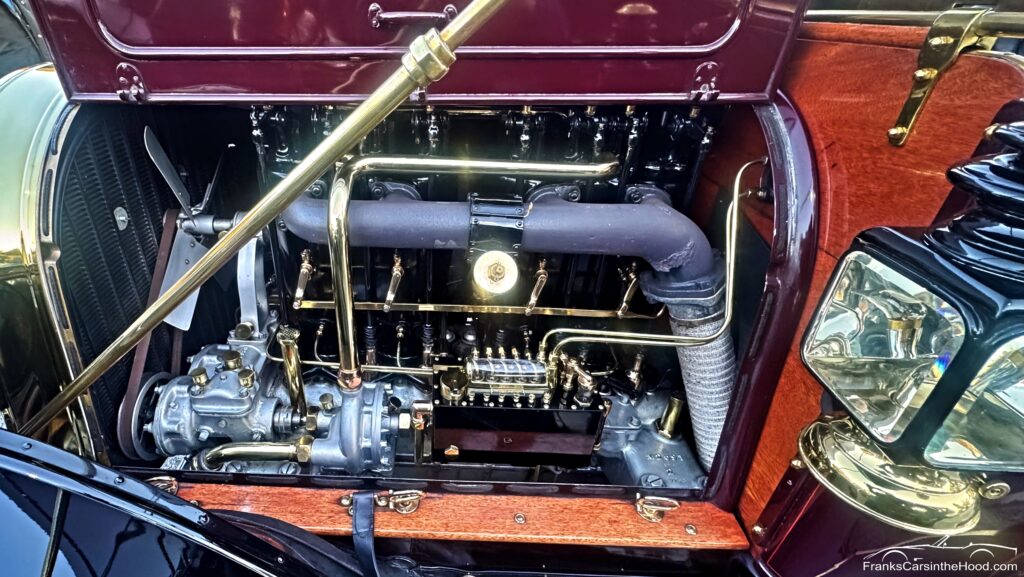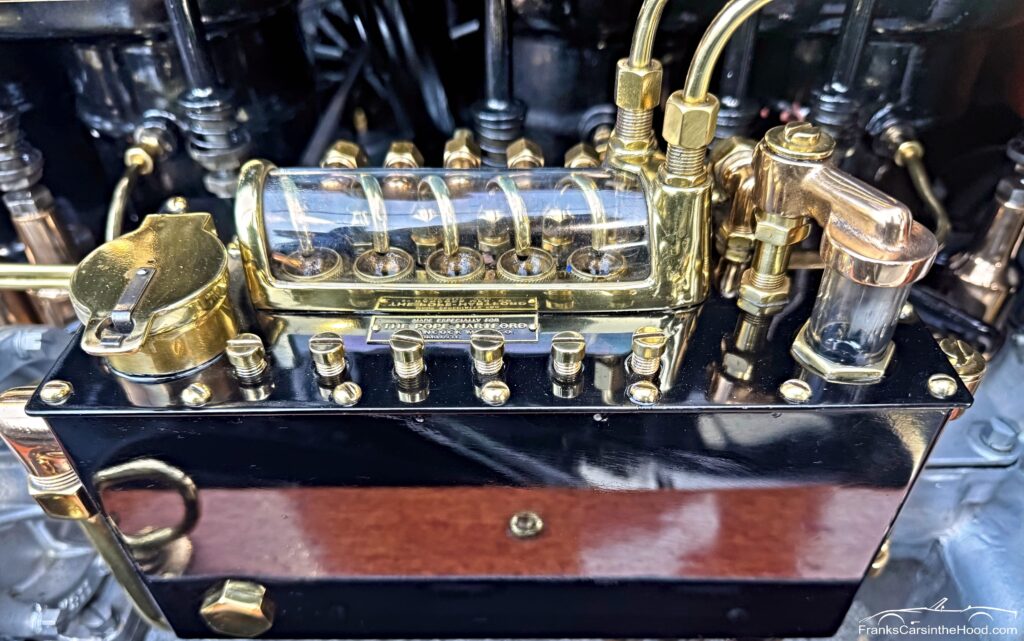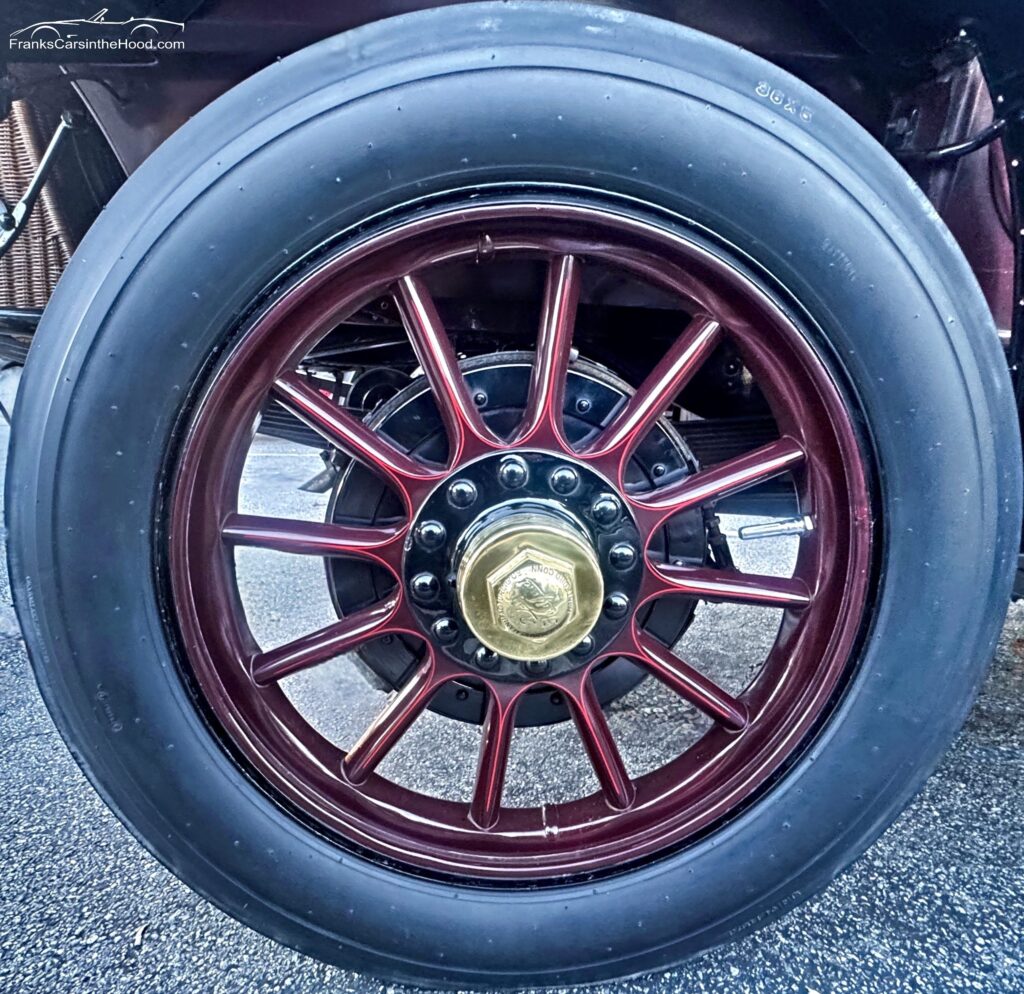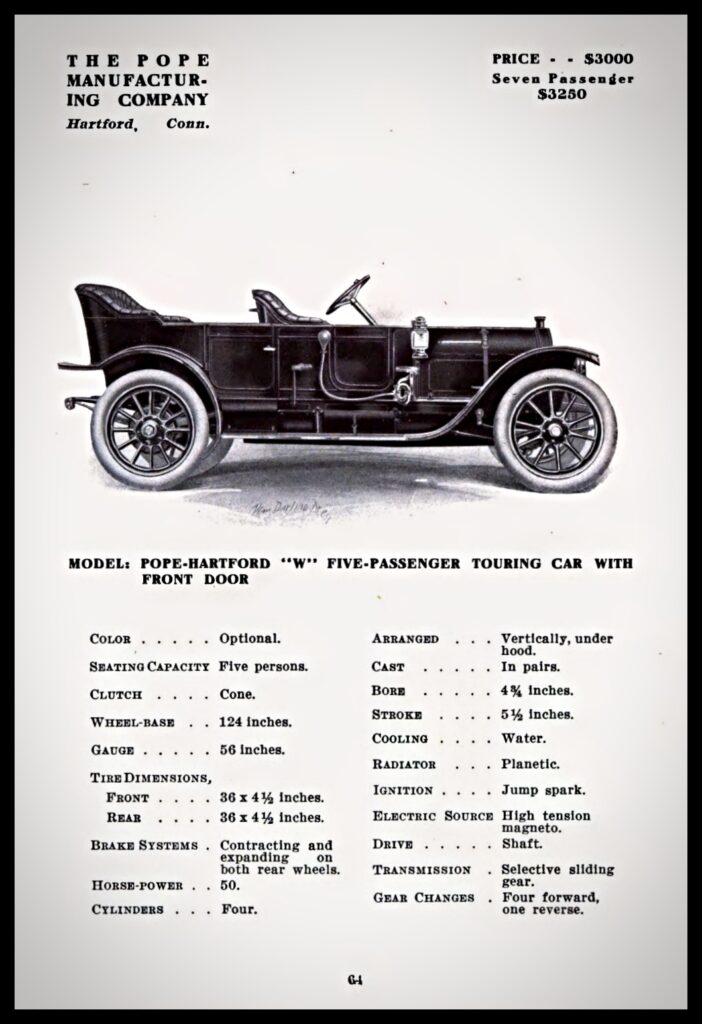
Today’s car is a 1911 Pope-Hartford Model W five-passenger touring, which I photographed at the 2025 Annual Horseless Carriage Show at Arcadia Community Regional Park in Arcadia, California. It’s finished in a two-tone combination of Purple Lake and black with red pinstriping, tufted black leather upholstery, and a black soft top with side curtains, and it’s right-hand drive. Under the hood is a 50 hp, 389.9 cubic inch inline four with two monobloc cylinder-and-head castings, overhead valves, a six-feed mechanical oiling system, and a single updraft carburetor, backed by a four-speed manual gearbox. I’ll be honest, I had to look up what “two monobloc cylinder and head castings” meant. In plain English, it means the engine is built in two big chunks, each one combining two cylinders and the head into a single piece instead of a bunch of separate parts. Slowing this beauty down are rear-mounted two-wheel mechanical drum brakes with externally contacting bands. Unlike the internal-expanding brakes we’re used to seeing before disc brakes, drum brakes with externally contacting bands use a metal band that tightens around the outside of the drum to create friction and slow the wheel, an early braking design common on Brass Era cars before internal-expanding brakes became standard. The suspension it rides on is a solid front axle and a live rear axle with longitudinally mounted semi-elliptic leaf springs and period-correct friction shock absorbers, often called Hartford-style shocks. It sits on 27-inch wood-spoke wheels with 36-inch tires.
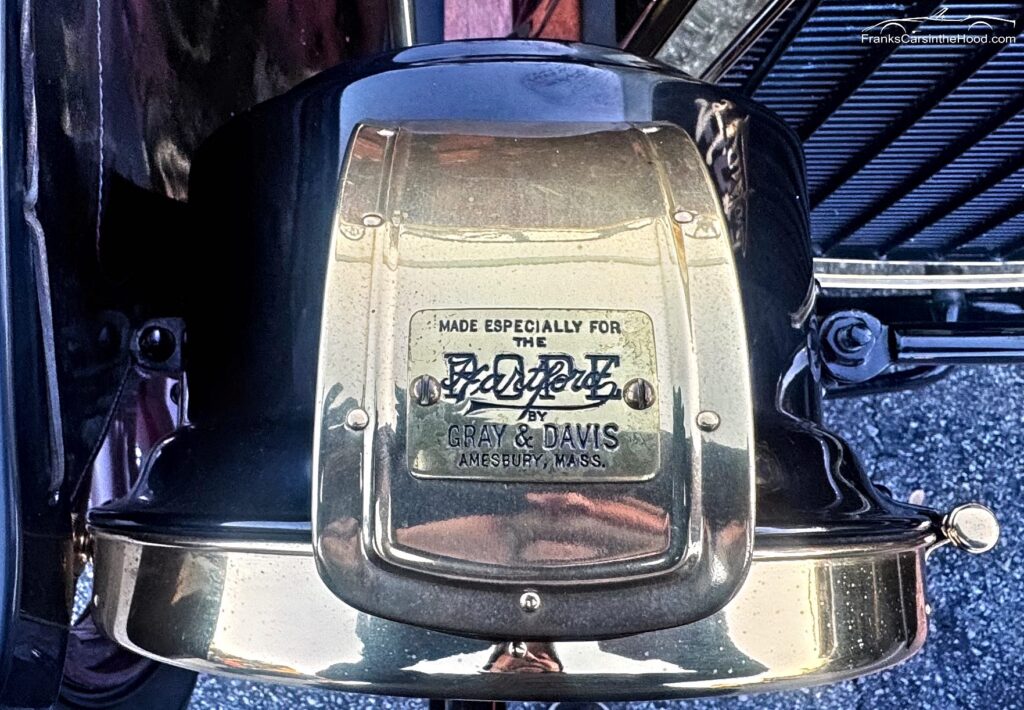
Five-passenger touring bodies could be ordered with or without front doors, and this example wears the single front passenger door version. Details are pure Brass Era, including the brass radiator shell, leather hood straps, Gray & Davis headlights, and an adjustable windshield with a single side mirror on the passenger side. The brass headlamps were fueled by acetylene gas while the brass side lamps and rear taillight used kerosene fuel, which are a good reminder of just how different early cars were.
Colonel Albert A. Pope made his fortune producing Columbia bicycles before the turn of the century, but he was quick to see where the future was headed, and by 1903 the Pope Manufacturing Company was building automobiles. By 1906, Pope was running a small automotive empire with several different brands aimed at different buyers. The Pope Waverly was an electric car, the Pope Tribune covered the lower-priced end of the market, and the Pope-Toledo, built in Toledo, Ohio, and the Pope-Hartford, built in Hartford, Connecticut, sat at the top of the lineup in the luxury class. In 1911, that put Pope-Hartford in the same conversation as other high-end American makes, building large, powerful touring cars for buyers who wanted performance, comfort, and prestige.
In 1911, the Pope-Hartford Model W wasn’t just another car, it was built by a company with a decade of automotive experience and a reputation for quality. Pope-Hartford was one of several marques produced by Colonel Albert A. Pope’s Pope Manufacturing Company between 1904 and 1914, and over that period the brand built roughly 4,700 cars in total under various model names. In 1911 alone, Pope-Hartford produced about 693 automobiles, with the Model W serving as its top-end four-cylinder offering. The Model W was offered in a range of body styles, including touring, roadster, landaulet, limousine, and more, with new prices generally from about $2,750 up to around $4,150, placing it above the average car of the day and into the luxury bracket. With its big 50-horsepower engine, period reports and auction descriptions note the car could comfortably tour in excess of 60 mph, which was serious speed for a brass-era touring car.
Like a lot of early automakers, Pope-Hartford didn’t disappear because the cars weren’t good. The trouble started higher up the ladder. Colonel Albert A. Pope’s manufacturing empire had been under financial strain for years, and after his death in 1909 his brother George took over, but the business never really found solid footing again. By the early 1910s the company was in receivership, and at the same time the auto industry was changing fast, with mass-production automakers driving prices down and squeezing smaller, high-end builders. By 1914, Pope-Hartford was done, another quality name that simply couldn’t survive the shift from the Brass Era to the modern automotive world.
Seeing a car like this in person is a good reminder of just how ambitious early automakers were, and how quickly the automobile grew from experiment to serious machine. The Pope-Hartford Model W isn’t about flash or gimmicks, it’s about solid engineering, craftsmanship, and the confidence that comes from building at the top of the market in 1911. More than a century later, it still draws a crowd, still makes people stop and look, and still tells the story of an era when the road ahead was wide open and nobody quite knew where it would lead, only that it was worth going. This is a great car for any level of car shows, maybe a little over the top for a typical Cars and Coffee, but what a crowd it would draw, or taking a leisurely tour of Arcadia with other pre-1932 brass cars that attended the 2025 Annual Horseless Carriage Show ant tour.
Thanks for riding along.
Frank