Last updated on January 24, 2026
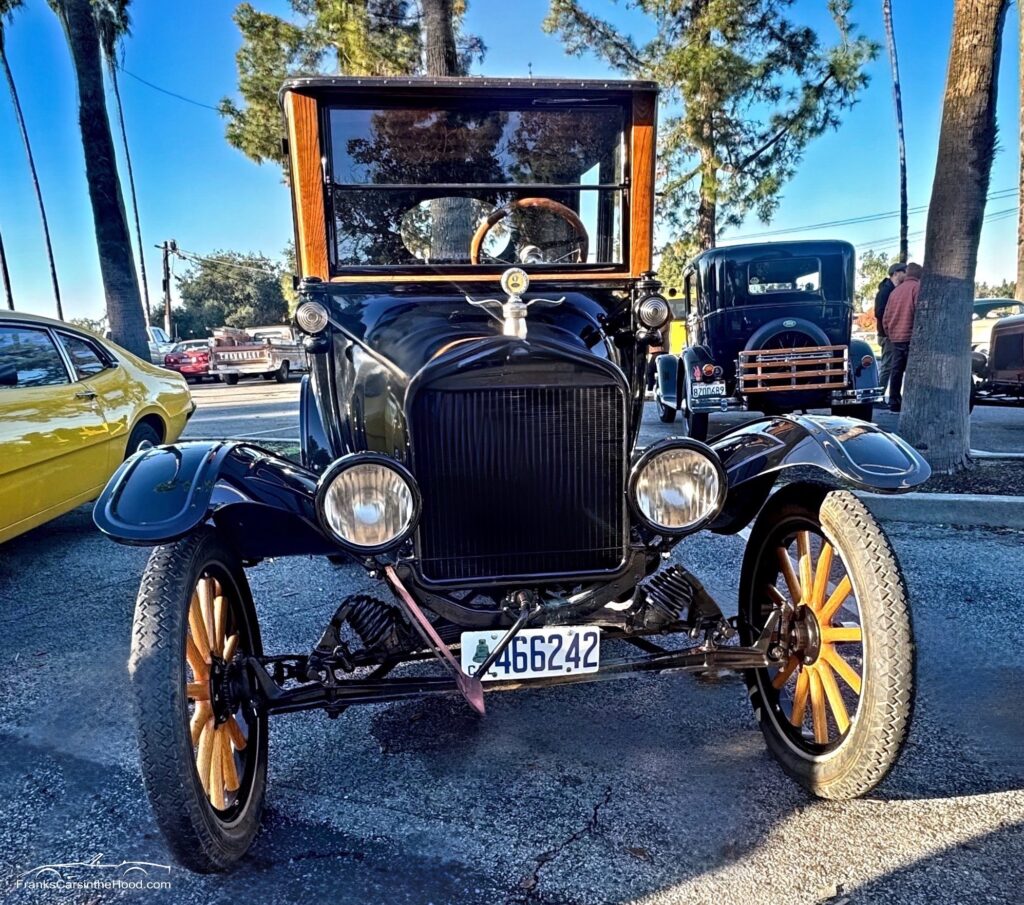
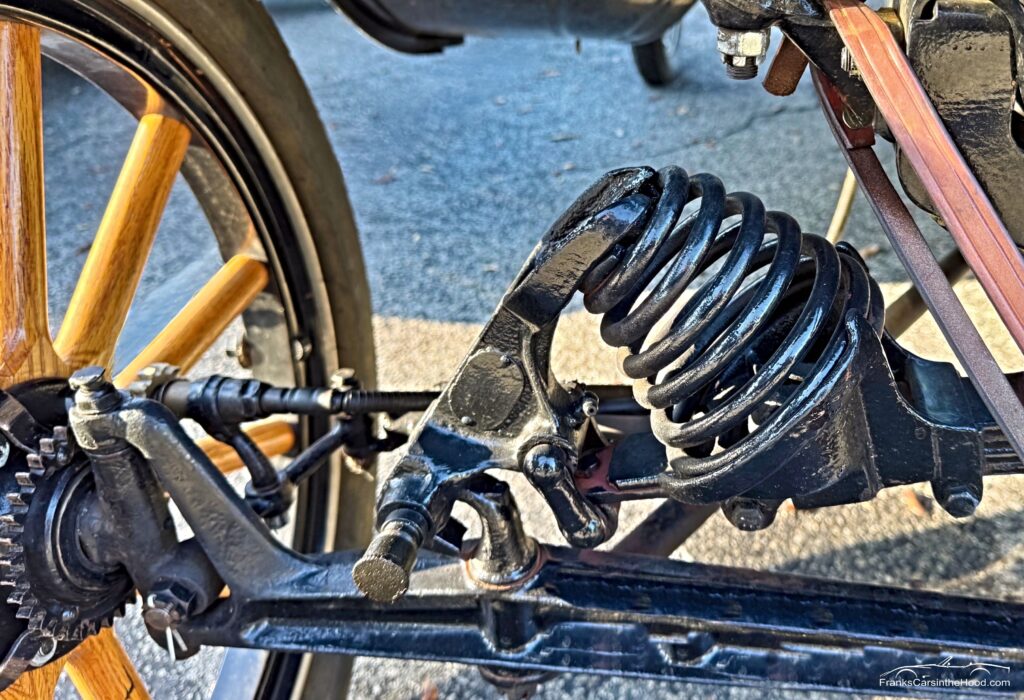
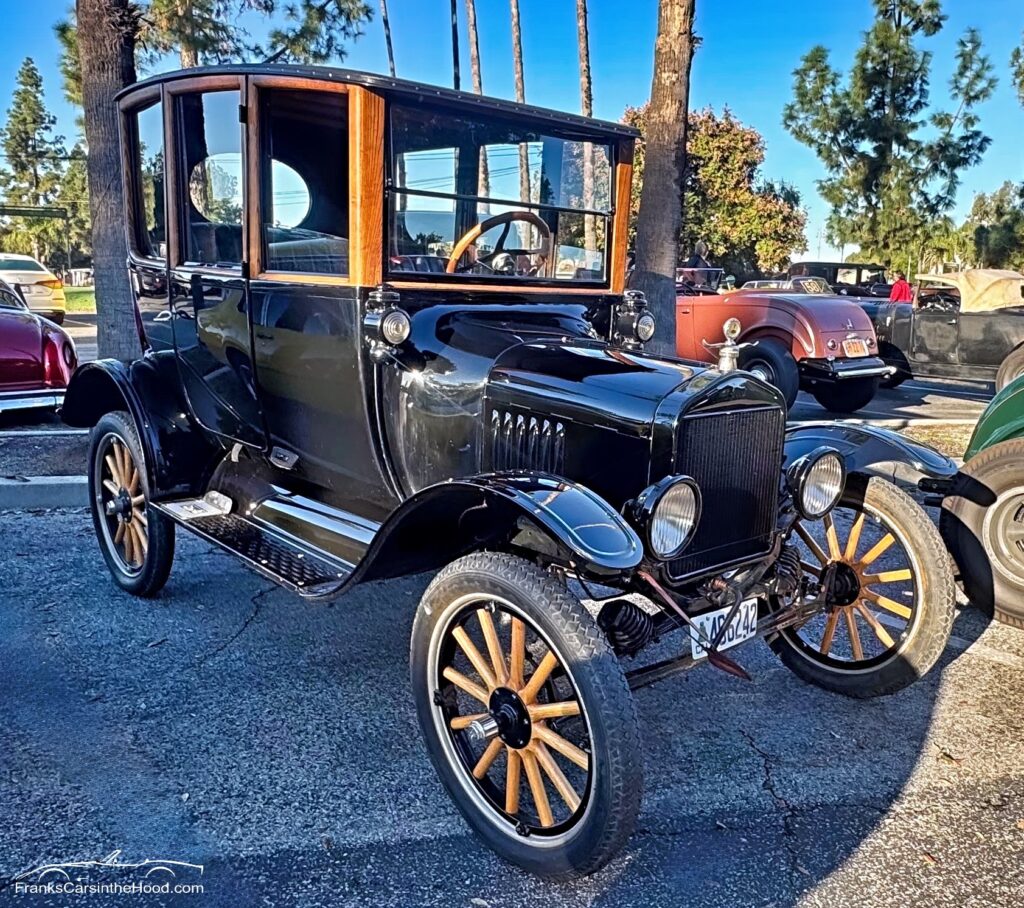
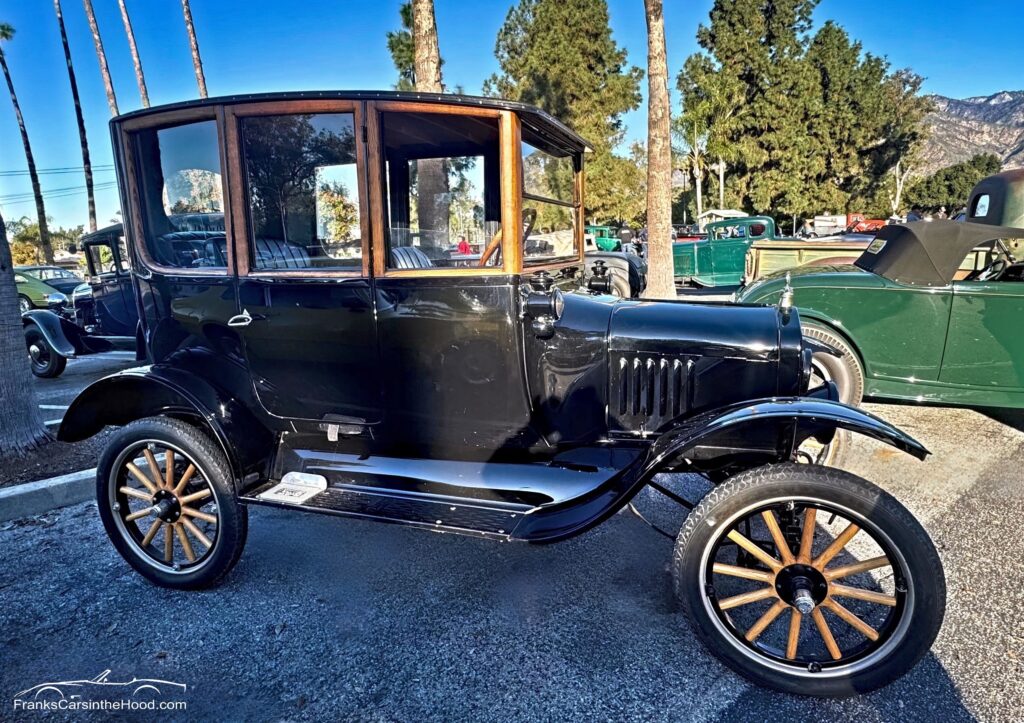
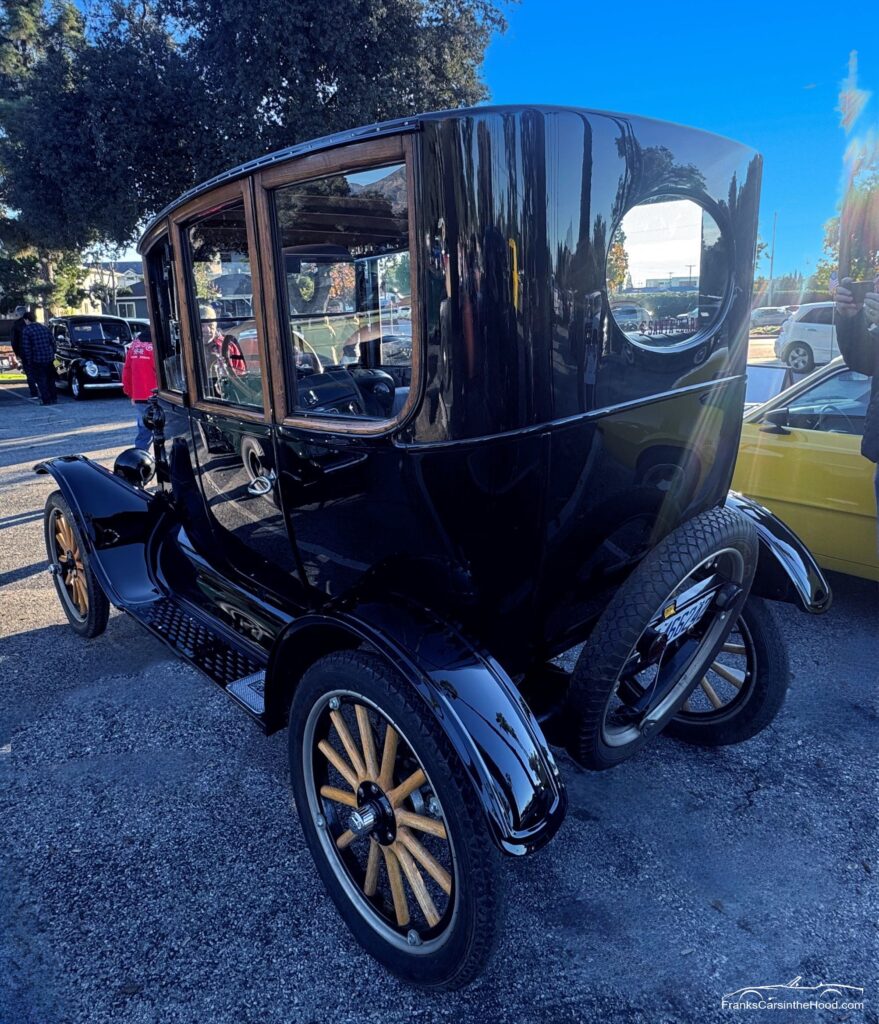
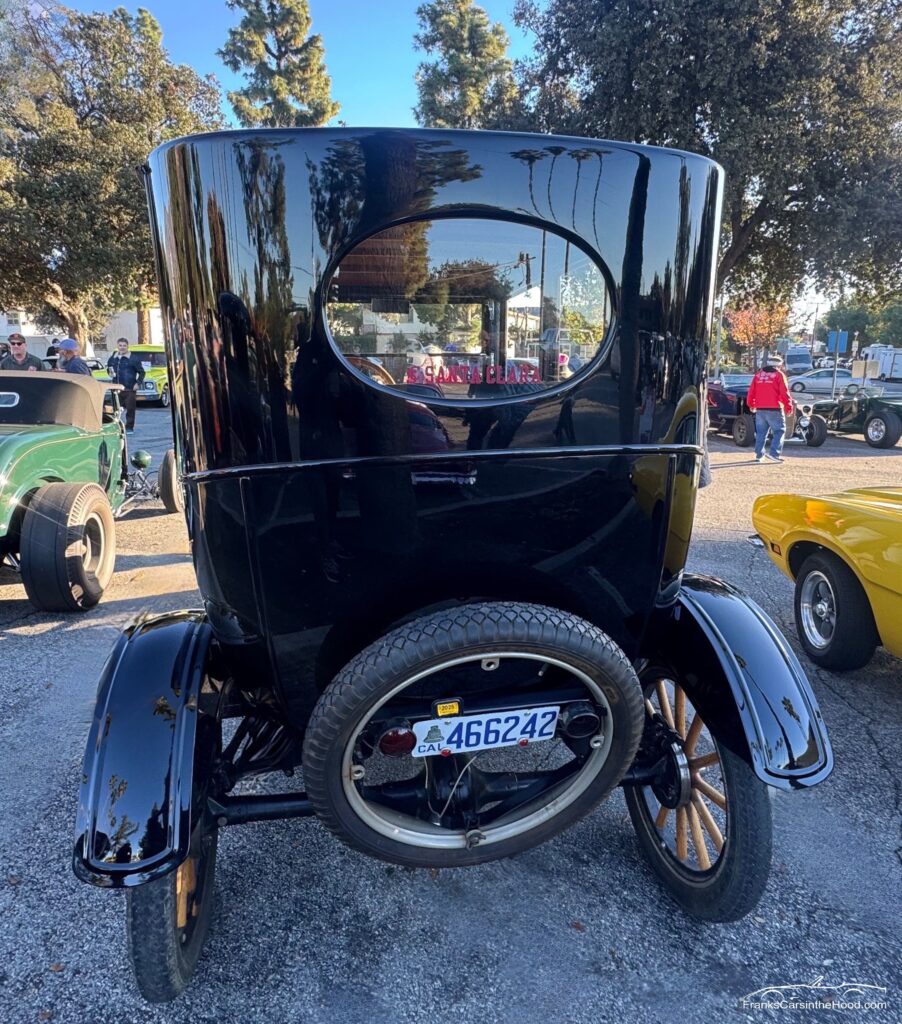
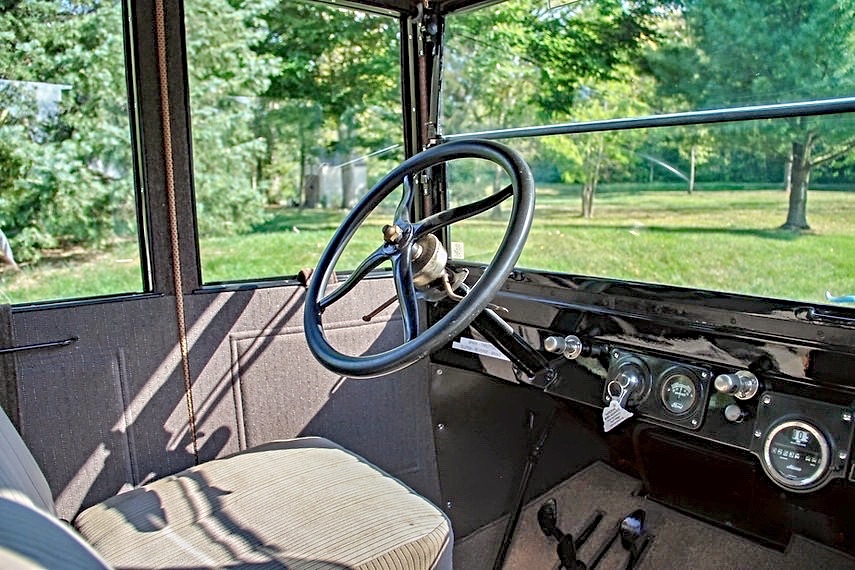
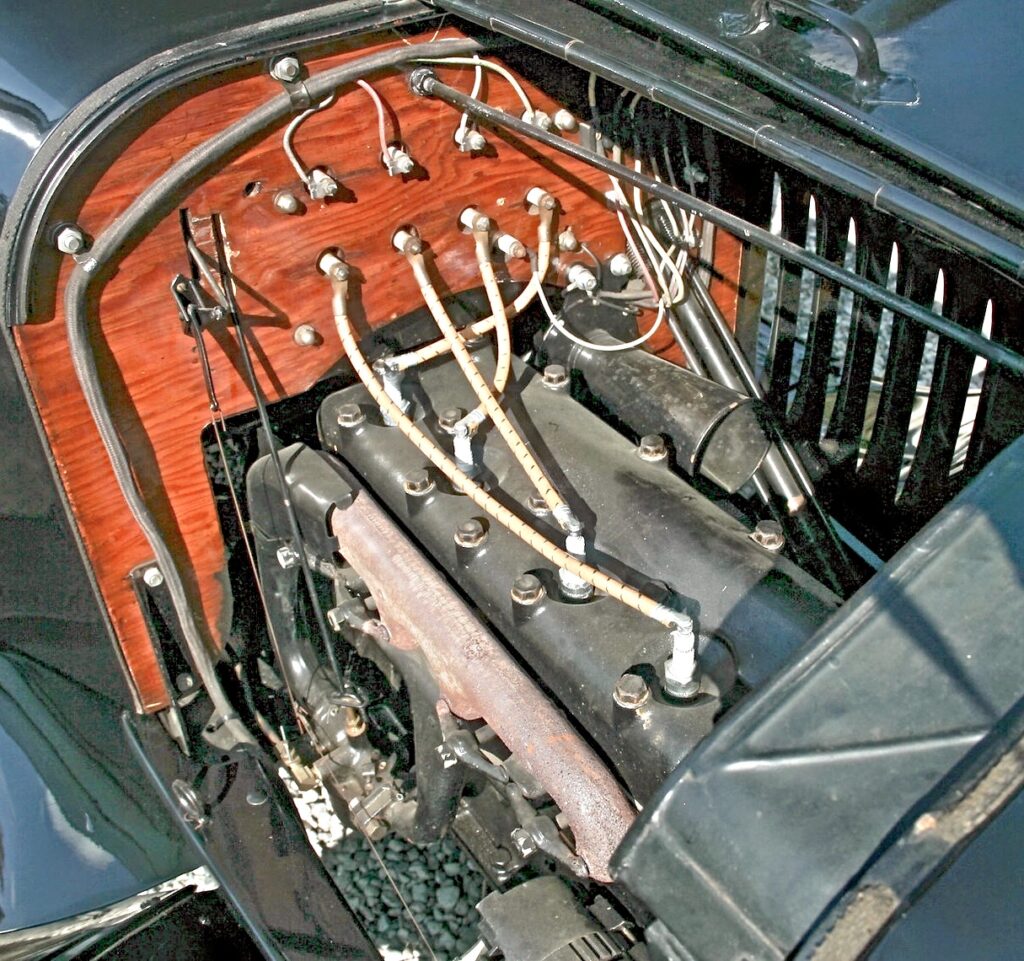
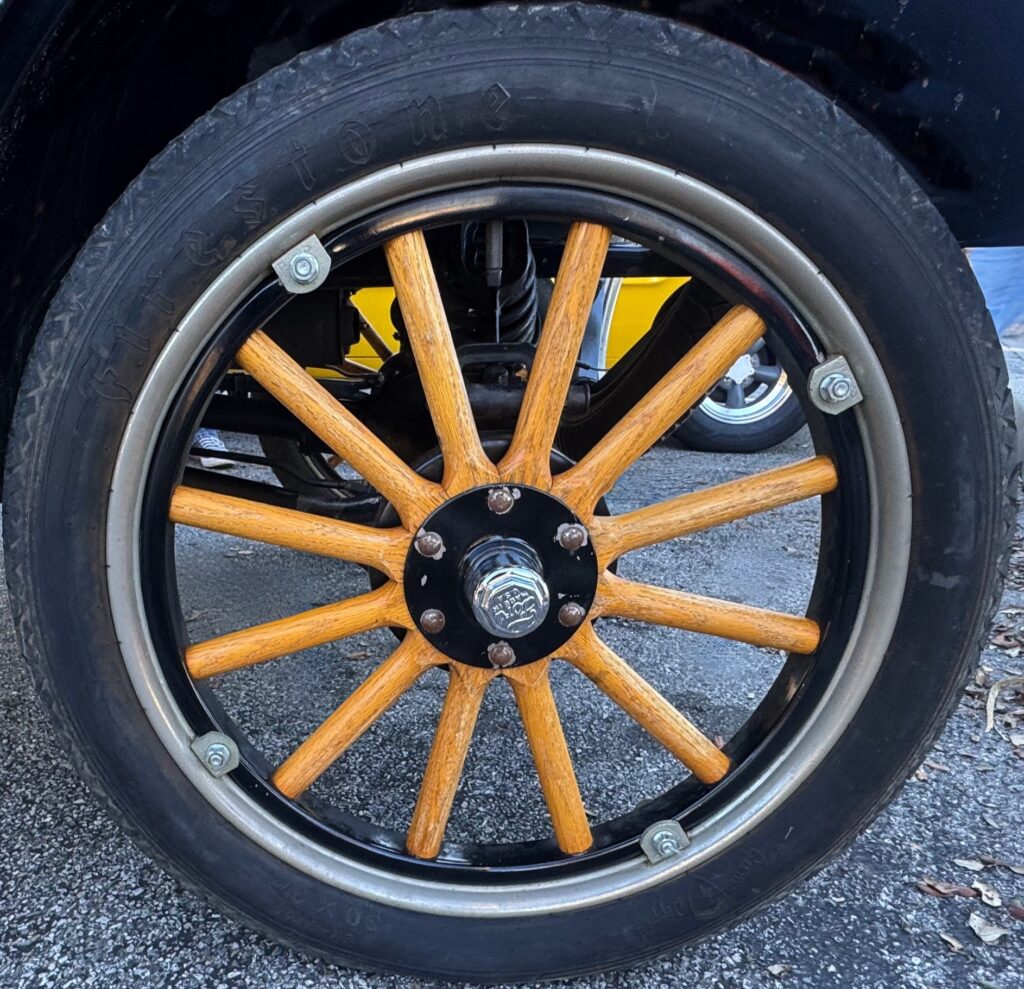
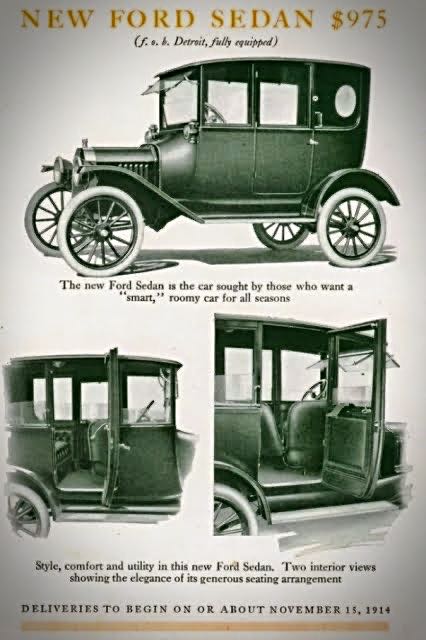
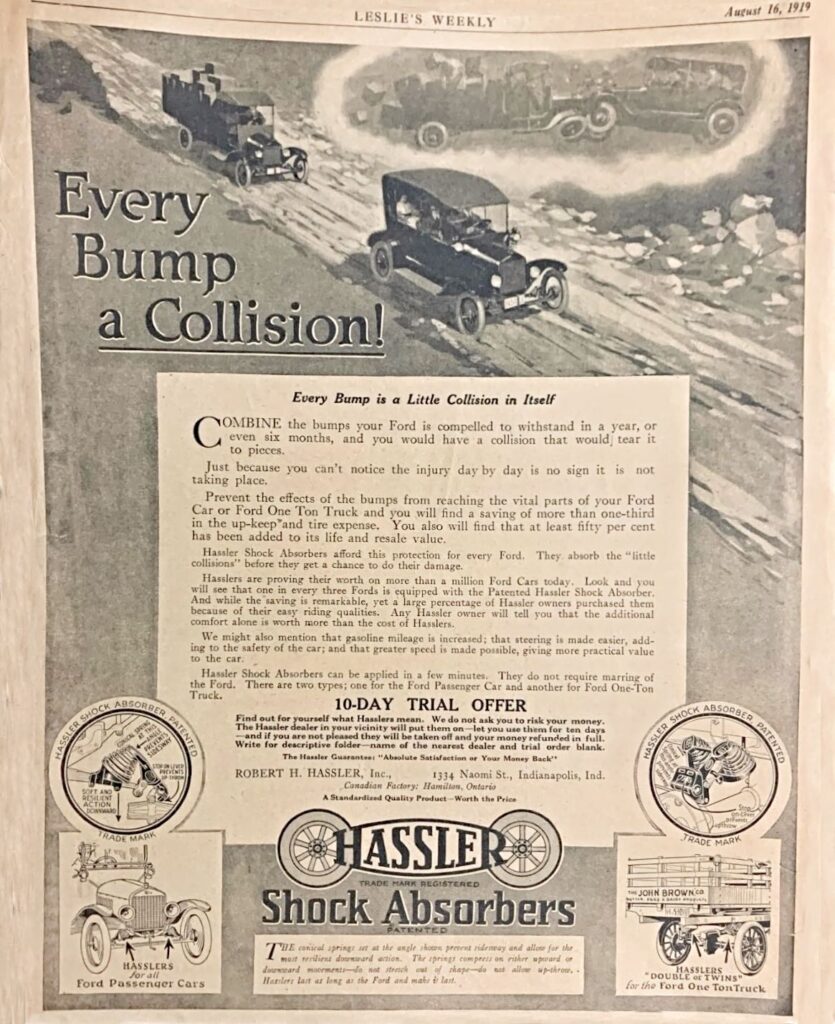
Today’s car is a 1918 Ford Center Door Sedan that I photographed at the 2025 Annual Horseless Carriage Show in Arcadia, CA. It is finished in factory-correct black with a Fisher-built body and it wears the upright greenhouse and carriage-like roofline that defined Ford’s earliest closed cars. Up close you can see the Fisher signature exposed wood framing around the window openings. Underneath, it’s all Model T with a 177 cu.in. L-head inline four making 20 hp and mated to Ford’s foot-operated two-speed planetary transmission, a system that still confuses most. The chassis is as straightforward as it gets: torque tube to the rear axle, transverse leaf springs front and back with aftermarket Hassler shock absorbers up front, and mechanical brakes on the rear wheels only. Demountable wooden artillery wheels were a big deal at the time of a flat tire on a dirt road. Electric lights were powered right off the magneto, and the “push-button starter” era wouldn’t arrive until 1919–1920 when the starter and battery system came online. Forty to forty-five miles per hour was about all it had, but for most buyers the magic wasn’t speed; it was being dry, warm, and dust-free for the first time in their motoring lives.
Ford built nearly fifteen million Model Ts between 1908 and 1927, but most were open cars. From 1915 through 1923 Ford produced around 478,000 Center Doors, and roughly thirty thousand of those were built for in 1918. The MSRP was about $645, more than a touring car or roadster, but for buyers willing to pay the difference, comfort and civility were starting to matter. You could take your family to church without dust in your teeth, arrive dry when it rained, and stay warm in winter. The Center Door still showed its carriage roots in the way bodies were built—wood under the skins and glass all around—but the idea it represented was modern.
In the wider Model T story, the Center Door is the bridge. When it arrived in 1915, a closed car still said something about its owner. It said comfort mattered, and comfort was becoming part of the conversation on American roads. But the industry was moving quickly. Steel stamping improved, production climbed, and the closed car’s premium aura began to fade.
By 1918 the Center Door was sitting in the middle of a quiet shift in American motoring. Closed cars were no longer curiosities or indulgences; they were beginning to make sense for everyday families. But the industry was moving quickly. The Tudor and Fordor Sedan landed in 1922 with a modern silhouette and side doors, and the Center Door suddenly looked like yesterday’s idea. It hung around for a short overlap and then bowed out as America embraced the sedan—ordinary comfort for ordinary drivers.
Color told its own side story. Early Center Doors came in dark blues, greens, and near-black maroons. Fisher-bodied cars sometimes showed a touch more color, while Wadsworth-bodied cars tended to go darker. For a few years the Center Door even interrupted Ford’s black era for closed cars (1914–1925) before everything settled back to black in the early 1920s. Yes, you could have “any color you want as long as it was black,” but Ford brought colors back in 1926 when sales softened and buyers wanted a little variety.
Seen today, the Center Door feels like it occupies the turning point between two eras. The body is still carriage, the chassis still Model T, but the idea of riding inside was the beginning of everyday comfort for everyday drivers. The sedans that followed would refine it, popularize it, and sell in large numbers. The Center Door introduced it!
This early restored Center Door is not only rare but was significant in changing history from open to closed cars. It fits perfectly at home in a Model T / FoMoCo car show, Cars and Coffee event, or out taking a leisurely tour of Arcadia after the 2025 Annual Horseless Carriage Show with like-minded enthusiasts.
Thanks for coming along for the ride.
Frank