Last updated on January 20, 2026
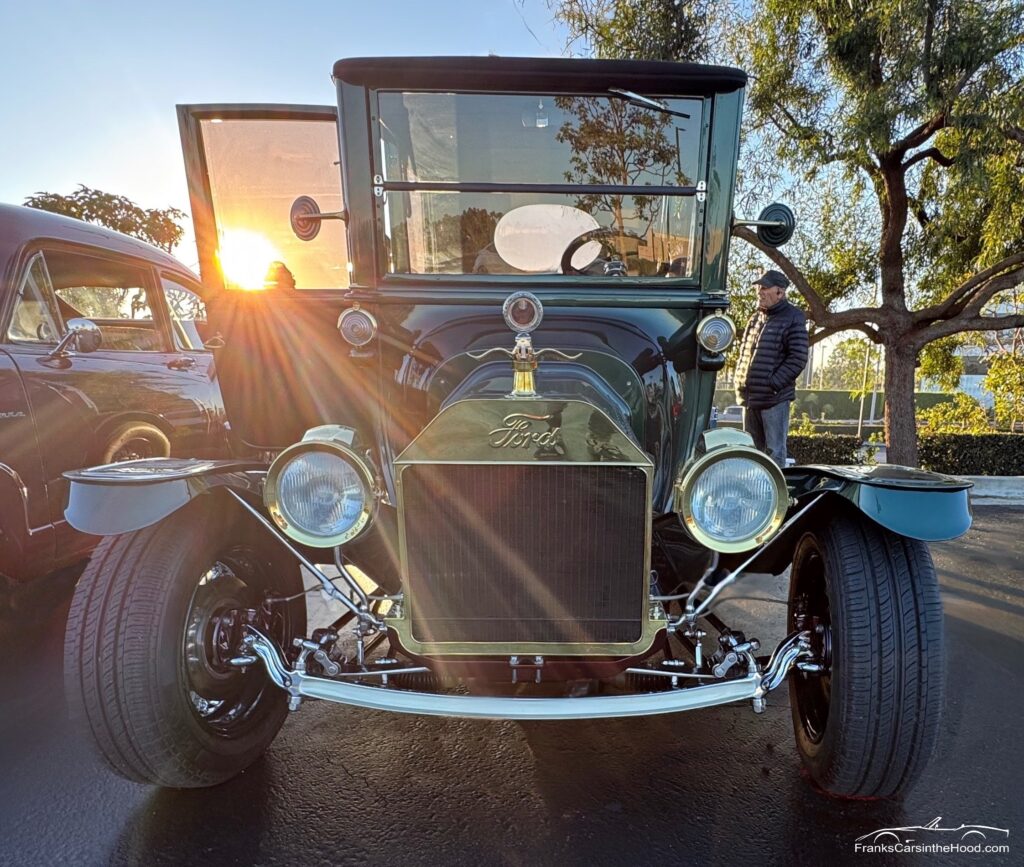
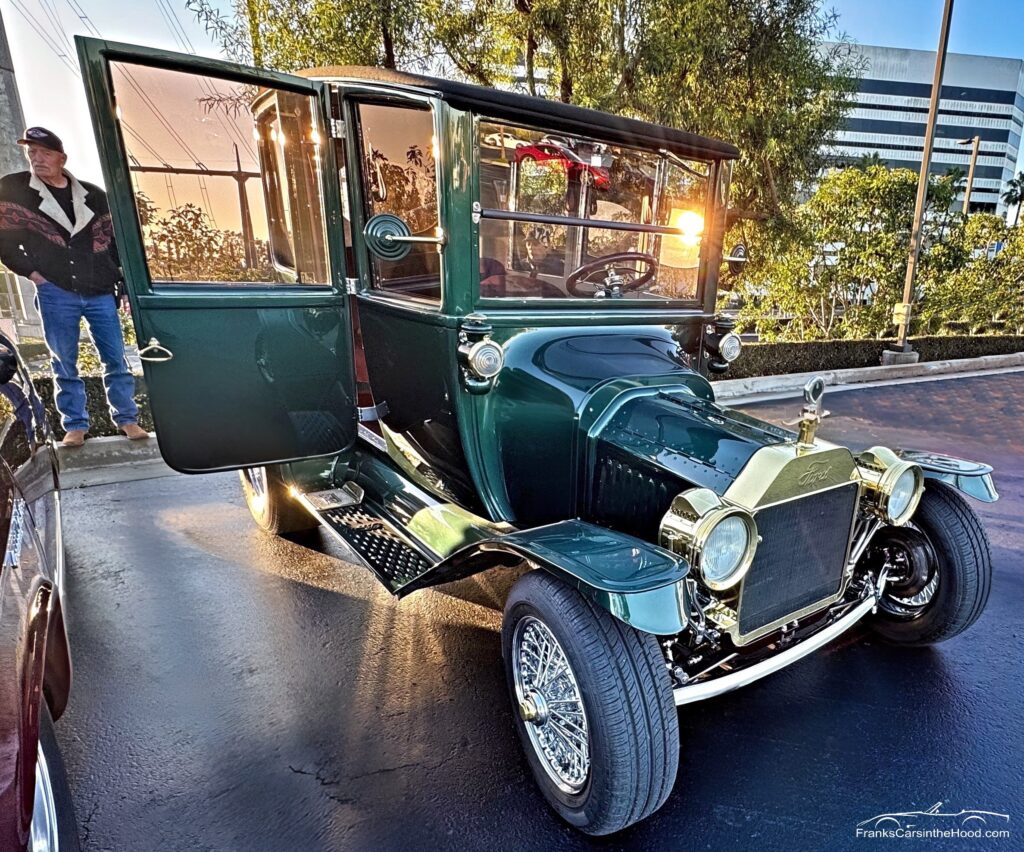
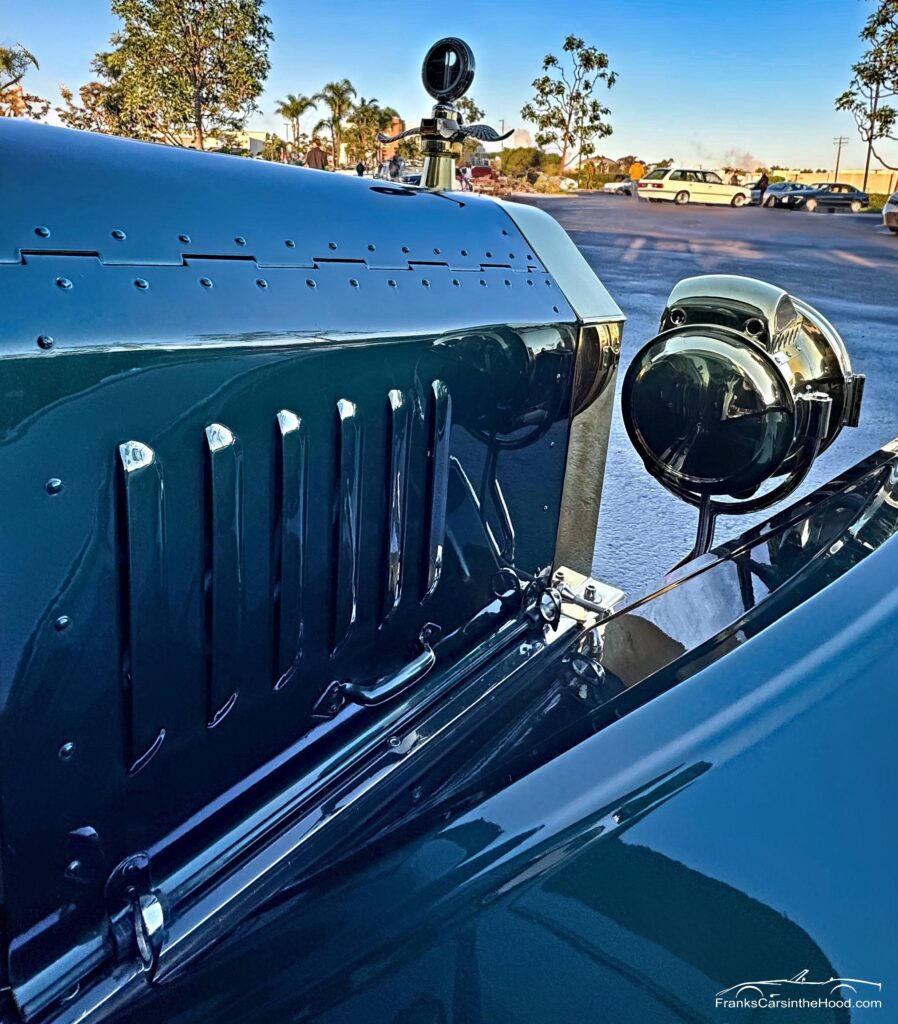
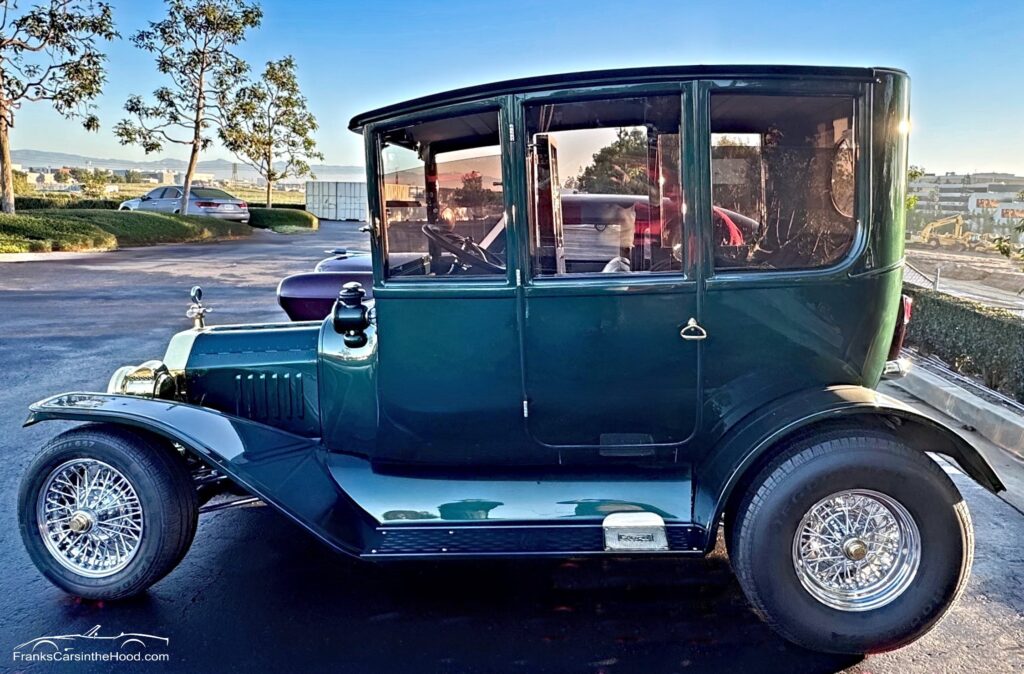
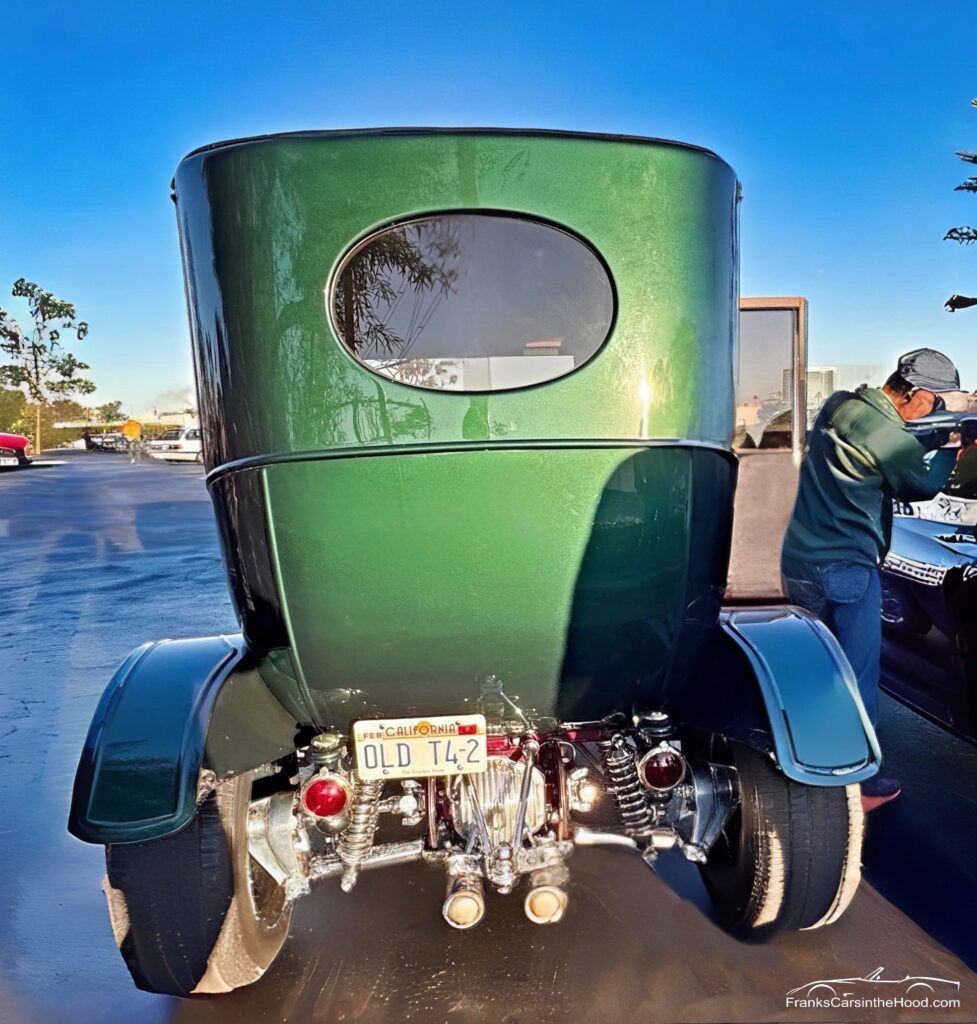
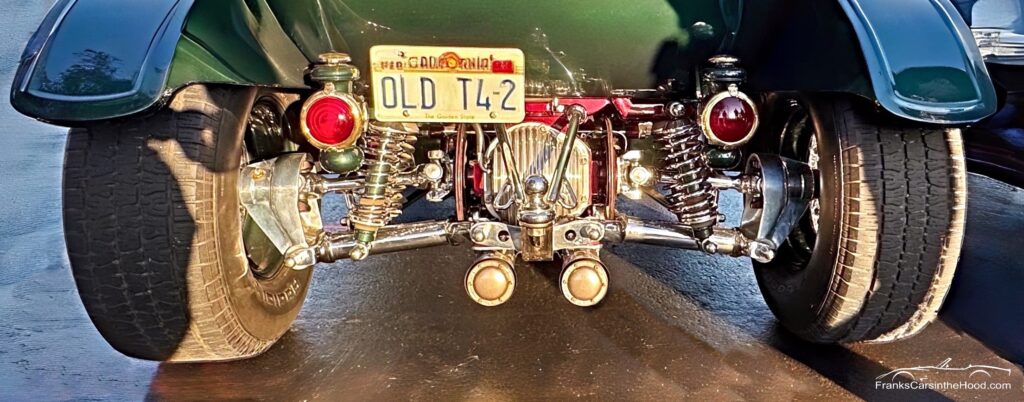
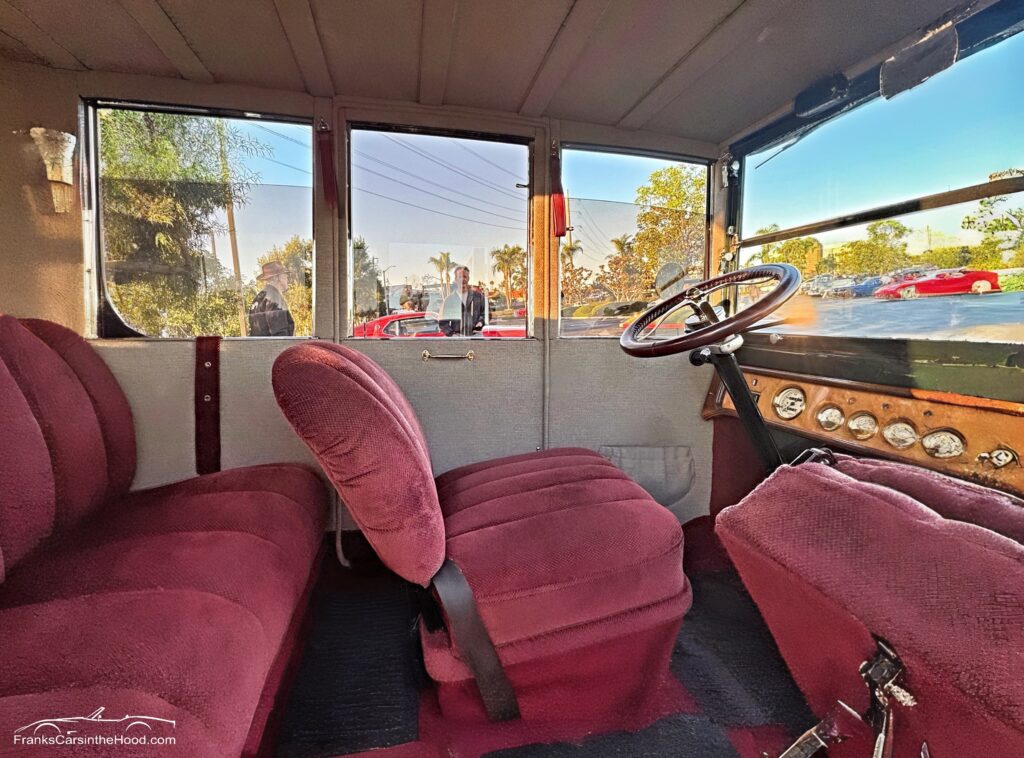
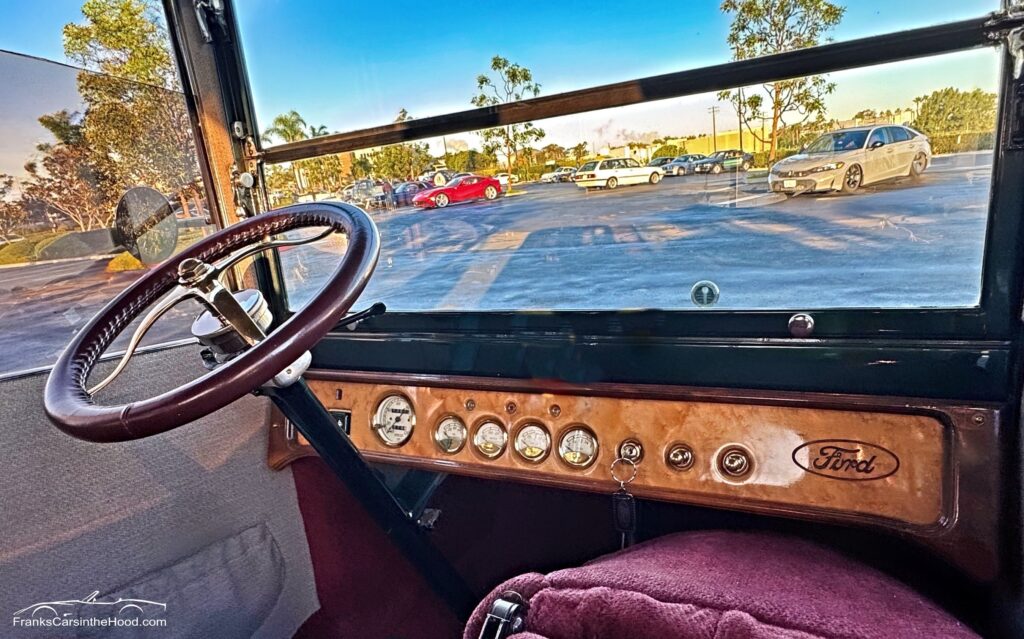
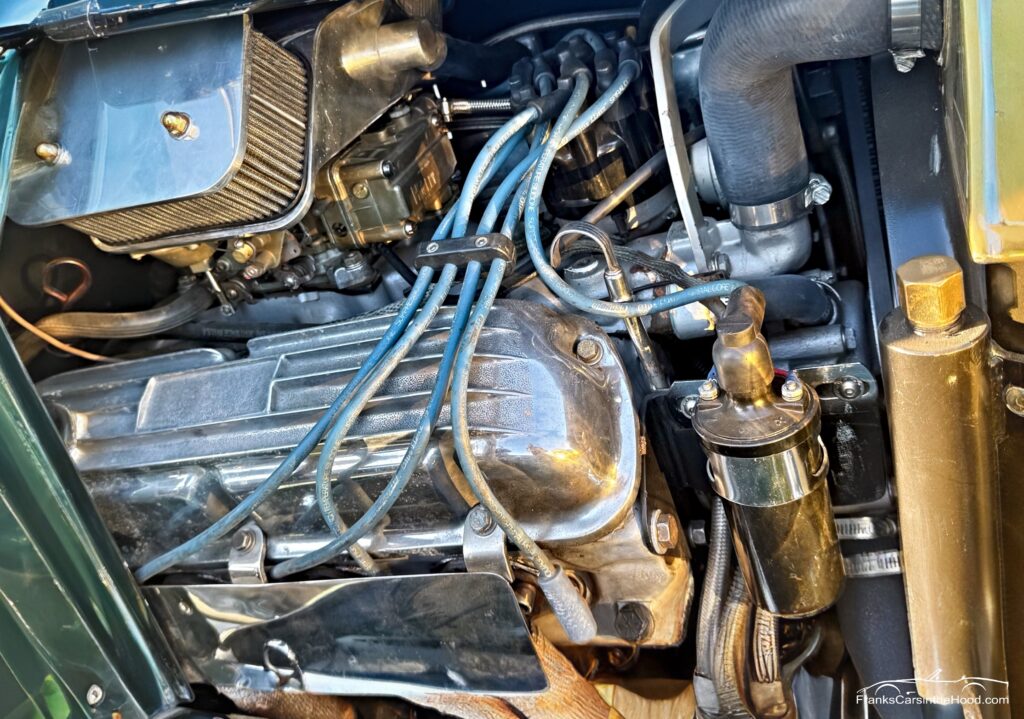
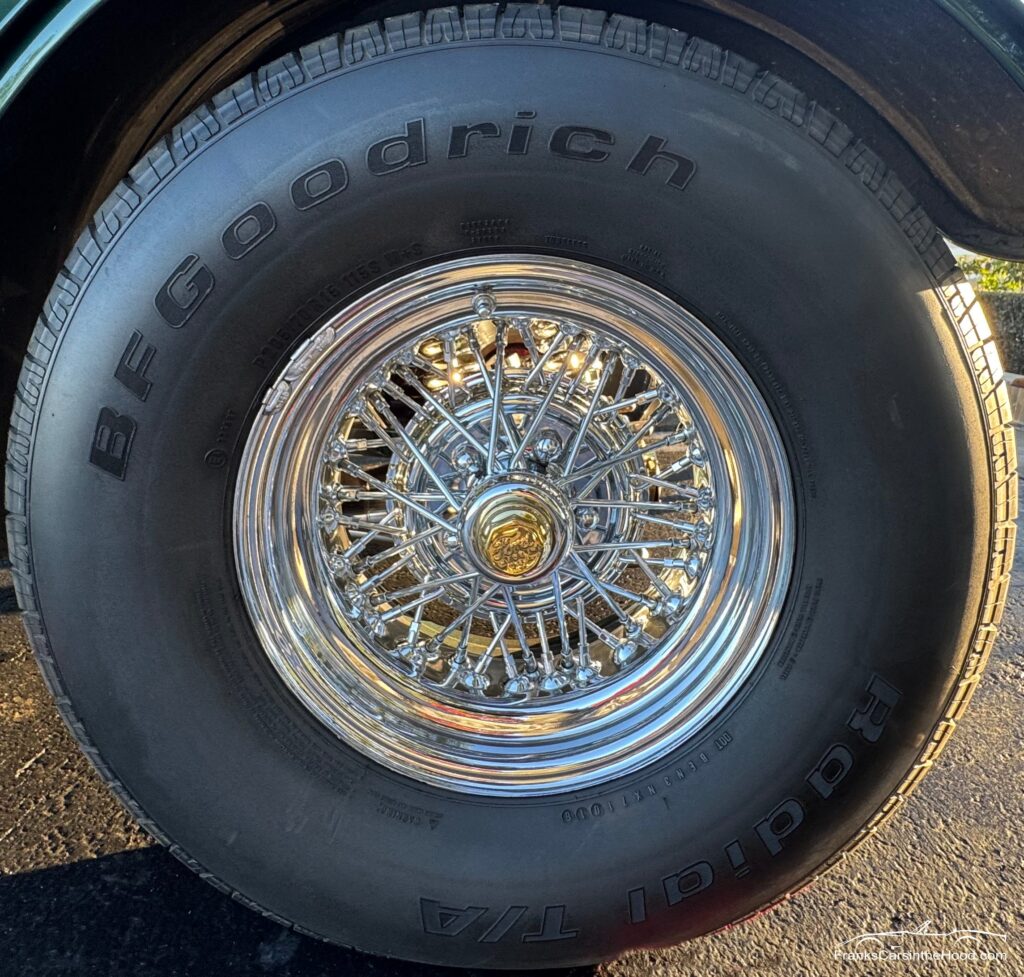
Today’s car is a 1918 Ford Sedan, Center Door, owned by Richard Tupper, which I photographed at the Manhattan Beach Cars & Coffee at The Point in El Segundo, CA. Finished in a rich metallic green with a burgundy and gray interior, this example is a thoughtfully executed restomod, retaining the Center door’s signature carriage-like profile while updating nearly everything underneath. Power comes from a 230–290 hp, 302 cu in OHV V8 Ford engine with a Holley double-pumper carburetor, mated to a Ford automatic overdrive transmission and a narrowed Jaguar rear end with a 3.54:1 gear ratio. Slowing things down are four-wheel disc brakes. The front suspension consists of a dropped solid axle with transverse semi-elliptic leaf springs, while the independent rear suspension (IRS) utilizes a Salisbury 4HU differential with half-shafts forming the upper links, along with radius arms, coil springs, and paired shock absorbers.
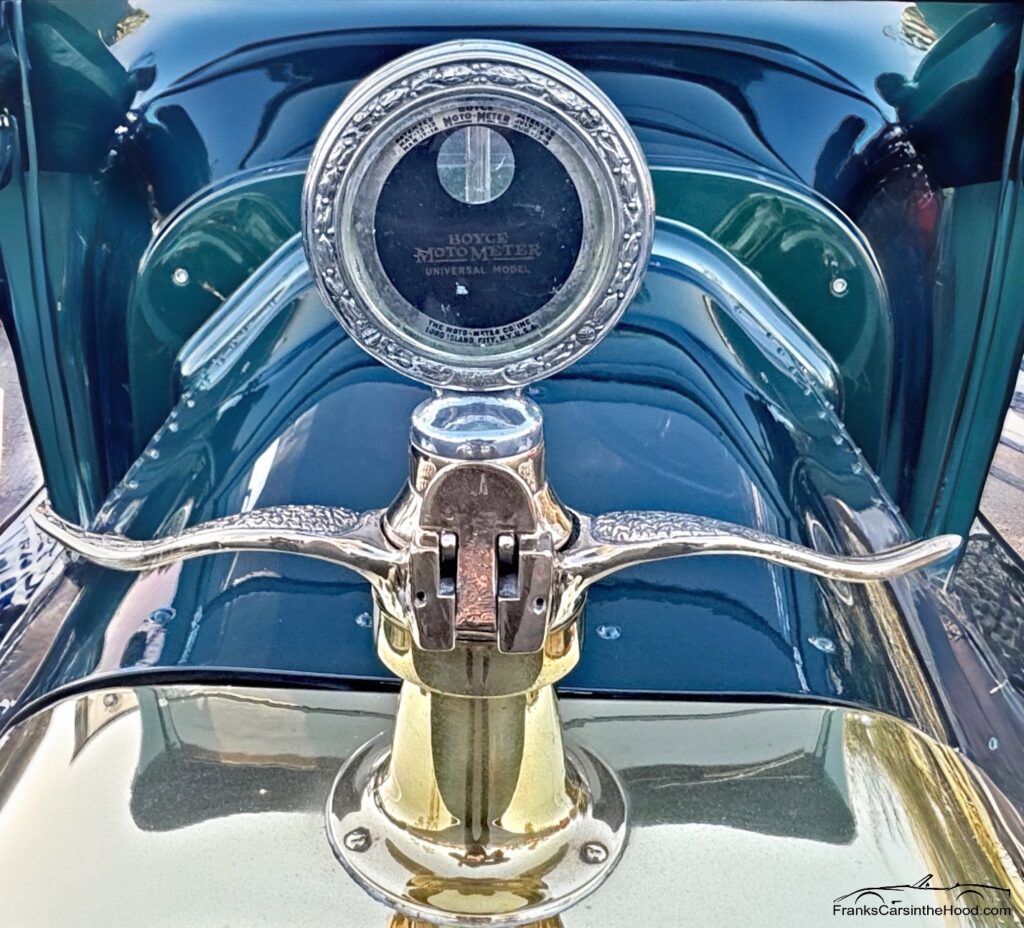
The Ford Centerdoor Sedan made its production debut for the 1915 model year as a Brass-era closed car and it represented Ford Motor Company’s first regular production closed-body passenger automobile. Its body was not manufactured by Ford directly; instead, Ford contracted with outside coachbuilders, principally the Fisher Body Company and the Wadsworth Body Company, to supply completed Sedan bodies for installation on the Model T chassis. The Centerdoor spanned the transition from Ford’s Brass Era to the later Black Era: early examples featured brass radiator shells and brass trim, while later cars adopted black-painted radiator shells, standardized fittings, and interior improvements that accompanied the introduction of electric starters, battery systems, and upgraded upholstery.
The Centerdoor reflected carriage-derived town brougham design practice, characterized by an upright roofline, generous glass area, and a centrally positioned door on each side. This arrangement allowed passengers to enter and exit without requiring movement by other occupants.
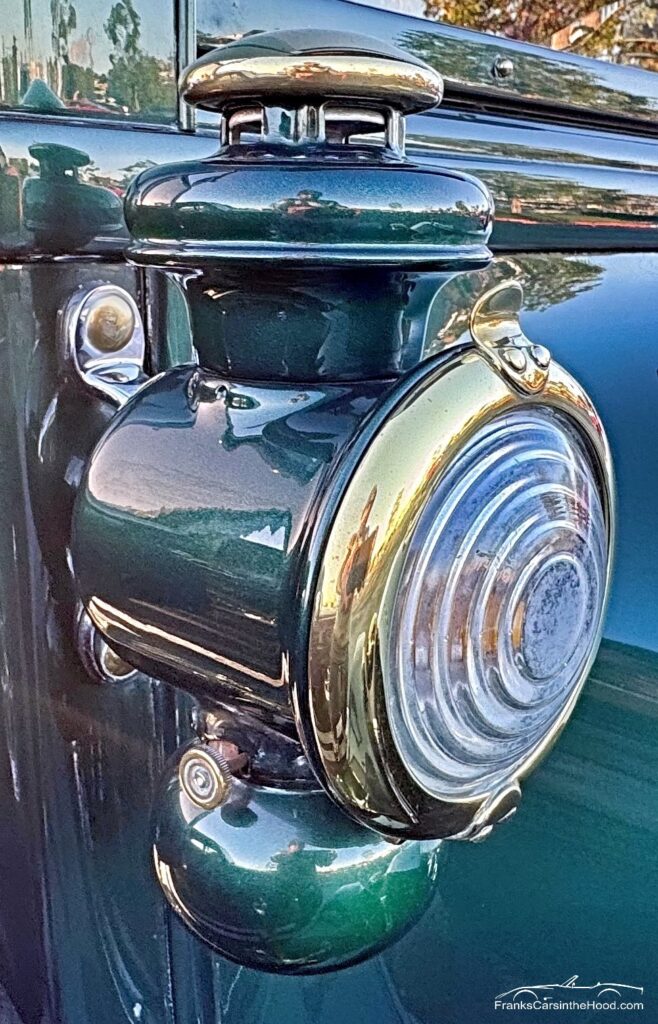
The Centerdoor appeared in the same year Ford adopted electric lighting for the Model T (1915 model year), replacing acetylene and kerosene lamps. These electric lamps were powered directly by the engine-driven magneto and operated without a storage battery. Electric starters and generators were introduced for the 1919 model year and became standard equipment on closed cars, including the Centerdoor, by approximately the 1920 model year, with the battery recharged by an engine-driven generator.
Early 1915 production Sedans utilized aluminum outer panels over a substantial wooden internal frame. On this particular car, the original wood structure was replaced with an aluminum framework during its restomod build. Beginning in 1916, body panels transitioned to steel, although the underlying wooden structure remained standard throughout production. From 1915 into early 1922, Sedans typically displayed exposed exterior wood trim around the window openings, a detail more frequently associated with Fisher-bodied cars, while Wadsworth bodies appear to have adopted metal trim earlier. Later 1922 and 1923 bodies incorporated metal window trim that concealed the underlying wood structure.
Ford built the Centerdoor Sedan from 1915 through mid-1923. Approximately 478,000 were recorded between 1915 and 1922, including roughly 989 in 1915. The 1923 figures are blended with the new Tudor Sedan and therefore cannot be isolated.
Performance of the Centerdoor was typical of the Model T chassis. The 177 cu in L-head four-cylinder engine produced roughly 20 horsepower, yielding a top speed of 40–45 mph under favorable conditions. Acceleration was modest; period testing methods varied, but 0–30 mph generally required 10–12 seconds, while 0–45 mph, effectively the usable speed range, required 30–40 seconds depending on load, road surface, wind, and grade.
What makes the Centerdoor significant today isn’t just its rarity, but its role in shifting America from open to closed cars. In 1915 that idea felt luxurious; by the time Ford replaced the Centerdoor with the Tudor in 1923, the closed car had become the default shape of the American automobile.
And this particular Centerdoor, with its clean and thoughtful restomod execution, shows just how well the old and the new can coexist. It has enough authenticity to earn a smile at a Model T, Ford, or FoMoCo gathering, enough uniqueness to hold its own at any custom car show, and more than enough personality to fit right in at any Cars & Coffee on a Saturday morning. Most of all, it’s the kind of car that invites conversation — the kind we enjoy having with fellow enthusiasts who appreciate history, ingenuity, and a good story on four wheels.
Thanks for coming along for the ride.
Frank