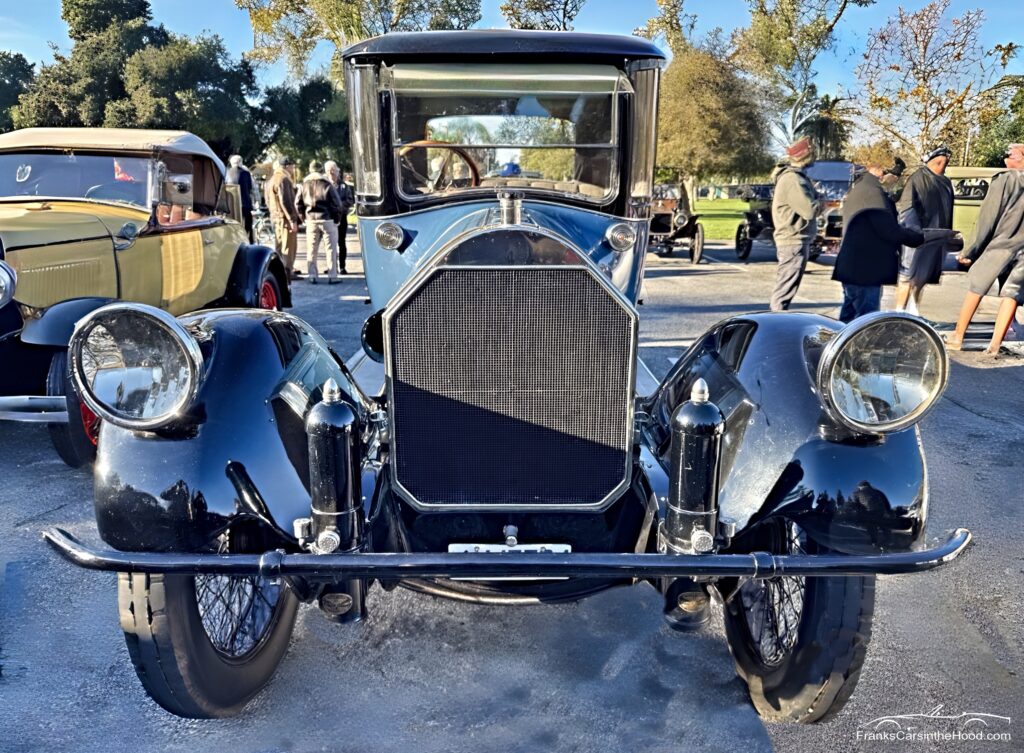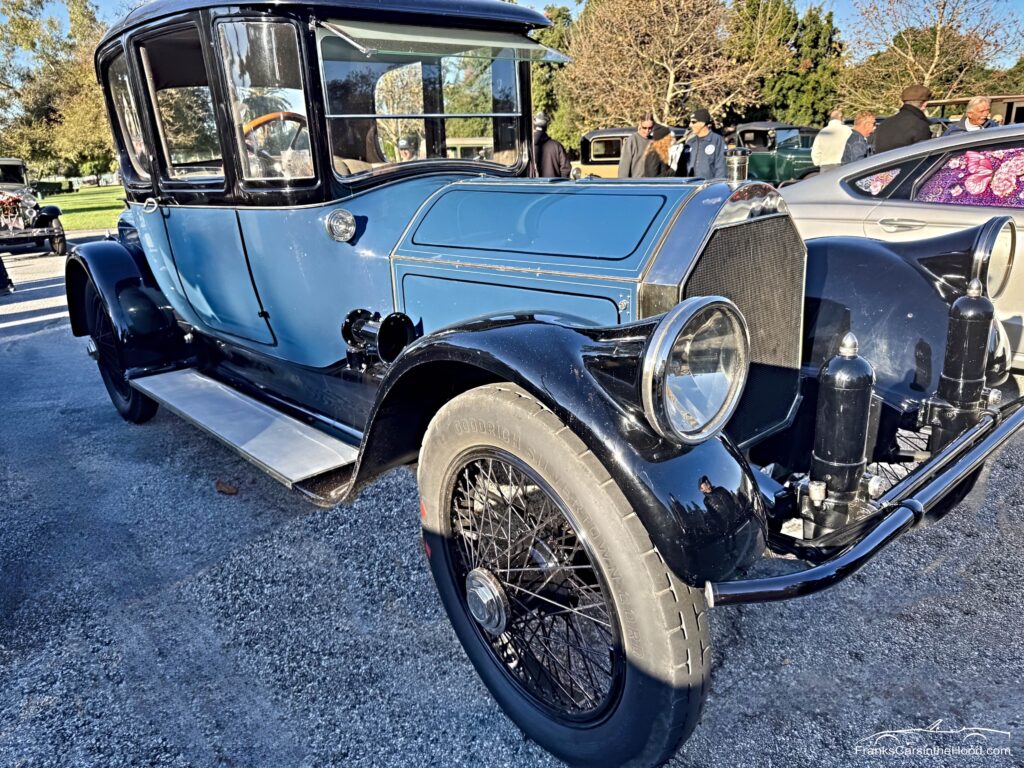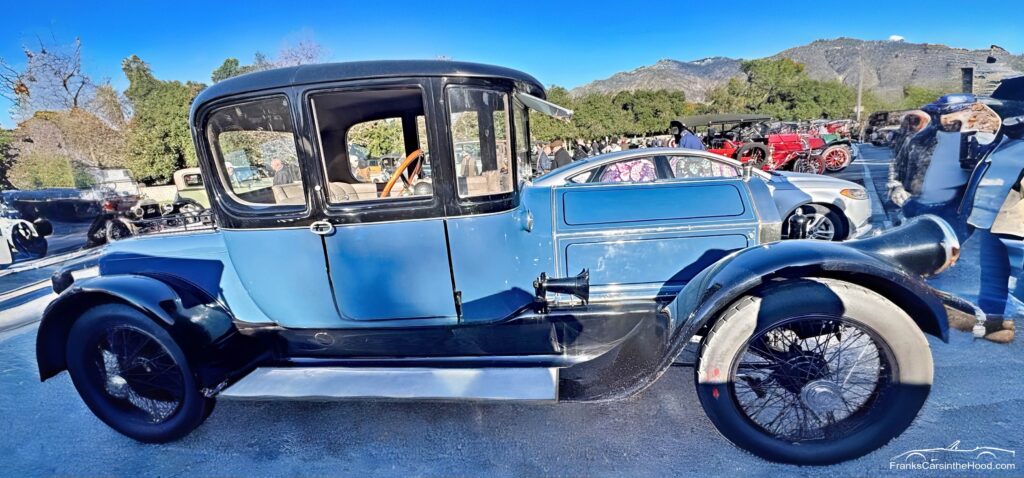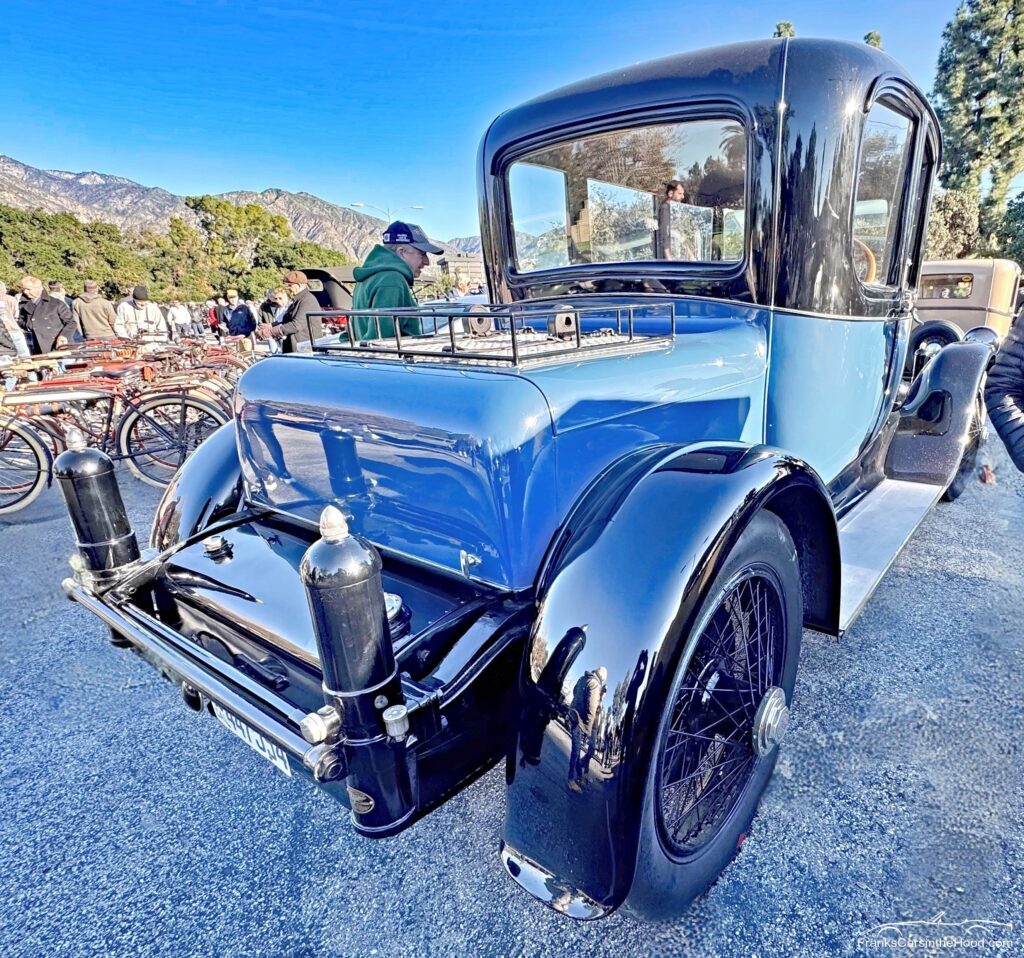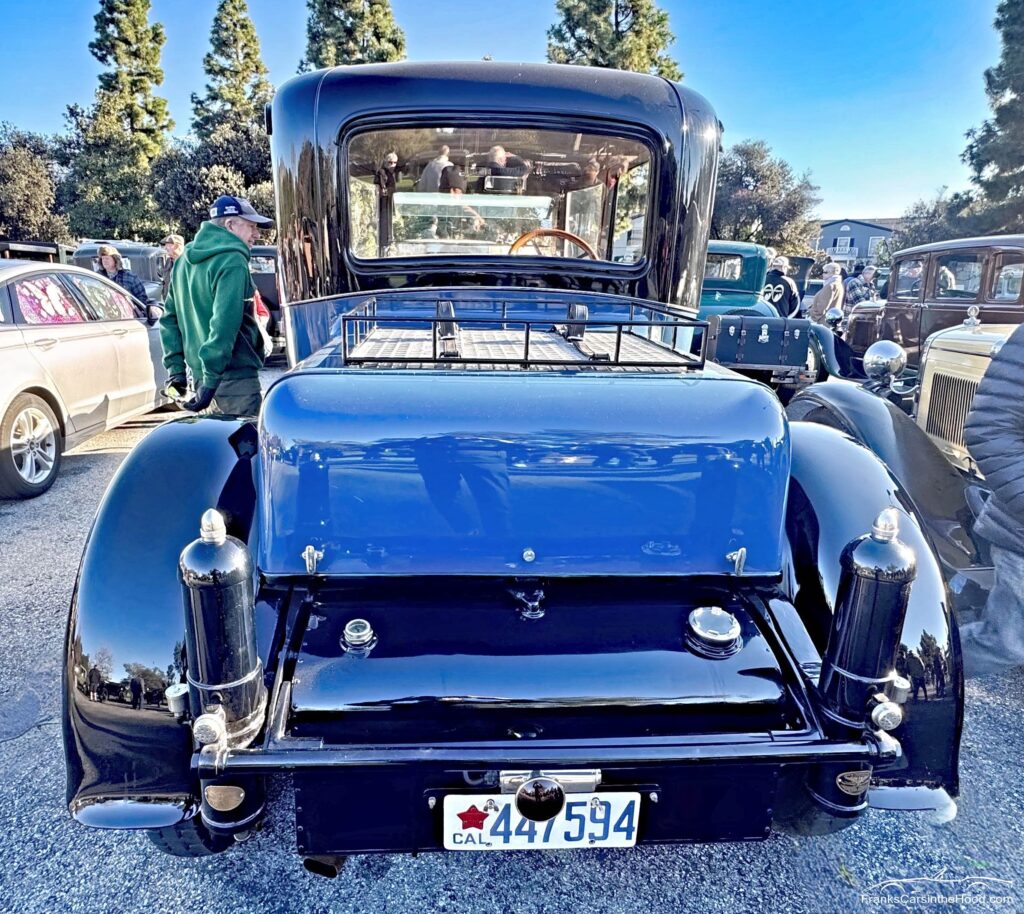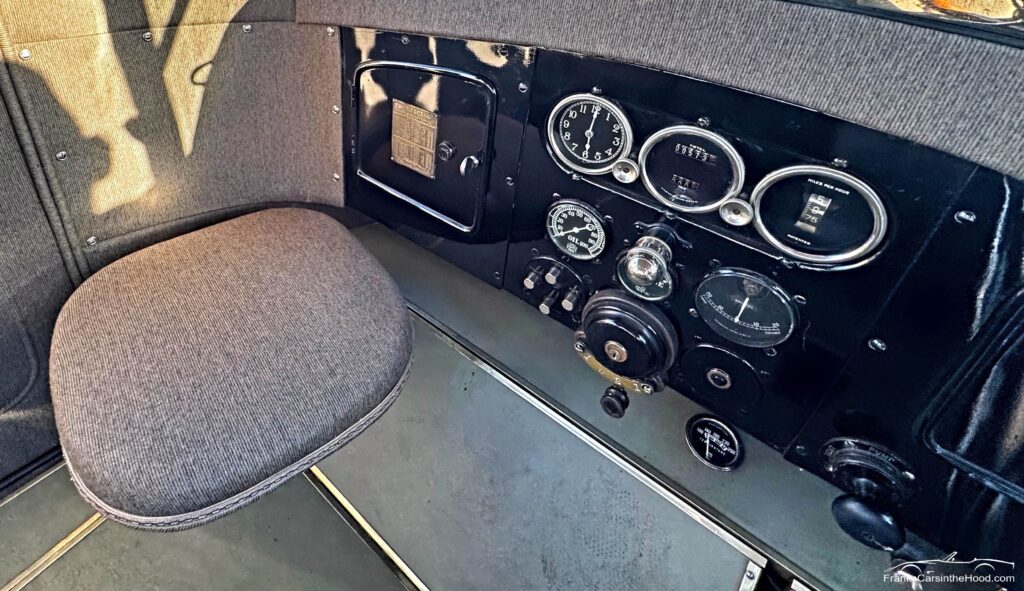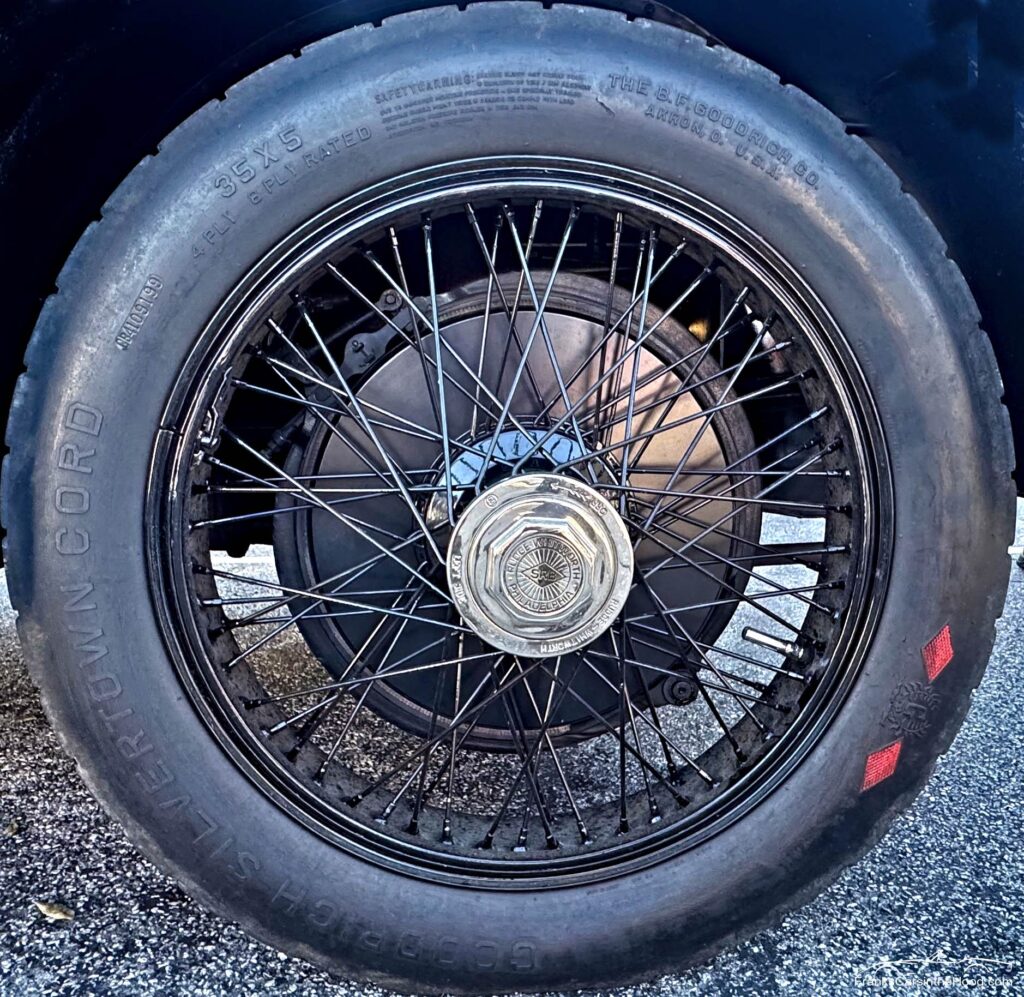
Today’s car is a 1918 Pierce-Arrow Model 48 Coupe, I photographed at the 2025 Annual Horseless Carriage Show in Arcadia, CA. It is finished in a two-tone combination of black and blue with a grey tweed interior. This closed coupe has seating for just three people – two in the main compartment and a third on a jump seat, which was located on the left passenger side
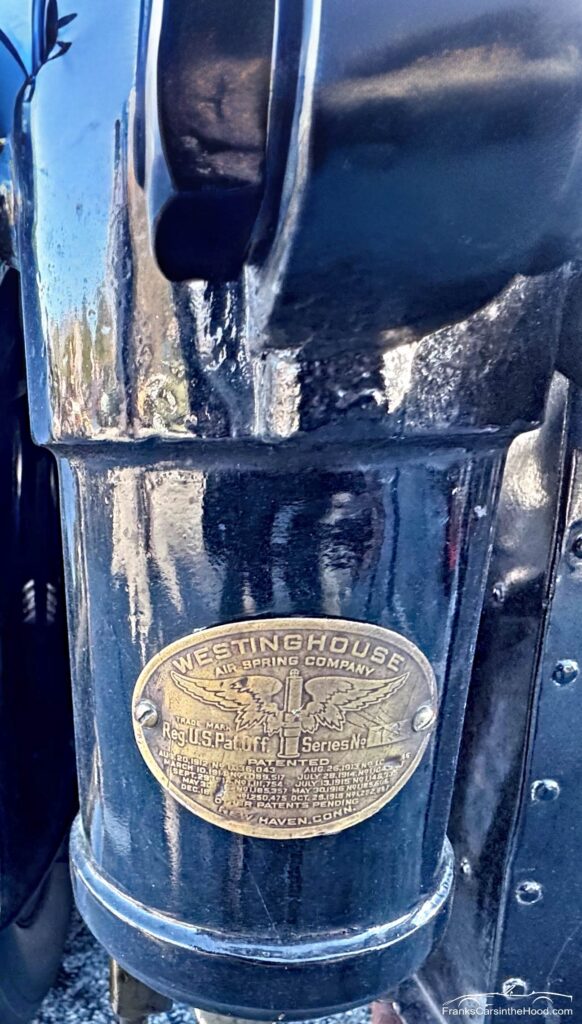
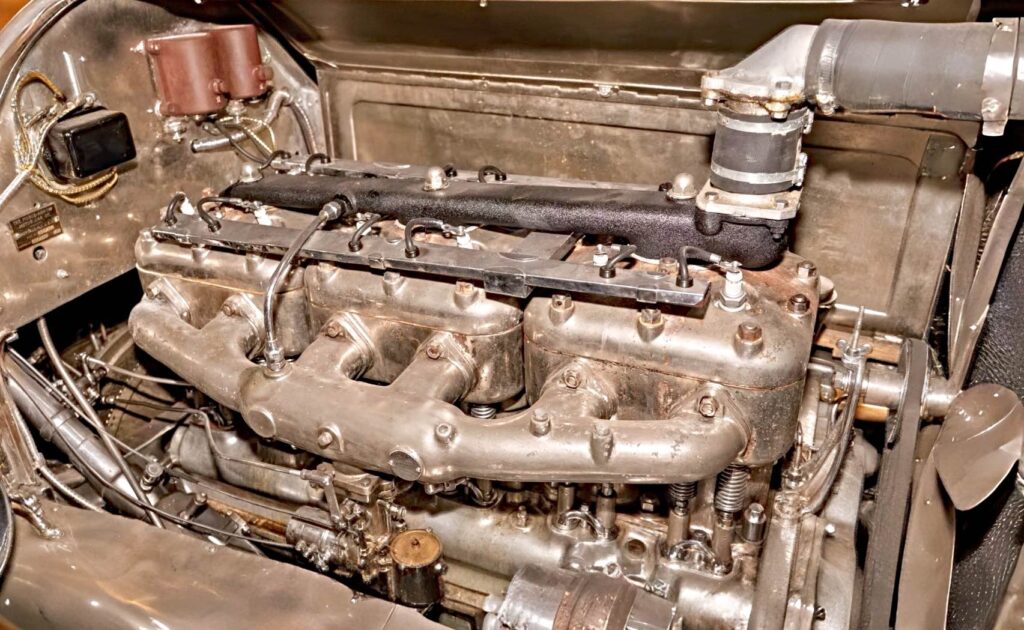
Under the hood is Pierce’s big Dual Valve Six, a T-head inline six with a dual-valve layout, displacing 515 cubic inches (8.4 liters). It was rated at roughly 48 horsepower, but actual output was closer to 90–92 hp on Pierce’s own dynamometers. Fueling was handled by a single Pierce-Arrow updraft carburetor. Power fed through a leather-cone clutch into a four-speed selective-slide gearbox. Braking was accomplished with two-wheel mechanical rear drums doing the stopping, perfectly adequate at the time, a bit of an adventure by modern standards. Suspension was classic Pierce: solid front axle on semi-elliptic leaf springs, live rear axle on three-quarter-elliptic/semi-elliptic leaf springs, with optional Westinghouse air springs helping to smooth out the ride.
Being based on the successful business of its founder, George N. Pierce, and having developed an extensive network of dealers for its very successful line of bicycles, Pierce-Arrow enjoyed excellent distribution. Its sales organization reached into every corner of the United States.
Pierce-Arrow actively sought the business of prominent figures, including the White House, where many Presidents from William Howard Taft through Franklin Delano Roosevelt were transported in the Buffalo company’s automobiles. Pierce-Arrows were favored by movie stars like Mary Pickford, Gloria Swanson, and Tom Mix. The publicity and recognition of product placement like this were supported by an imaginative advertising campaign.
Pierce-Arrow had cemented its reputation for performance and reliability when the Pierce Great Arrow performed exceptionally well in the famed Glidden Tours of the early 1900s, while achieving top marks for reliability in all but one of them. The Glidden Tours (1904–1913) were endurance runs, with the Glidden Trophy being awarded to the most roadworthy car on the tour.
Pierce-Arrow established its own Art Department, long before GM recruited Harley Earl to create their “Art and Colour Department.” Herbert Dawley designed the bodies for the Pierce-Arrow automobiles and worked closely with the clientele to ensure proper colors, materials, and accessories were fitted to the vehicles.
Pierce-Arrow built cars for the people who didn’t need to ask about the price. In the years just after World War I, this was America’s most aristocratic automobile, and the Model 48 was the flagship—long, hushed, and supremely confident about its place in the world. It was a dramatically designed and exclusive car when it rolled out of Pierce-Arrow’s Buffalo, New York factory.
Pierce-Arrow’s success enabled the company in 1906 to construct a massive integrated factory in Buffalo that covered 1.5 million square feet on the site of the 1901 Pan-American Exposition. Unit production from Pierce-Arrow was never high (it took until 1912 before Pierce-Arrow built its 12,000th car) but in quality and materials there was none better and Pierce-Arrows were enthusiastically snapped up by the elite at prices that made Packards and Peerlesses seem inexpensive by comparison.
The Pierce-Arrow Model 48 ran from 1910 through 1919, one of the longest-running early models in the Pierce-Arrow lineup. In 1918, total production was only about 2,014 cars spread across a wide range of body styles, and no reliable factory breakdown survives, so exact numbers for three-passenger Coupes are unknown, other than that they were a very small part of an already small run, with only a handful known today. The three-passenger Coupe was among the more unusual body styles offered, since most wealthy buyers chose open seven-passenger touring cars, limousines, or town cars that let the chauffeur do the work, and this one suggested a different kind of owner—someone who liked to drive, who still appreciated privacy and style. Pierce’s own price lists show a Model 48 three-passenger Coupe at about $5,700 in 1916, and by 1917–1918 it would still have lived in the mid-$5,000 range. On paper, the numbers were serious for 1918, with modern estimates putting top speed at about 50–55 mph, which was plenty when you ran out of roads before the engine did, and while nobody bothered to quote 0–60 times, 30 seconds is a fair estimate given the weight and gearing.
By the time the 1920s were in full swing, advances in V8 power, hydraulic brakes, and lower-priced luxury began to nibble at Pierce-Arrow’s safe perch at the top, but in 1918 the Model 48 was still unmatched. When a rare three-passenger Coupe shows up at a concours today, people tend to linger, not just to admire the craftsmanship, but to take in the dignity of it all. There are no hood ornaments screaming for attention and no wild paint, just restrained elegance and quiet confidence in every detail. This older restoration can still hold its head high. Yes, it could use a fresh update, but it still draws an admiring crowd and feels perfectly at home at a Brass Era show, an Orphans show, even a relaxed Cars and Coffee event or out taking a leisurely tour of Arcadia after the 2025 Annual Horseless Carriage Show with like-minded enthusiasts.
Thank you for riding along.
Frank