Last updated on March 1, 2026
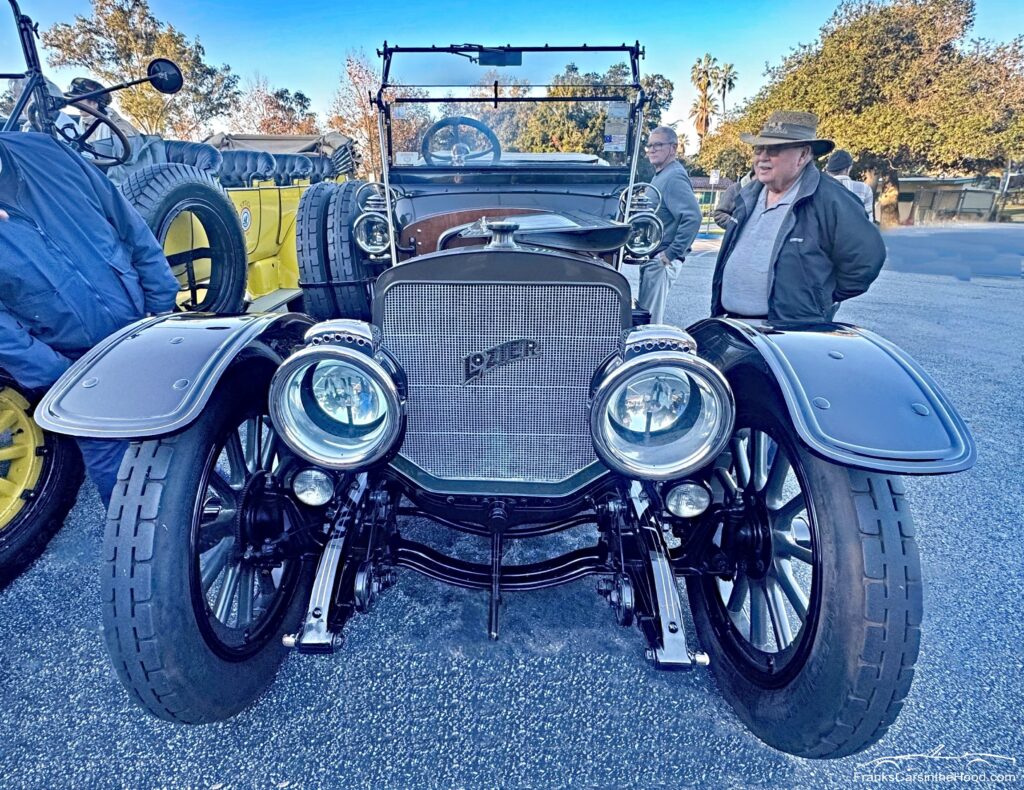
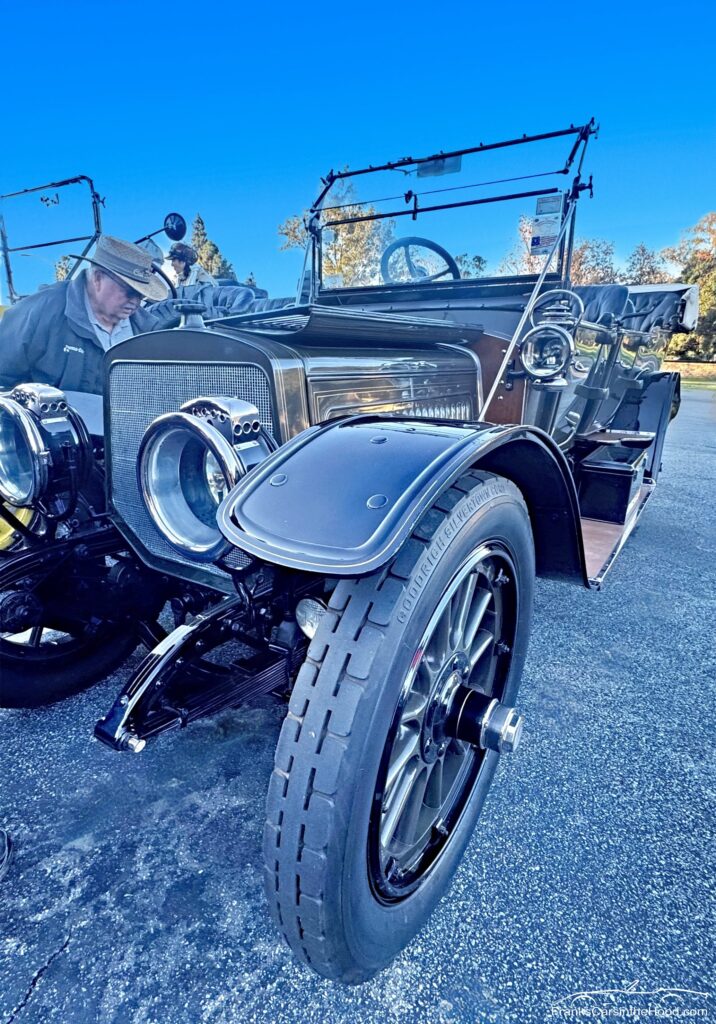
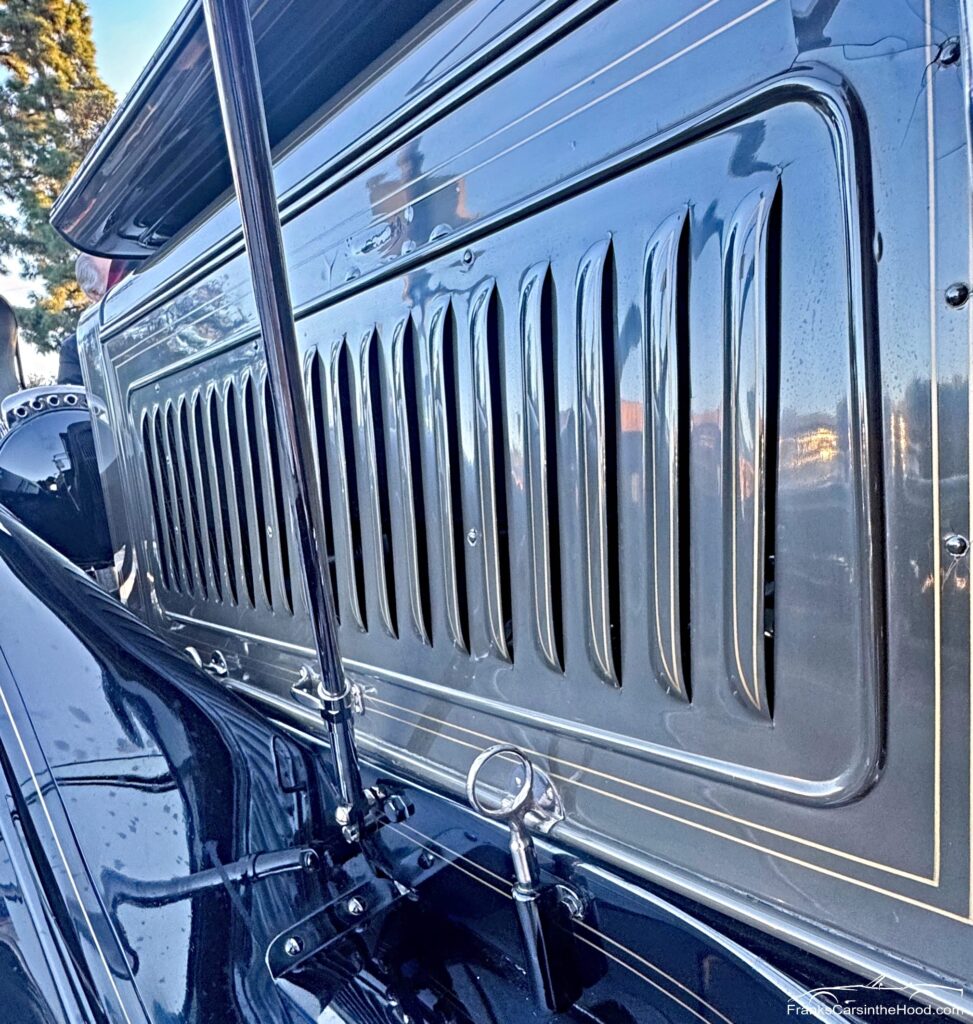
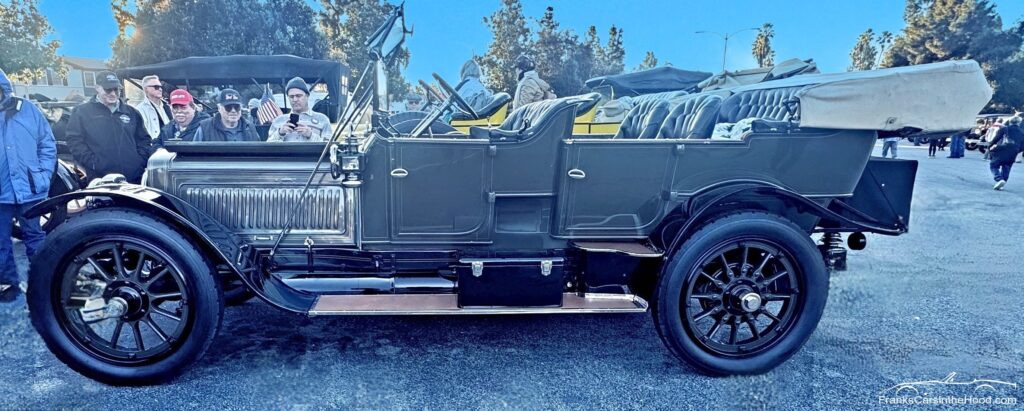
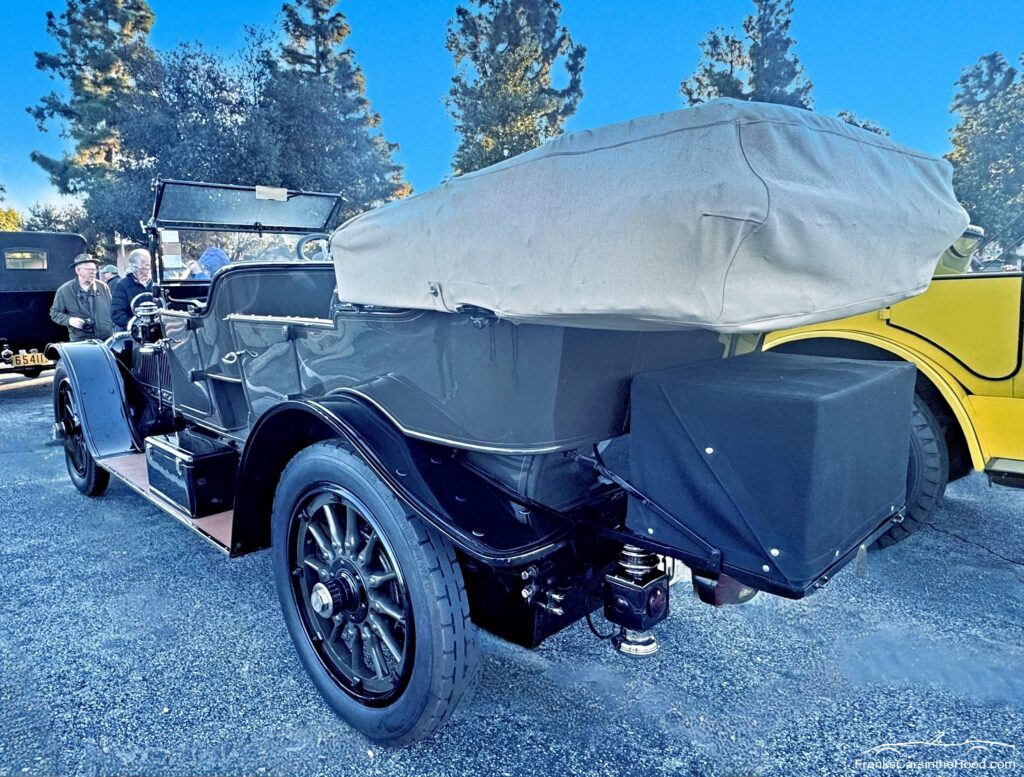
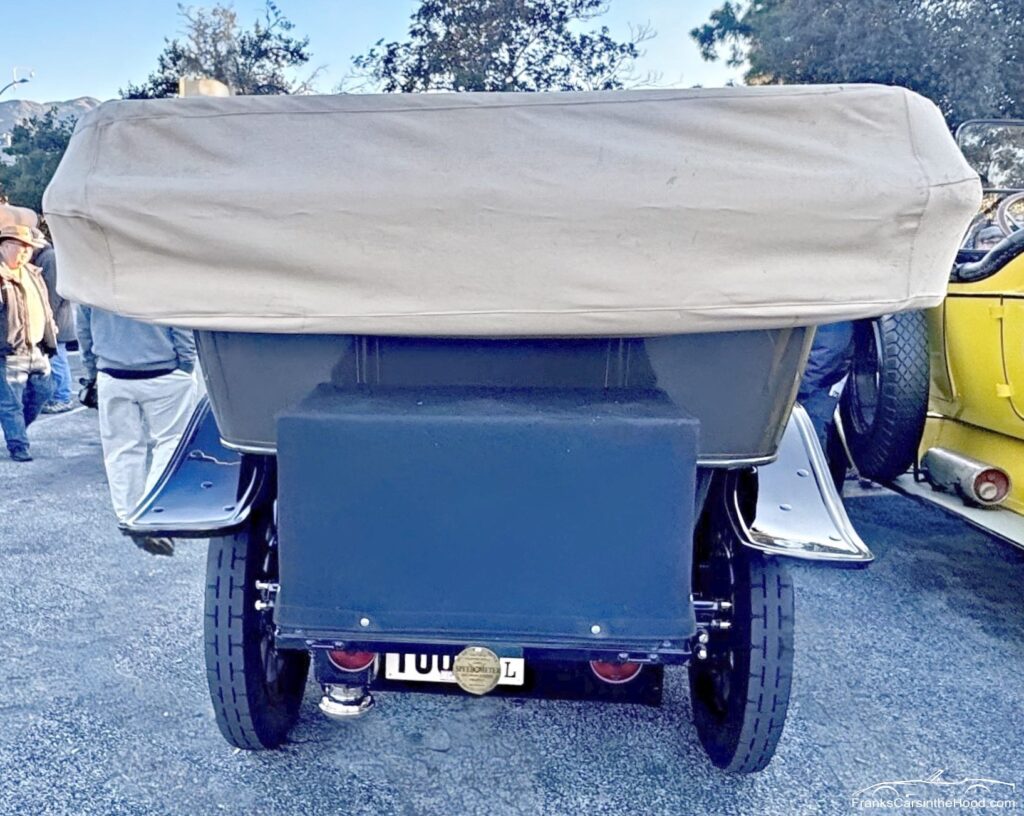
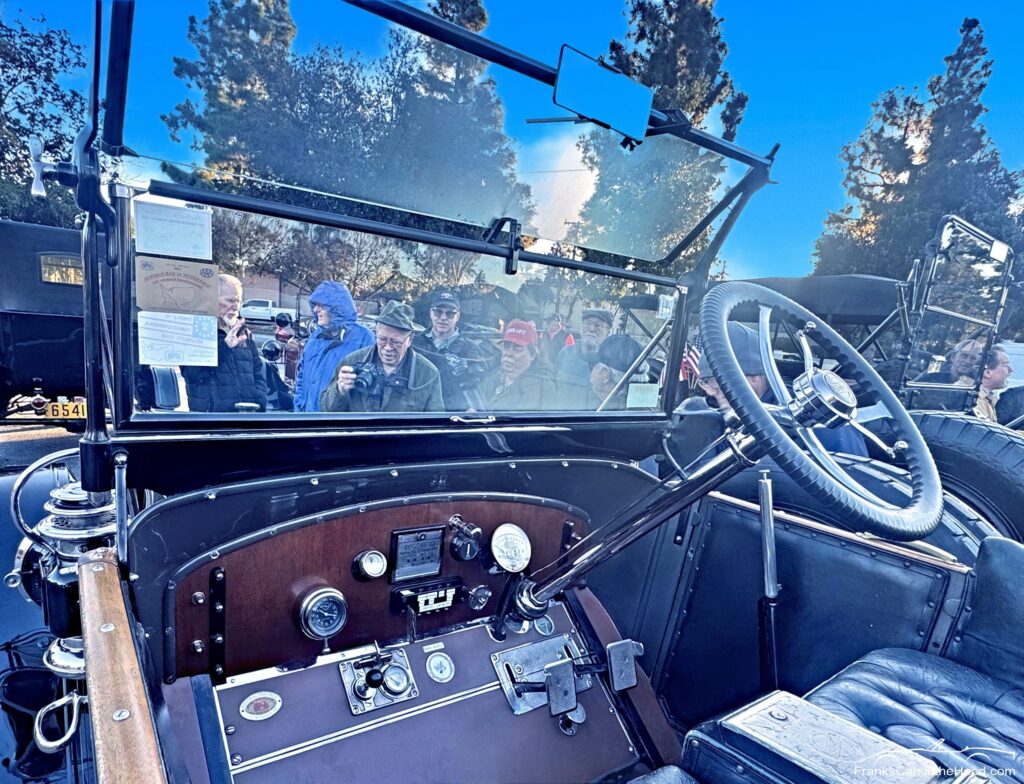
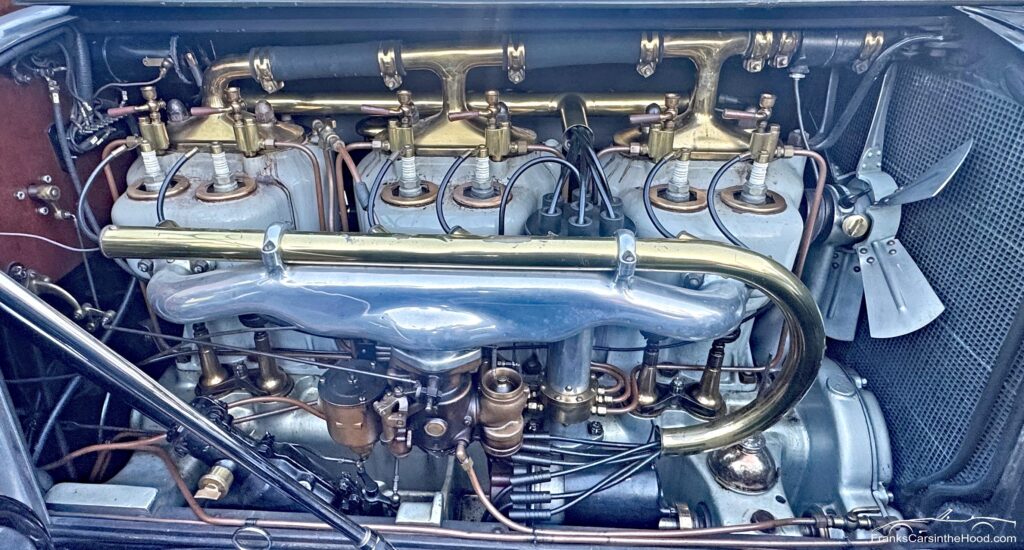
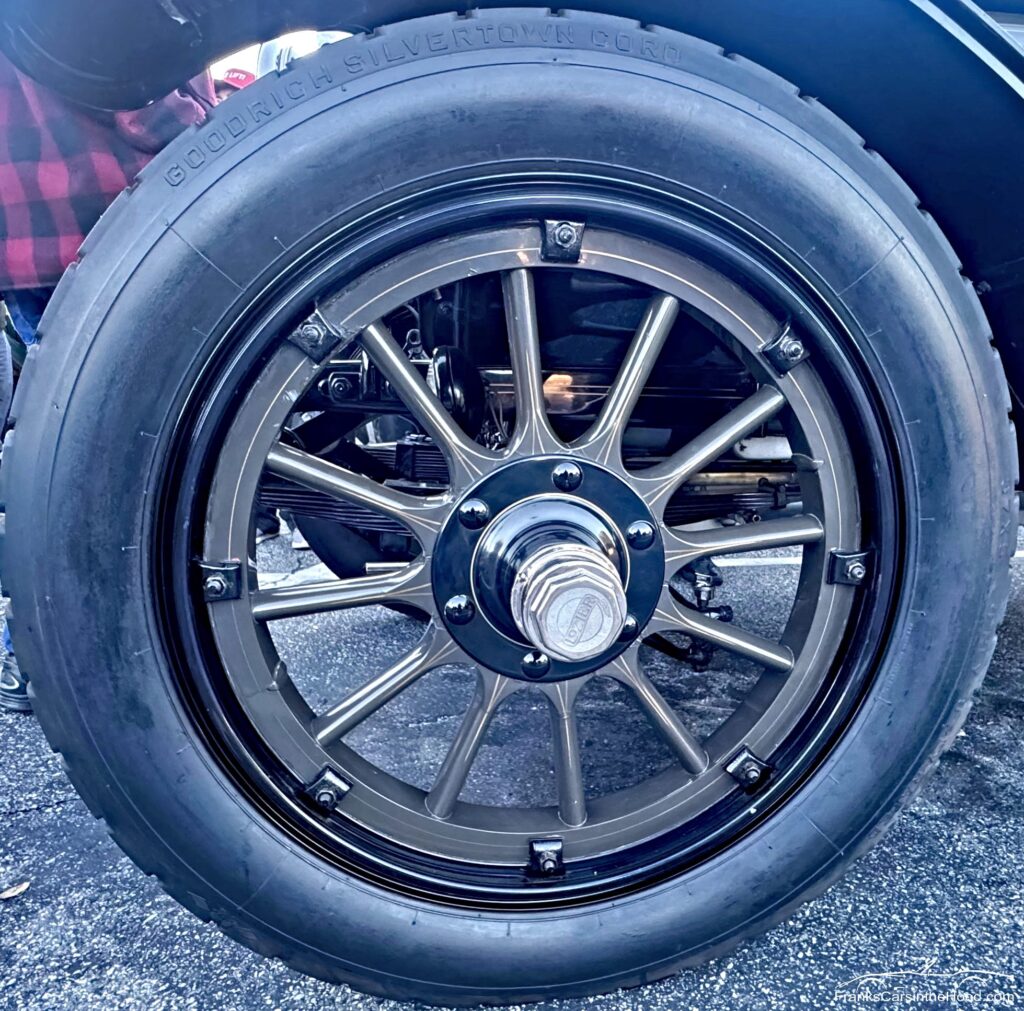
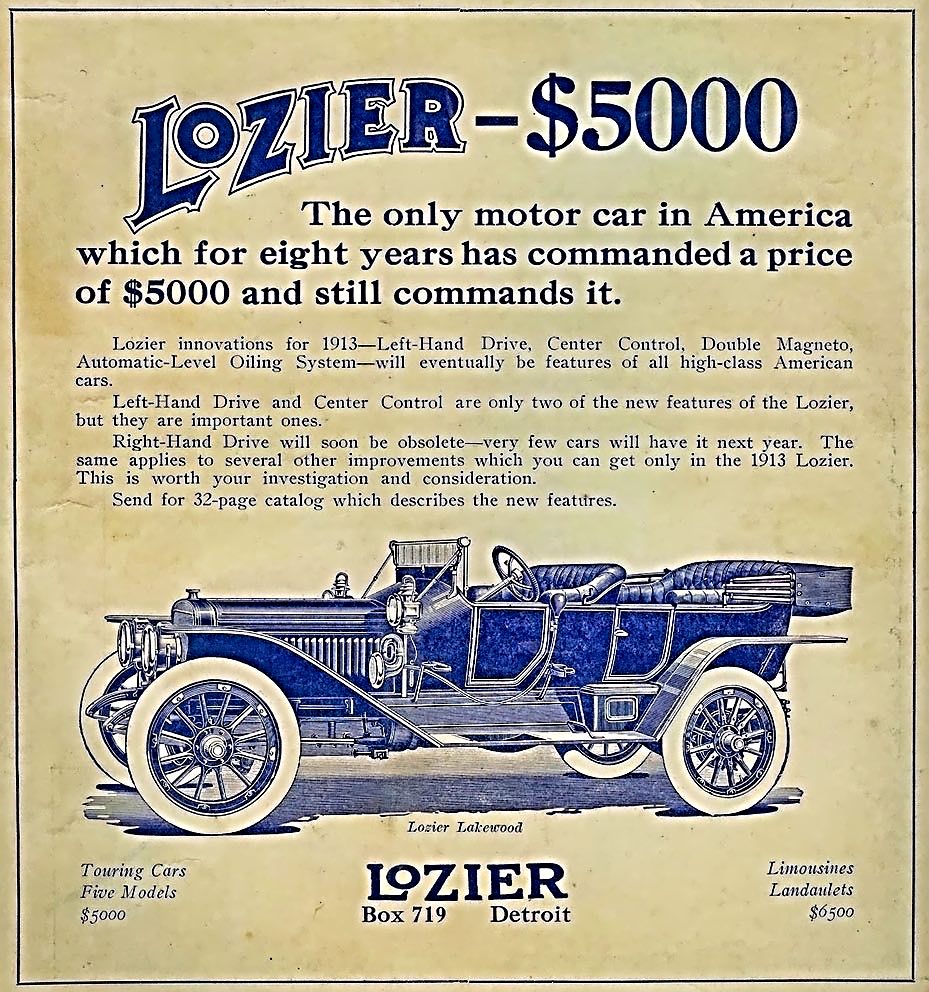
Today’s car is a 1911 Lozier Model 51 Seven-Passenger Touring, which I photographed at the 2025 Annual Horseless Carriage Show at Arcadia Community Regional Park in Arcadia, California. It’s finished in olive green with gold pin-striping and rides on 37″ x 5″ matching wood wheels. The black tufted leather upholstery, still stuffed with horsehair as it was originally, is topped by a tan canvas top, and the running boards and floorboards remain covered in brown linoleum, just as Lozier intended. This Lozier carries chassis no. 3574 and engine no. 3539. Power comes from a 51 hp, 554 cu in T-head inline six-cylinder engine, with cylinders cast in pairs, fed by a single updraft carburetor and backed by a four-speed manual transmission. Braking is handled by rear-wheel mechanical drum brakes, with a solid front axle with longitudinal semi-elliptic leaf springs and friction shocks, and a three-quarter platform rear suspension, which is a combination of longitudinally mounted semi-elliptical, and a quarter elliptical leaf springs.
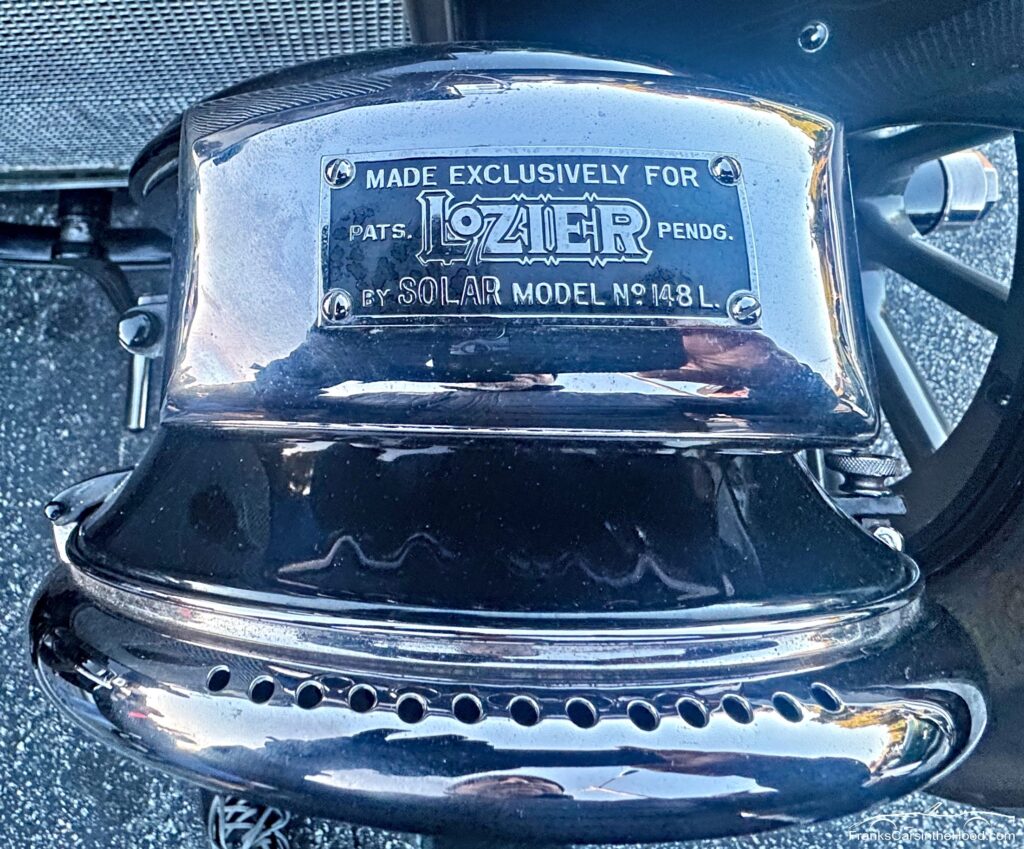
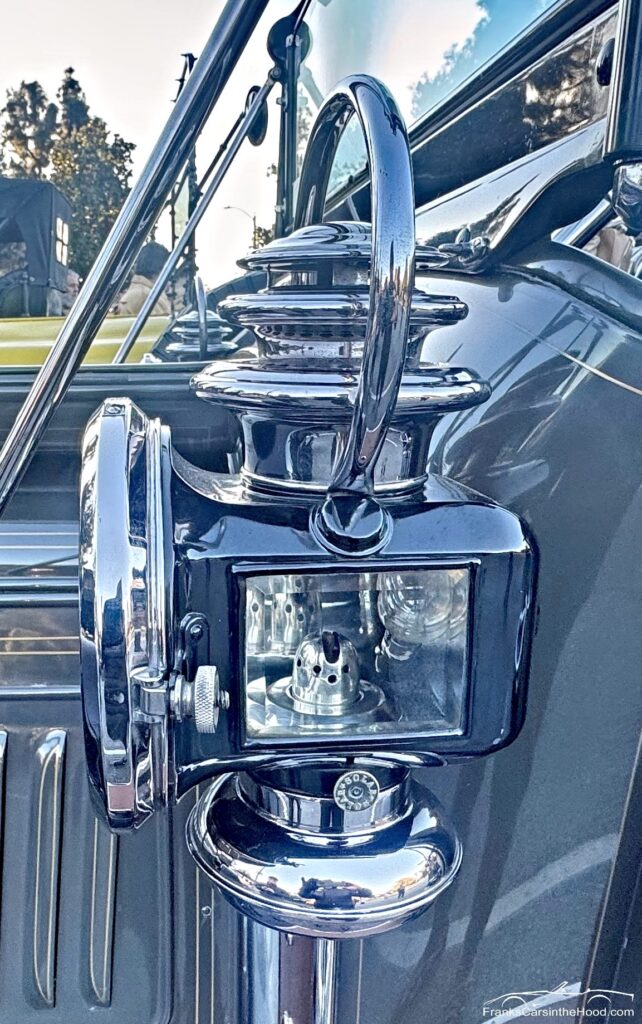
One of the great things about this Lozier is how the details tell its story. A period manual even noted, “When you reach 70 miles per hour, you may shift into fourth gear,” and this car backs that up with handwritten notes still on the kickboards, including one that reads, “Fourth / 1800 RPM / 78 MPH.” The tool compartments are lined with cork to prevent rattles on tour, and the car remains remarkably original, from its major mechanical components and body wood down to small details like the Solar headlamps marked “Made Exclusively for Lozier.” Even the beveled glass on the Waltham clock and the fine instrumentation remind you how carefully this car was built. For easier starting, Mr. Pearson added an air starter years ago, and it’s proven reliable ever since.
Henry M. Lozier didn’t come to automobiles by accident. Before building cars, he built sewing machines, bicycles, and marine engines, earning a reputation for precision manufacturing and quality long before the auto industry found its footing. Founded in Plattsburgh, New York, Lozier saw the automobile as the next step in personal transportation and brought that same engineering mindset into his new venture. Although he died in 1903, the standards he set for craftsmanship and performance carried forward. Control of the company passed to his son, Harry C. Lozier, who had already been involved in the business and stepped into leadership after his father’s death.
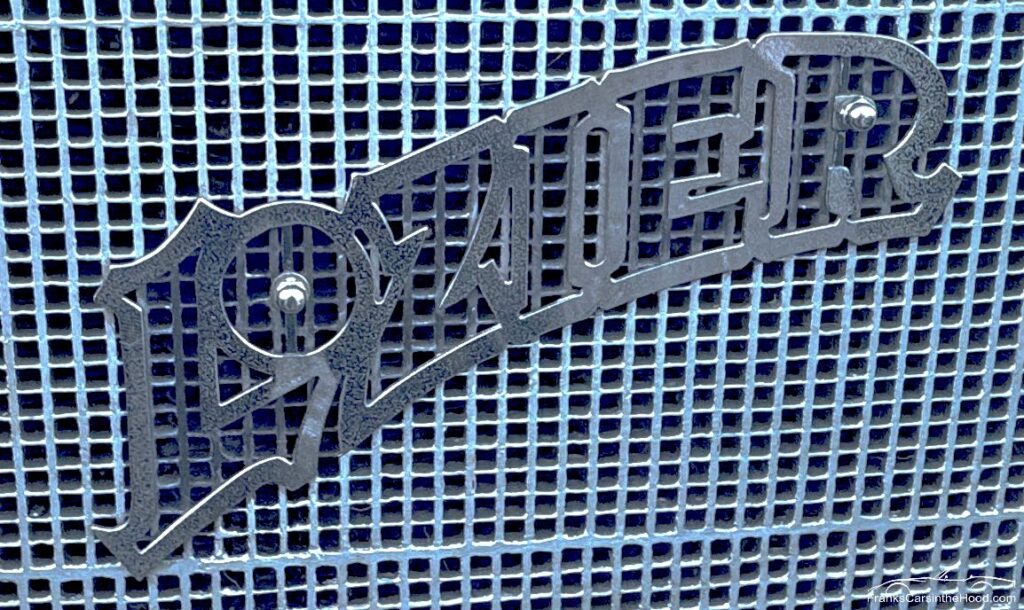
Lozier was never meant to be a mass-market car. The company set its sights squarely on the top of the American luxury market from the very beginning, and by 1910 it had moved its headquarters and main factory to Detroit, Michigan. The cars were large, powerful, and beautifully finished, built for buyers who wanted prestige as much as performance. Production was always limited, and that exclusivity was part of the appeal. Lozier also obsessed over the details, from door straps, gauges, and hardware to the mechanical pieces like the crankcase, cooling fan, nickel valves, and roller-bearing crankshaft. This wasn’t just a collection of parts bolted together, it was a carefully considered machine. With its size, presence, and finish, the Model 51 stood comfortably alongside Packard, Pierce-Arrow, and Peerless, and captured the confidence of the Brass Era at its peak.
Lozier’s downfall wasn’t due to poor engineering or lack of ambition. In many ways, the company was a victim of its own standards. The cars were expensive, production was limited, and as the industry shifted toward greater efficiency and larger volume, Lozier’s handcrafted approach became difficult to sustain. By 1915, financial pressures forced the company into receivership, and one of America’s great Brass Era luxury marques quietly faded away. The company disappeared, but the cars endured, and more than a century later, examples like this Model 51 still stand as reminders of a time when American luxury was built without compromise.
Lozier production was always limited, with the company never building more than a few hundred cars in a year and only a few thousand in total, which made cars like the Model 51 rare even when new. When new, this car cost $5,955—including $75 for nickel plating and $125 for its 100 mph Jones Speedometer—money that bought not just size and luxury, but serious engineering. The Model 51 had the kind of effortless power and long-legged pace that made it a true high-speed touring car for its day, built to cover big distances in comfort and with confidence.
This 1911 Lozier exemplifies a level of quality and finish that is hardly indicative of a four-decade-old restoration. From the sweeping proportions of its seven-passenger Touring body to its beautifully executed details, the Model 51 stands as one of the finest and most thoughtfully engineered Brass Era luxury automobiles built in the United States. It would be at home at any concours or prewar gathering, drawing a crowd at a local Cars and Coffee or setting the pace on a leisurely Arcadia tour alongside the other pre-1932 brass cars from the 2025 Annual Horseless Carriage Show.
Thank you for riding along with me and for being part of the Frank’s Cars in the Hood community.
Frank