Last updated on March 20, 2026
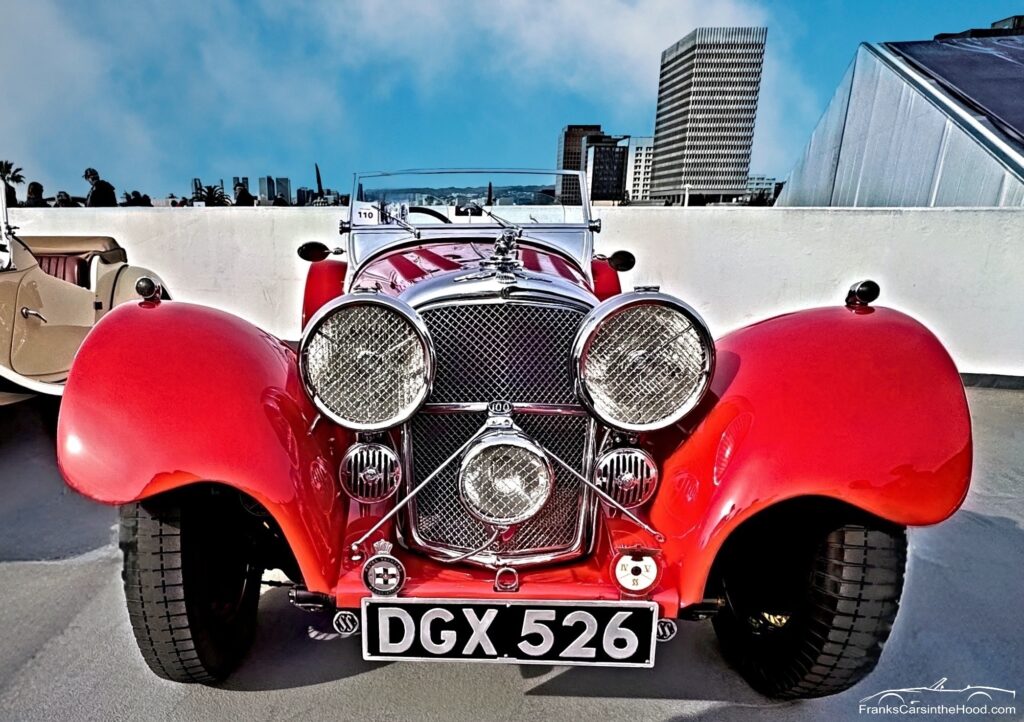
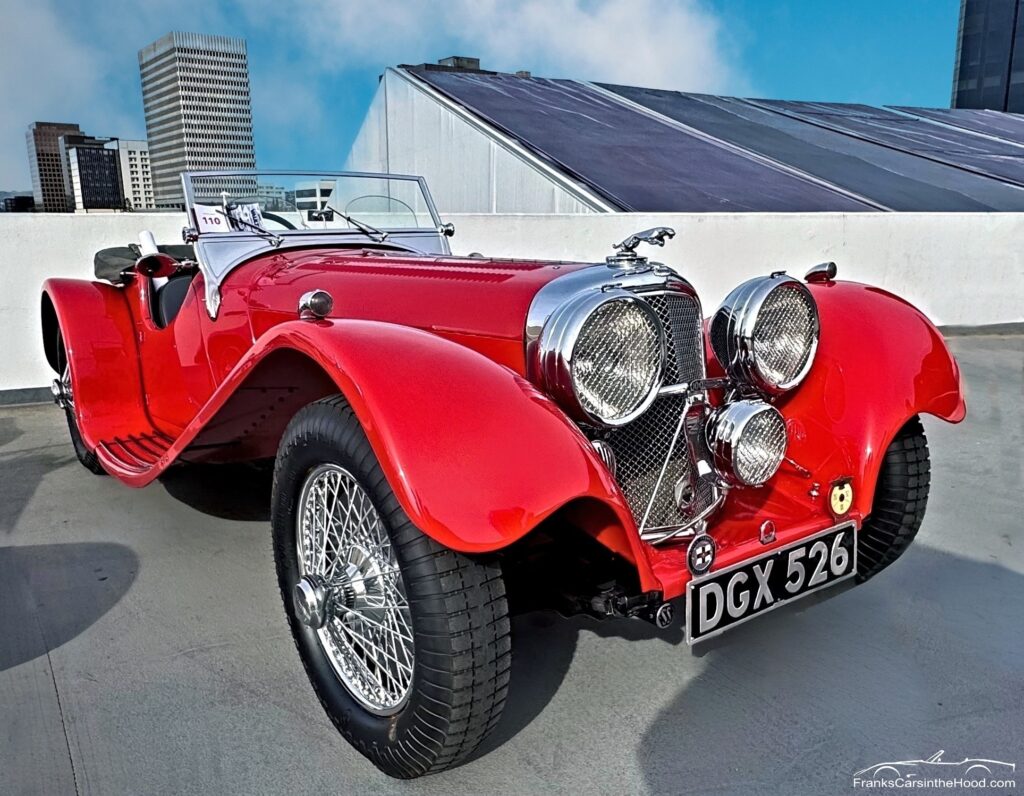
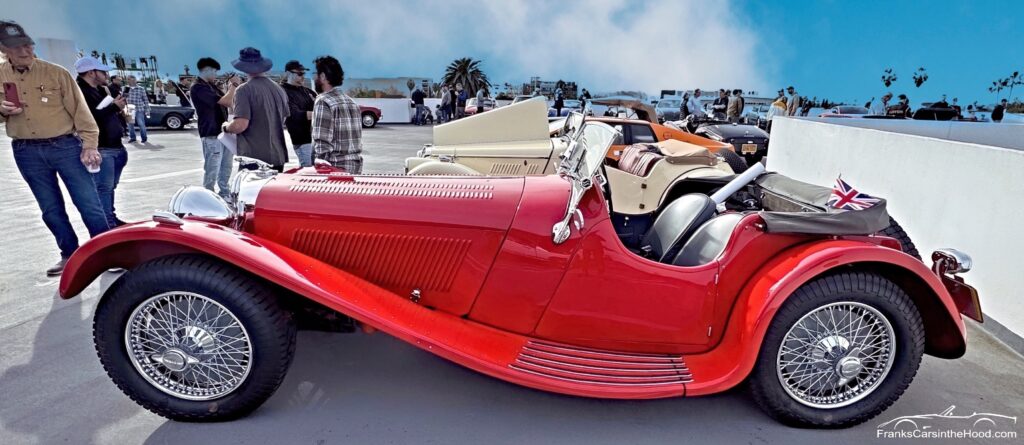
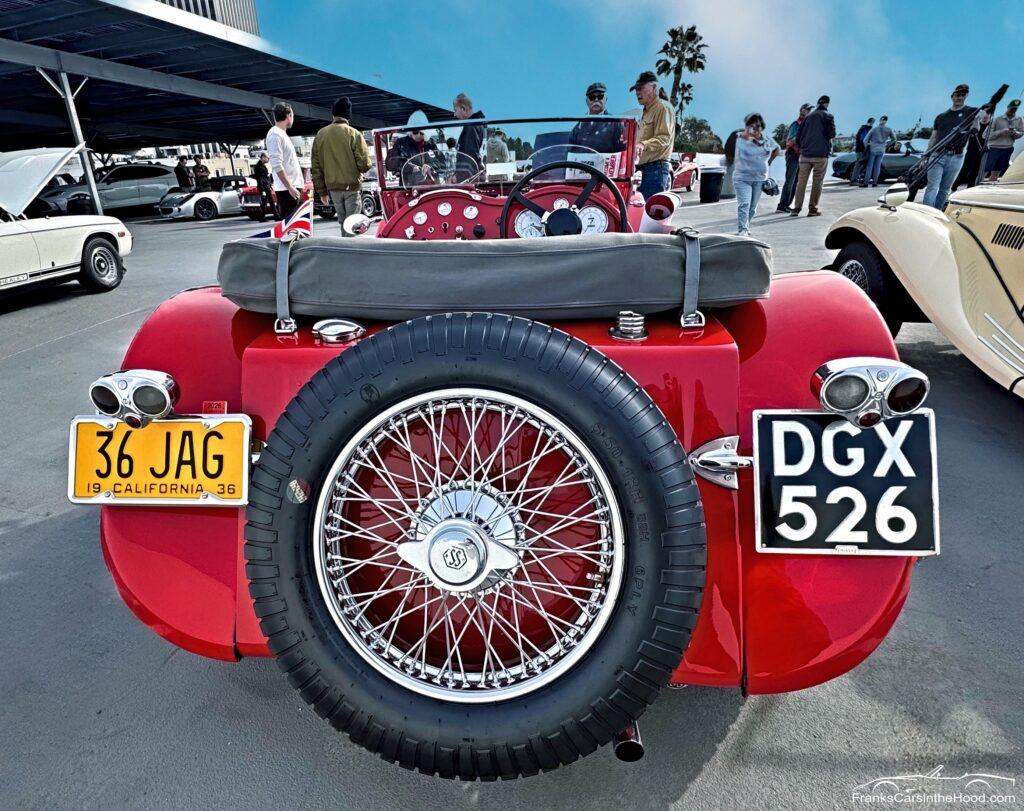
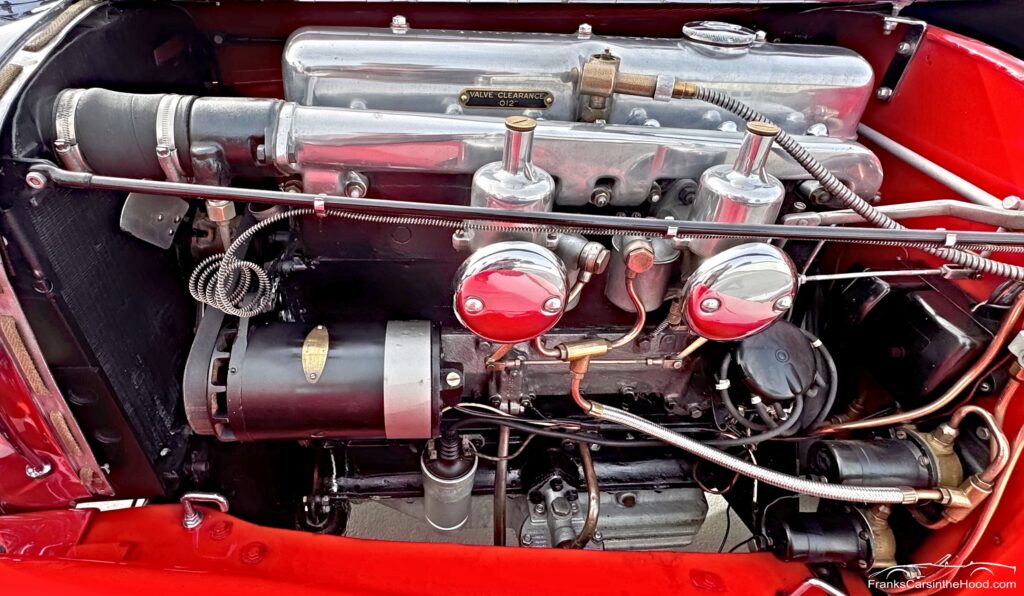
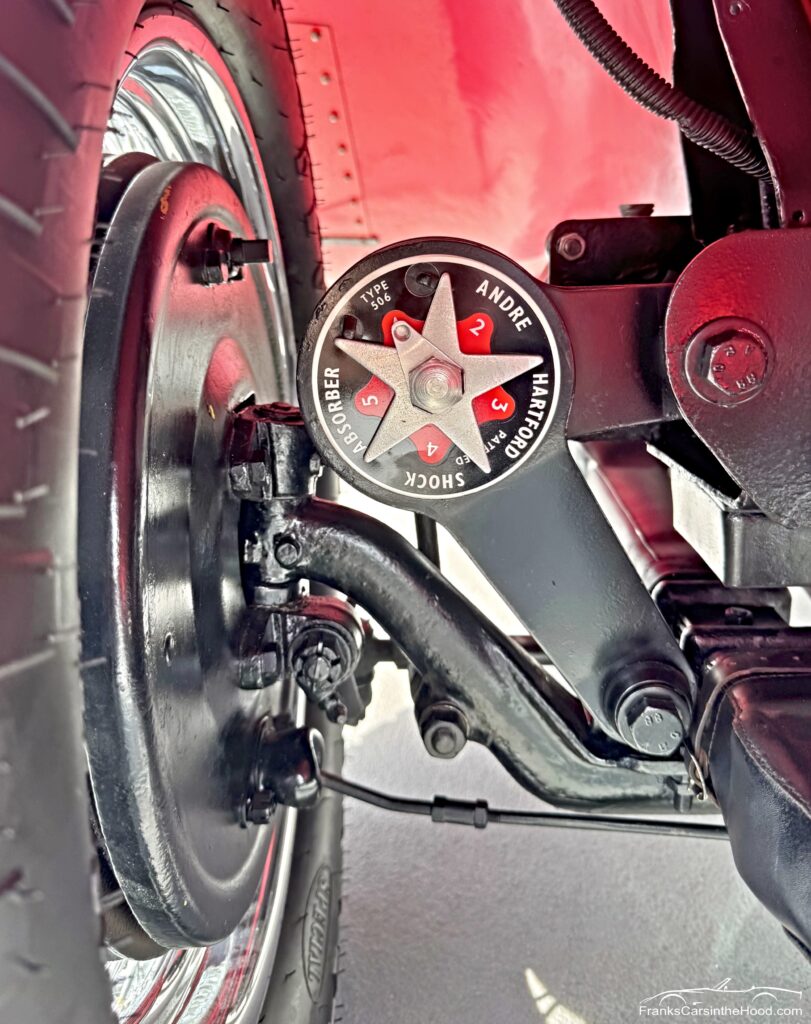
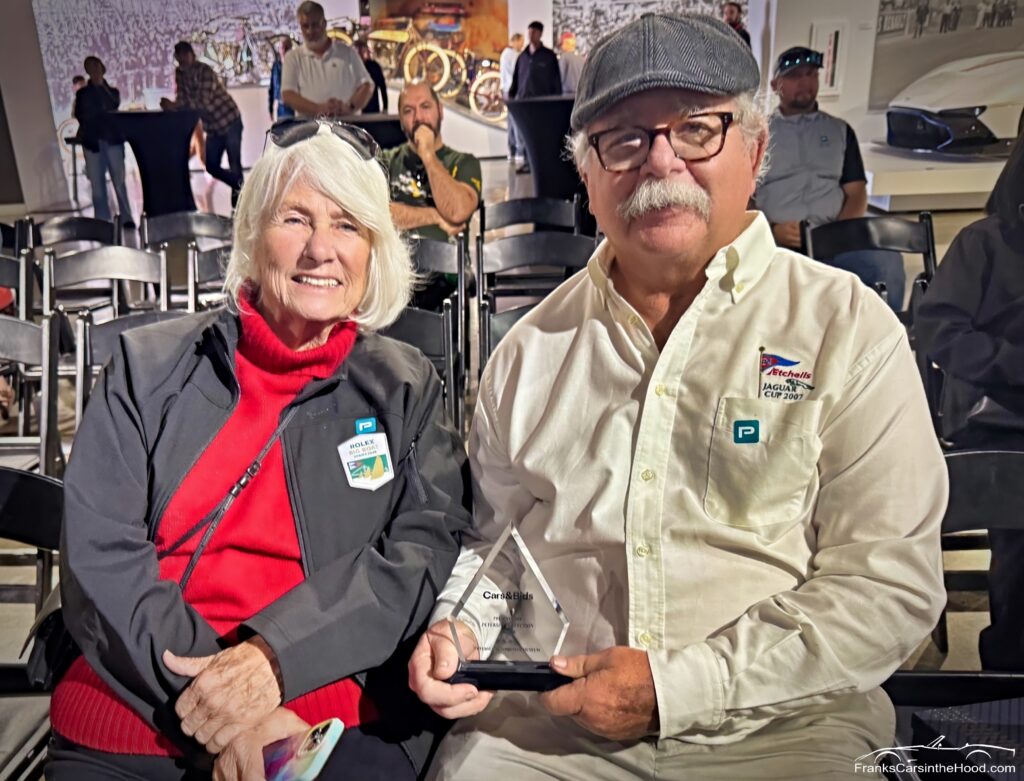
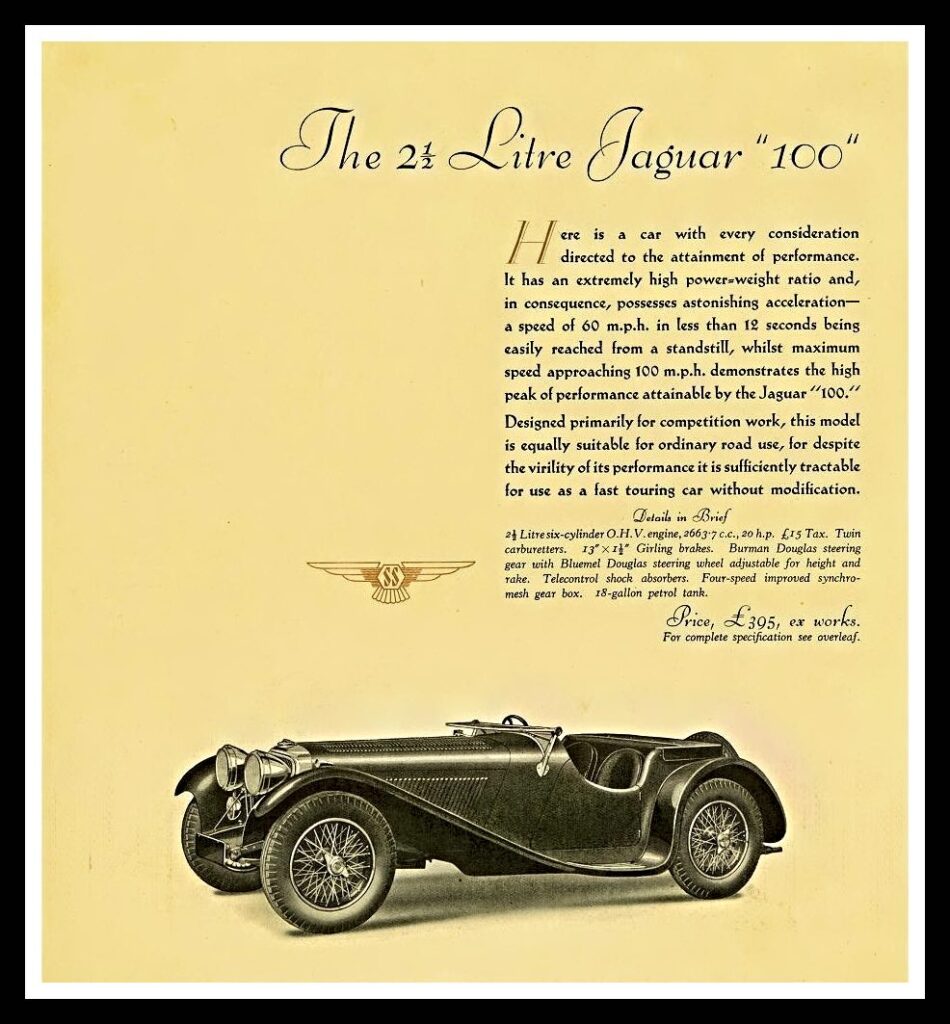
Today’s car is a 1936 SS 100 Jaguar Roadster, owned by Don and Lori Becker, which I photographed at the England Calling: A British Morning Cruise-In held at The Petersen Automotive Museum in Los Angeles, CA. It’s finished in bright red with a black interior and a black Double-duck canvas fabric soft top, though it was originally delivered in Grey with a silver interior, a combination not listed in the standard SS factory color palette. This SS 100 carries chassis no. 18041, original engine no. 251114, current engine no. 249720, and body no. 4774. It is powered by a 102 hp, 2½-litre overhead-valve inline six-cylinder engine supplied by the Standard Motor Company with dual SU carburetors. Power is delivered through a four-speed manual transmission to a Salisbury rear axle with a 4.25:1 final drive ratio. Braking is handled by Girling mechanical drum brakes, cable operated at all four corners. The suspension consists of a solid front axle with longitudinal semi-elliptic leaf springs and Andre Hartford friction dampers at all four corners, with a live solid rear axle and semi-elliptic leaf springs.
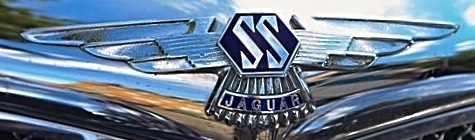
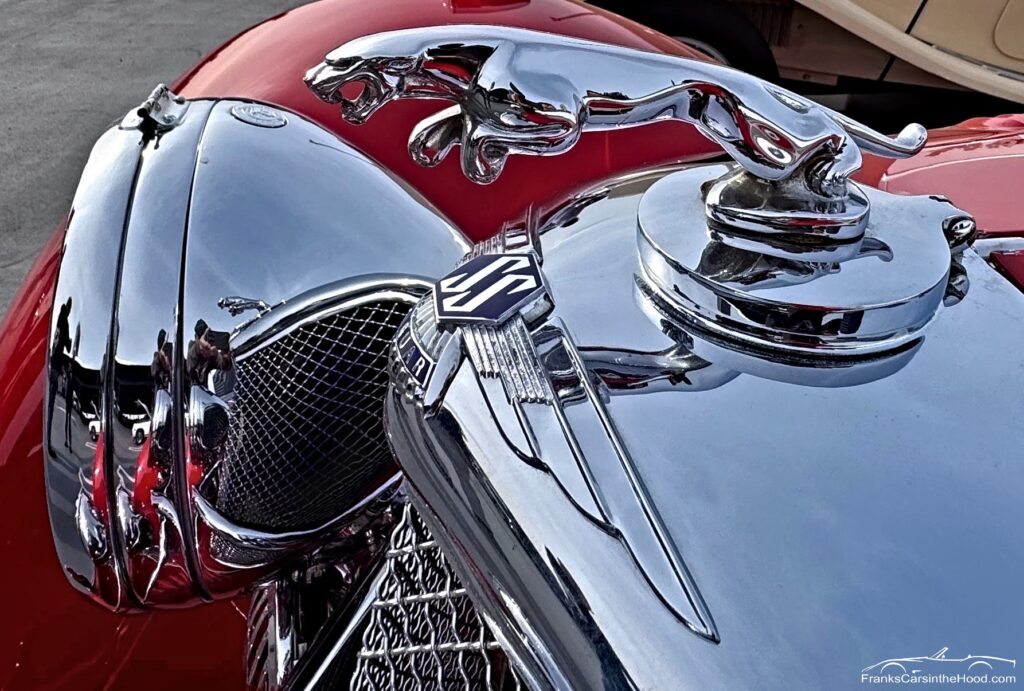
The story behind the SS 100 begins with a young Englishman named William Lyons, a man with a remarkable eye for style and an instinct for what motorists wanted before they even knew it themselves. In 1922 Lyons and his neighbor William Walmsley founded the Swallow Sidecar Company in Blackpool, England, building stylish sidecars for motorcycles. Lyons soon recognized that the future lay in automobiles rather than sidecars, and by the late 1920s the company had begun producing sleek coachbuilt bodies mounted on Austin chassis. The company eventually moved to Coventry and reorganized as SS Cars Ltd., with the initials derived from the company’s earlier name, the Swallow Sidecar Company. When Walmsley left the business in 1934, Lyons assumed full control and pushed forward with his vision of building fast, elegant motorcars that offered both performance and style at a competitive price.
In 1935 SS Cars introduced the first models to carry the Jaguar name, and with them came a major mechanical step forward: a development of the old Standard six fitted with an overhead-valve cylinder head and twin SU carburetors. The SS 90 had established the style, but it was the SS 100, introduced in 1936, that fully delivered the performance its dramatic shape promised.
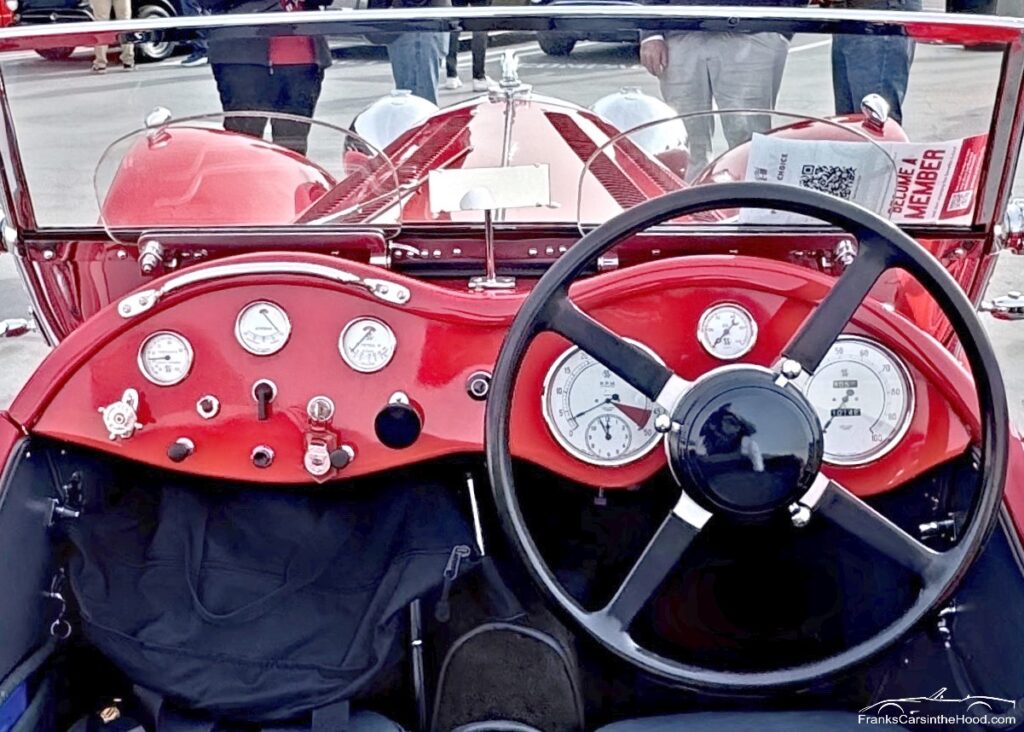
You’ll notice the small aero screens mounted behind the windshield. On the SS 100 the main windscreen could be folded flat, a feature borrowed from racing practice. Period drivers joked that if you wanted to see the car’s advertised 100 mile per hour top speed, you had to drop the windscreen and use the aero screens to reduce wind resistance.
Another subtle design detail often noticed on early SS 100s is the short scuttle, the body section between the bonnet and the windshield. Lyons pushed the cockpit well back in the chassis, partly to improve weight balance and partly to give the car the dramatic long-bonnet appearance associated with powerful sporting machines of the era. The result made the scuttle appear shorter and the bonnet longer, a proportion that would later become a hallmark of future Jaguar sports car designs.
Performance figures for the SS 100 were impressive for the mid-1930s. Power came from a robust inline six-cylinder engine, which through careful tuning and improved breathing was transformed into a lively performer capable of producing about 102 horsepower, impressive output for its time. Combined with the car’s relatively light weight and purposeful chassis design, the SS 100 delivered strong performance, living up to its name with a top speed of about 100 miles per hour. Contemporary road tests suggested it could reach 60 miles per hour in roughly 10 to 11 seconds, remarkable performance for the era. When introduced, the SS Jaguar 100 carried a price of about $2,100 in the United States, placing it firmly in the sporting luxury category. The balanced chassis and lively performance of the SS 100 established the foundation for Jaguar’s future sports cars, and many historians consider it the spiritual starting point of Jaguar’s sporting legacy, a philosophy that would later lead to cars like the XK120 and eventually the E-Type.
Production was limited, with a total of 191 2½-litre SS 100s built, followed by 118 of the larger 3½-litre version introduced from 1938 onward. Overall SS 100 production reached just 309 cars, with this example representing one of the earliest cars from the model’s inaugural 1936 production run.
The SS 100 also marked the beginning of a sporting legacy that would soon become known around the world. After World War II the company made an important decision to move away from the SS name, which had become permanently associated with the German Schutzstaffel during the war. In 1945 the company was renamed Jaguar Cars Ltd., a name that William Lyons believed better captured the speed, grace, and power his automobiles represented. In many ways the SS 100 was the car that started it all, setting the tone for the performance-oriented Jaguars that would follow and establishing a reputation that still resonates with enthusiasts nearly ninety years later.
According to the car’s history file, this SS 100 has passed through the hands of a number of dedicated caretakers since it was first delivered. The car was distributed through Henlys of London and manufactured on October 1, 1936, with its first recorded owner, Garnette George Thompson, taking delivery on November 3, 1936. Over the decades the car continued its journey through a succession of enthusiasts including Jamshid A. Kagaztchi in 1955, Edward Conway Thomas in 1956, John Harold Shead in 1957, David Houston Johnson in 1958, Harry C. Wuner Jr. in 1961, Dr. Jack Herod Hall in 1971, and Dr. Robert C. Sutter in 1987. The current caretaker, Donald R. Becker, OD, acquired the car on June 20, 2024, fulfilling a lifelong dream. As Don explained, “This was my dream since I was nine years old. Well, this is a dream come true, and it is wonderful.”
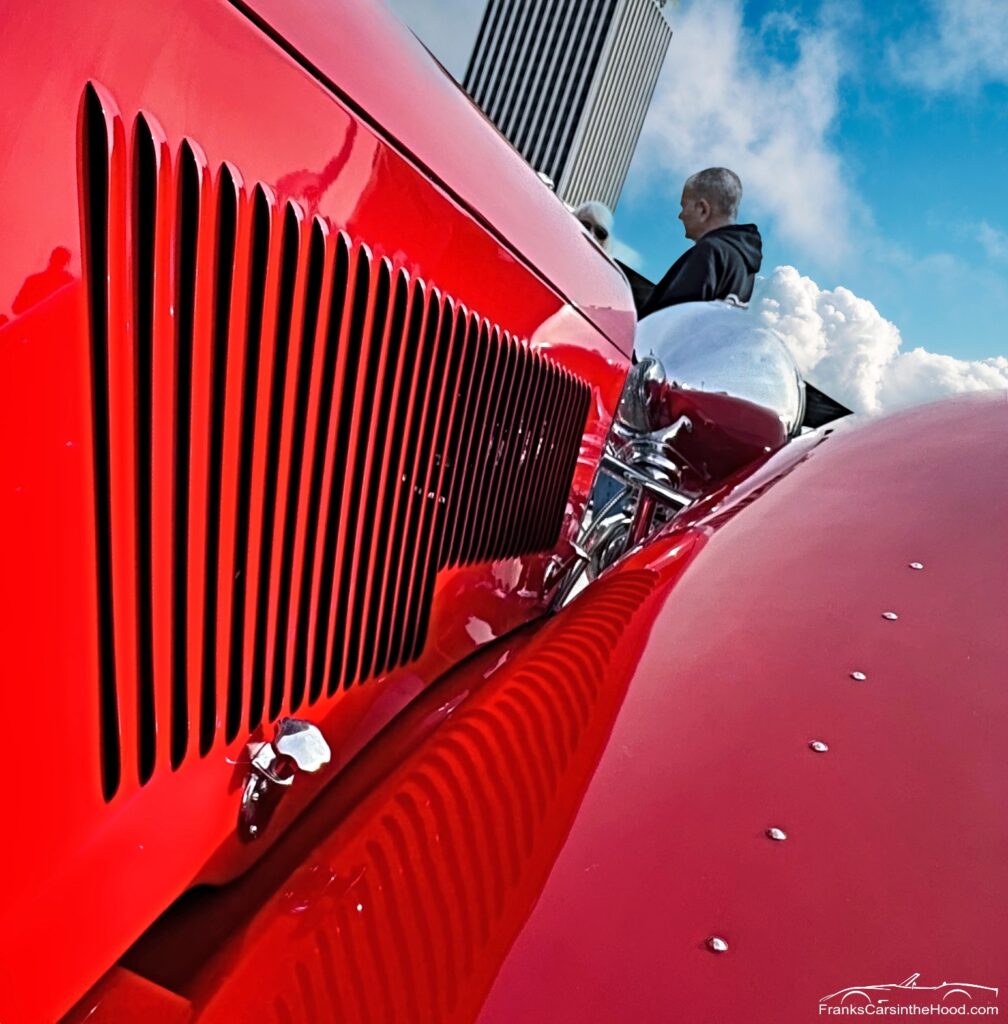
This 1936 SS Jaguar 100 Roadster is a rare sight at events like a Cruise-In due to its extreme rarity and historical value. With its long bonnet and sweeping wings finished in brilliant red with just the right amount of gleaming chrome, it would be at home at any Concours d’Elegance, drawing a crowd at a local Cruise-In like those held at the Petersen, or taking a leisurely cruise with like-minded friends on the way to a relaxing brunch.
Thank you for riding along with me and for being part of the Frank’s Cars in the Hood community.
Frank