Last updated on March 19, 2026
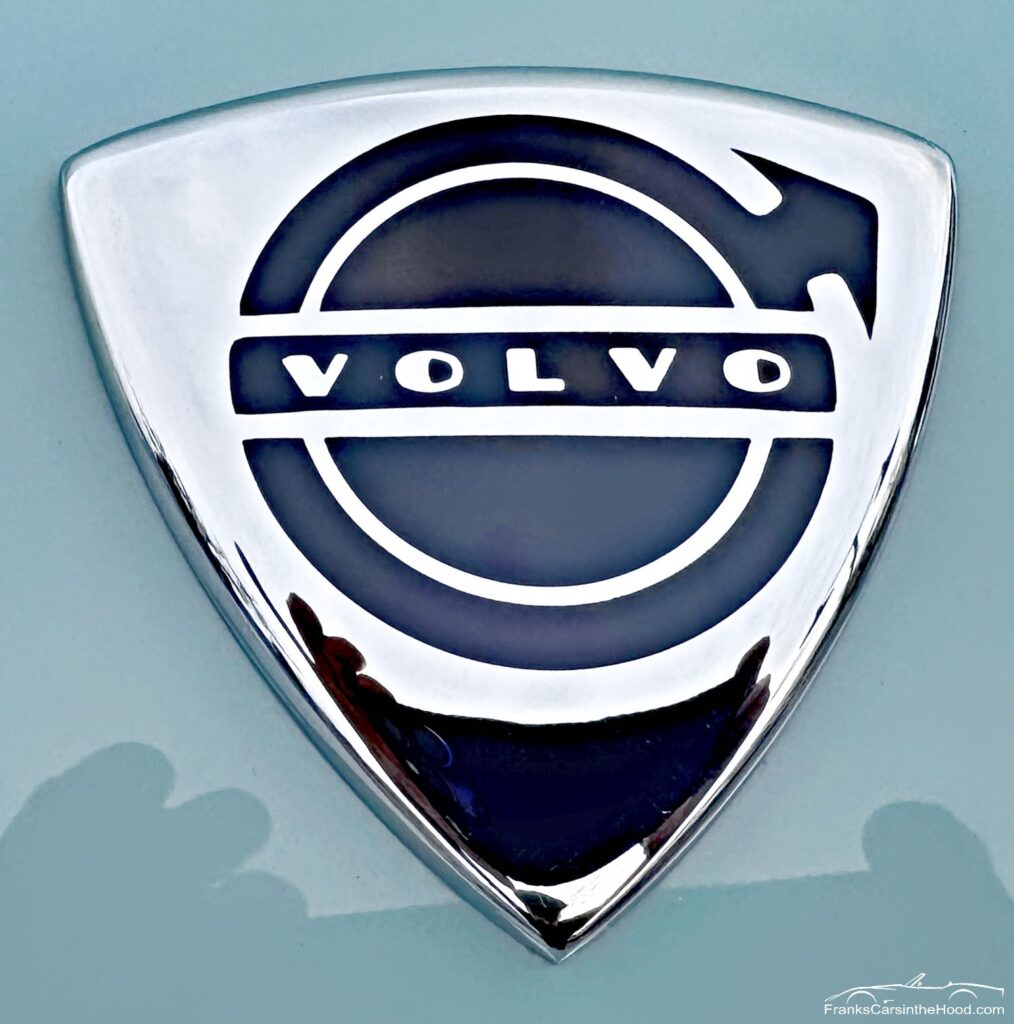
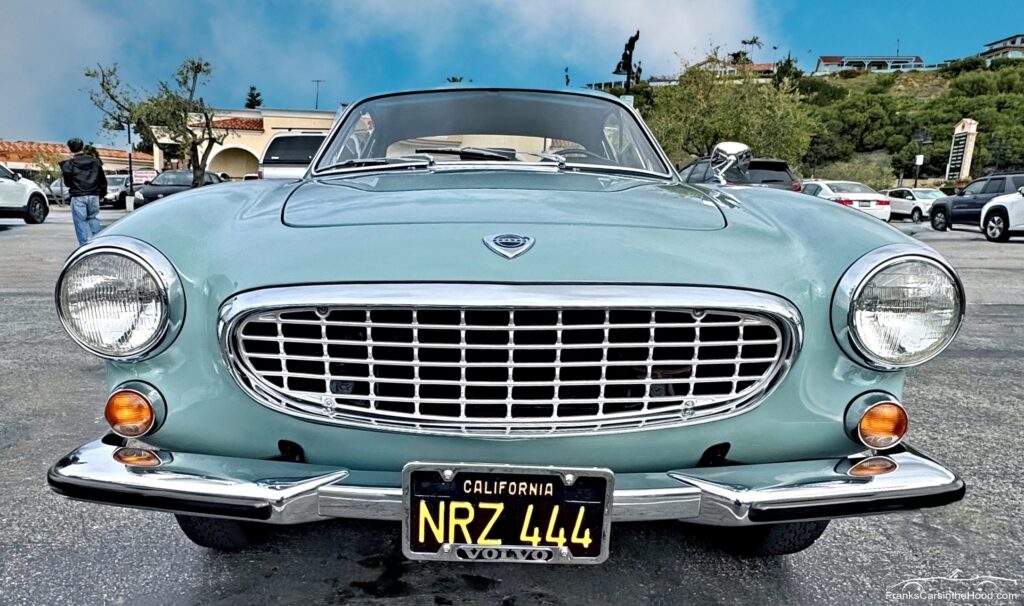
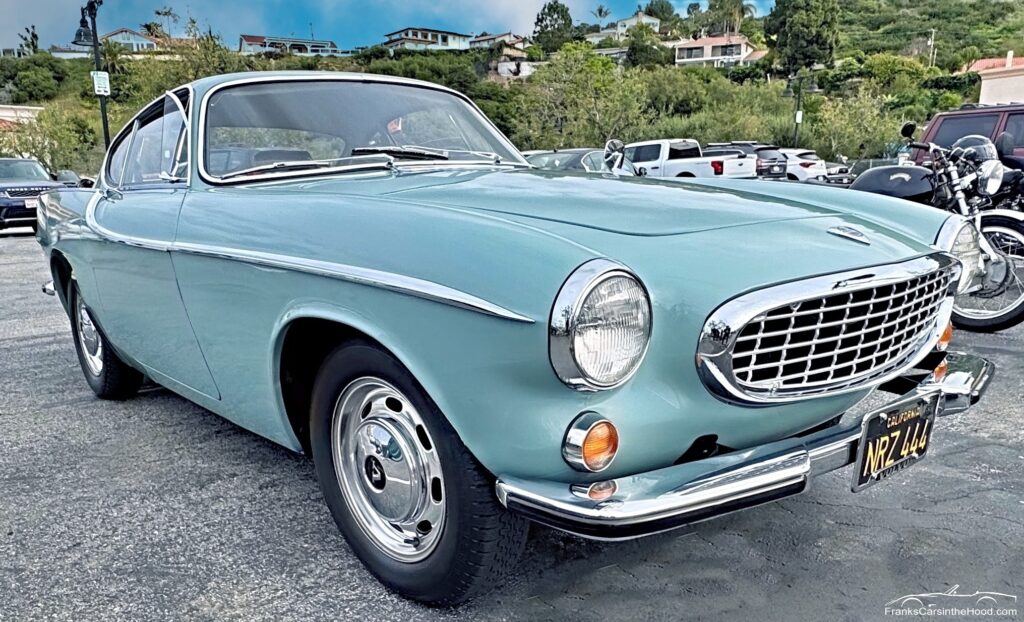
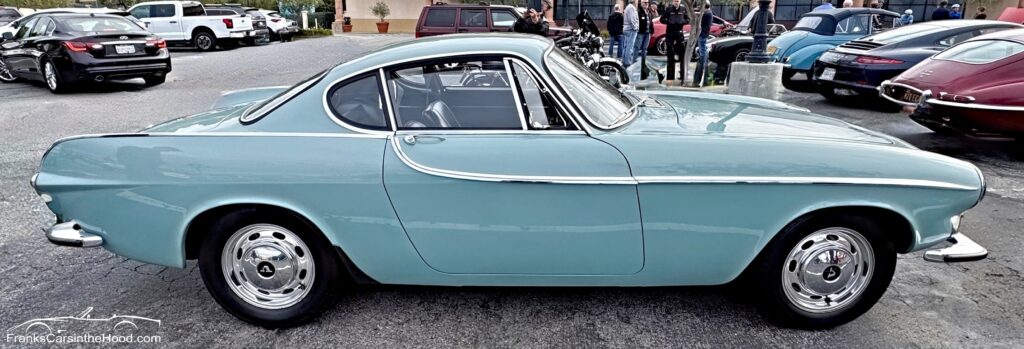
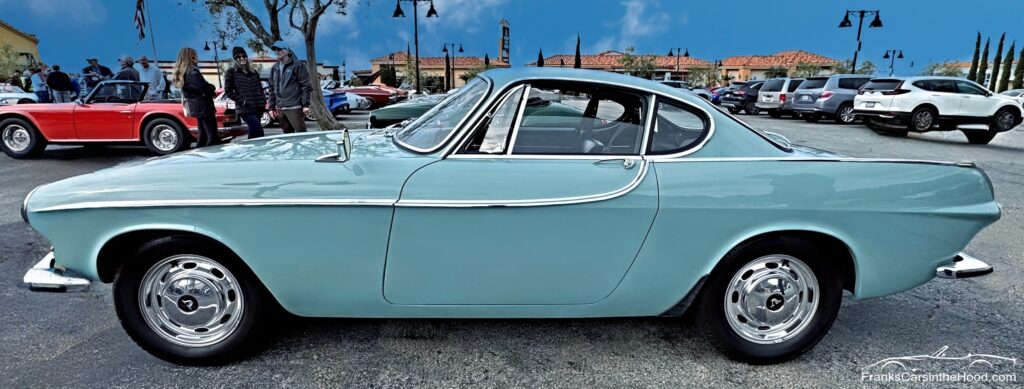
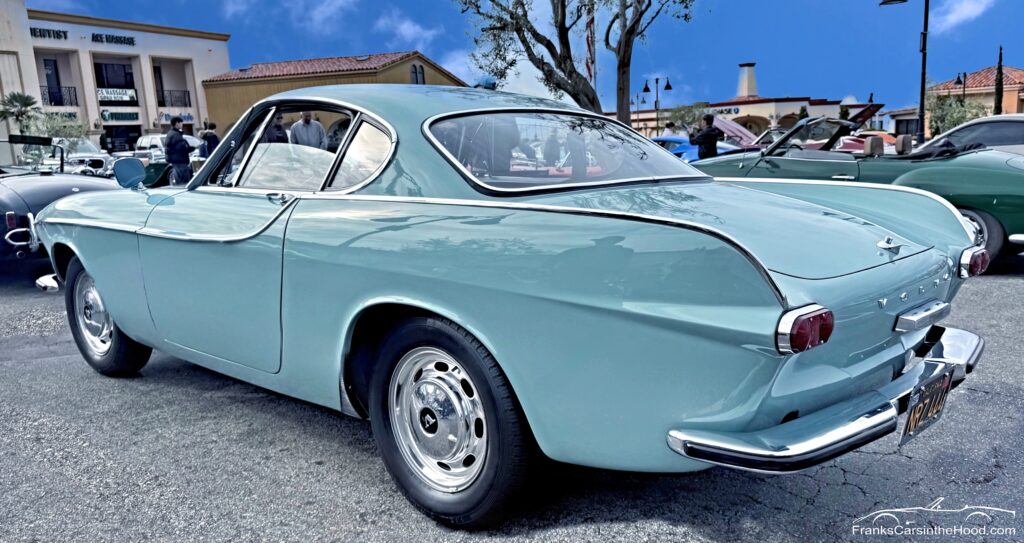
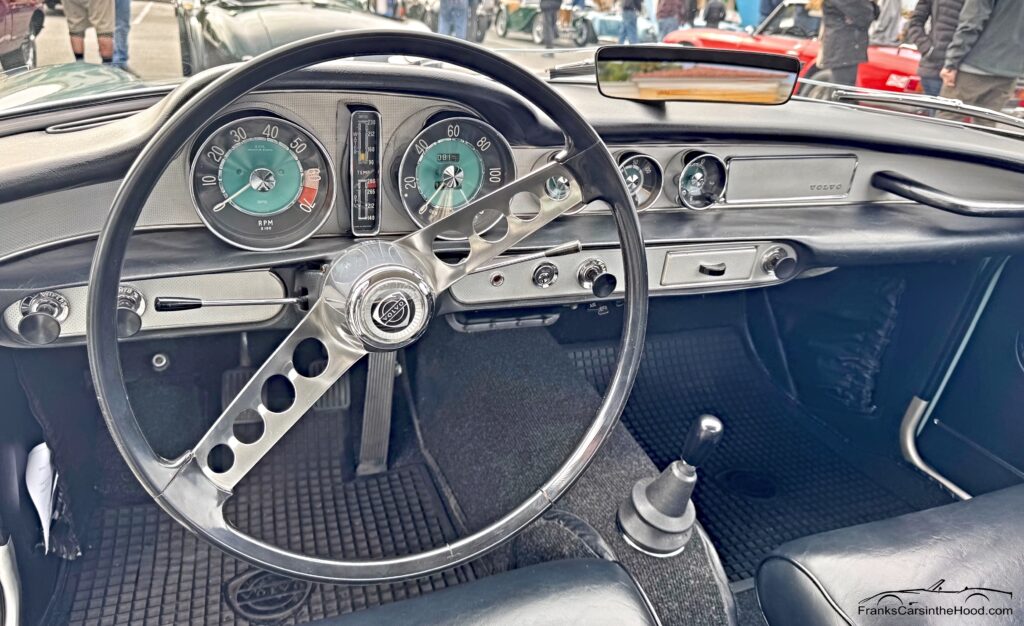
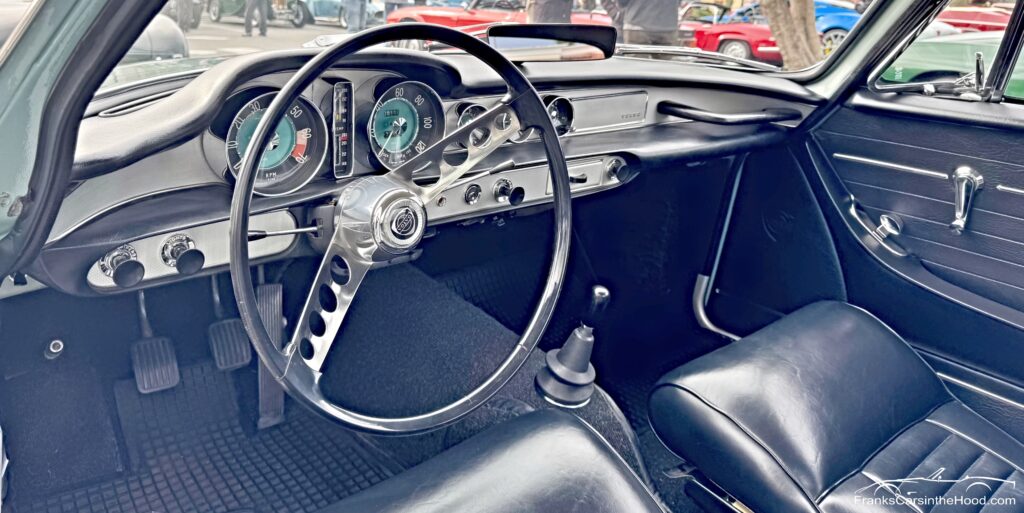
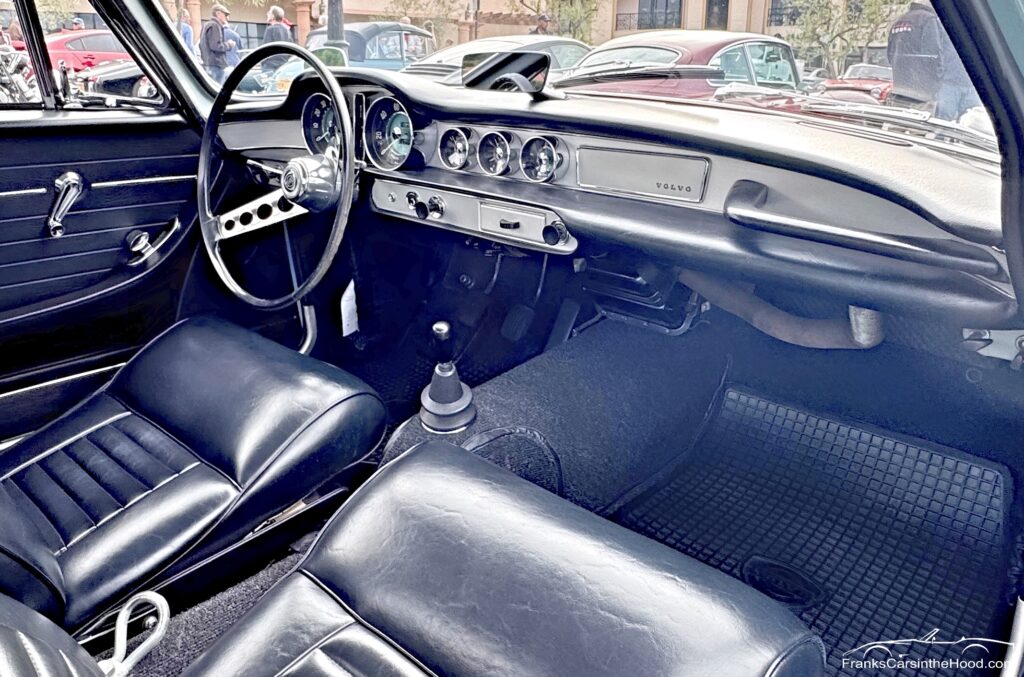
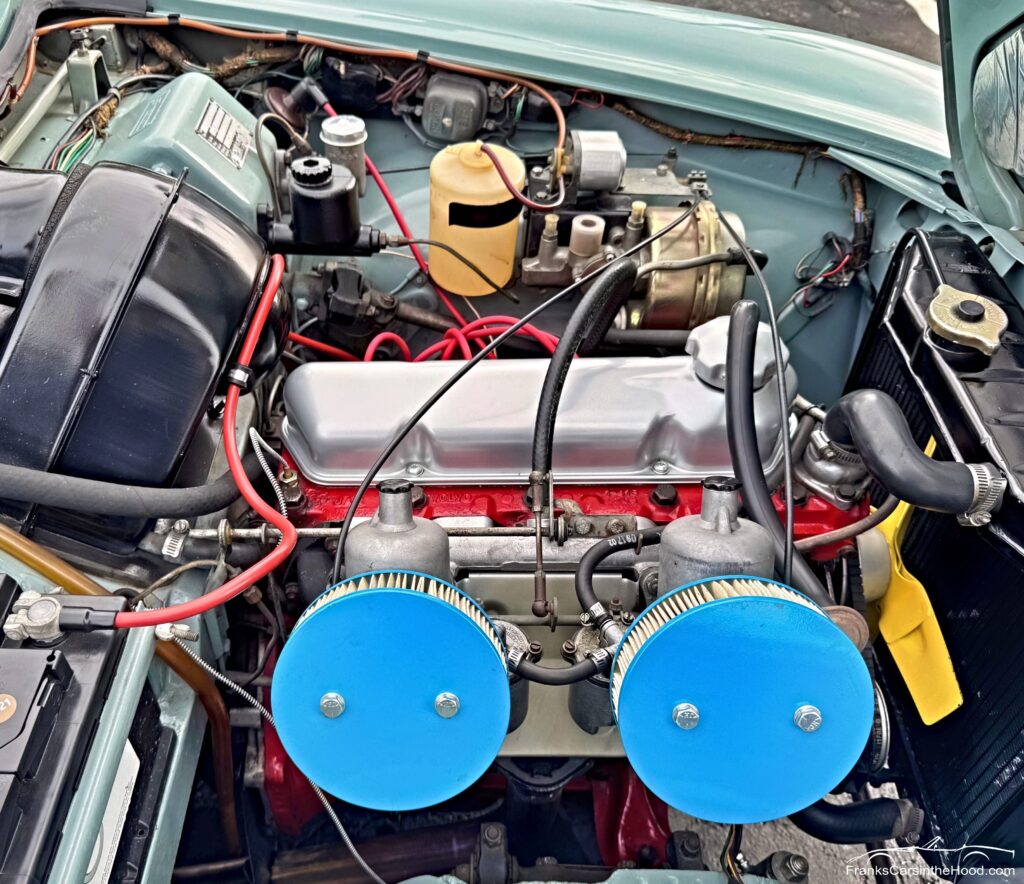
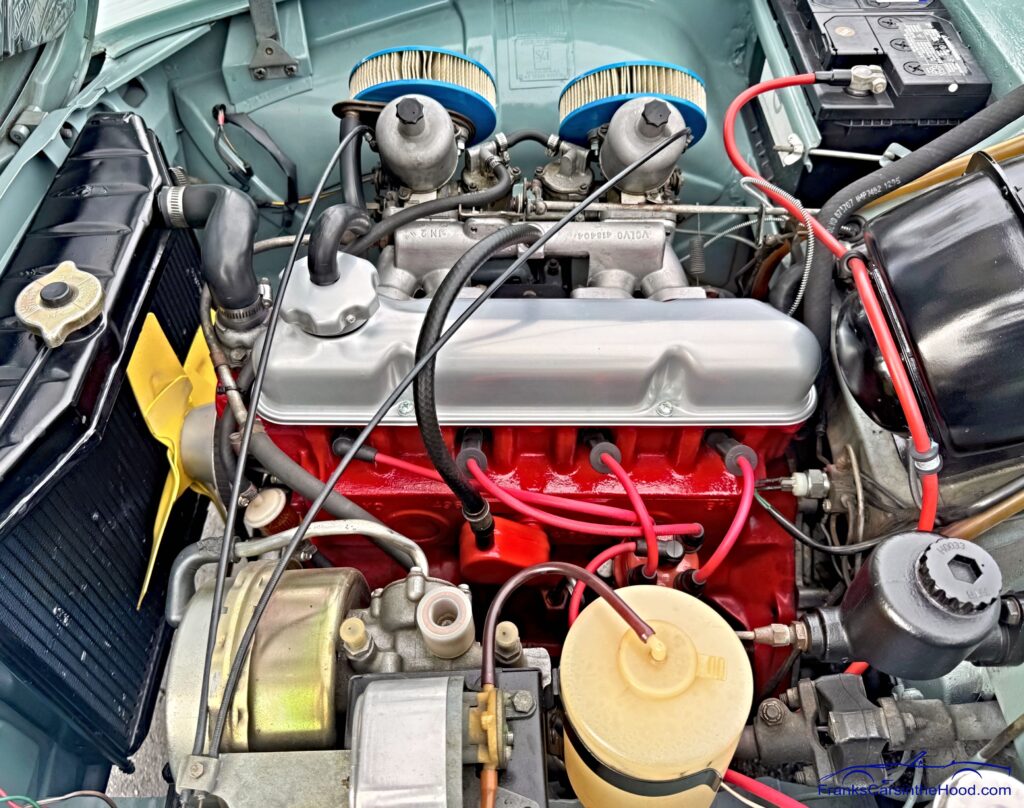
Today’s car is a 1965 Volvo 1800S owned by David Guelff, which I photographed at the mostly British Cars and Coffee event held at the Golden Cove Shopping Center in Rancho Palos Verdes, CA. The car is finished in Light Blue, Volvo color #89, with a black leather and vinyl interior. It is powered by a 115 hp, 1.8-liter B18B inline four-cylinder engine with dual SU HS6 carburetors, backed by a four-speed manual transmission with the optional Laycock de Normanville electric overdrive and a 4.10:1 rear axle ratio. Braking is handled by four-wheel Girling disc brakes, a sophisticated feature for the mid-1960s. Suspension consists of independent front suspension with coil springs and wishbones, while the rear uses a live axle located by trailing arms and a Panhard lateral locator rod, which limits side-to-side axle movement, a layout chosen for durability and predictable handling. Even standing still in the parking lot at Golden Cove, the Volvo’s low stance and long hood give it the unmistakable look of a proper grand touring coupe.
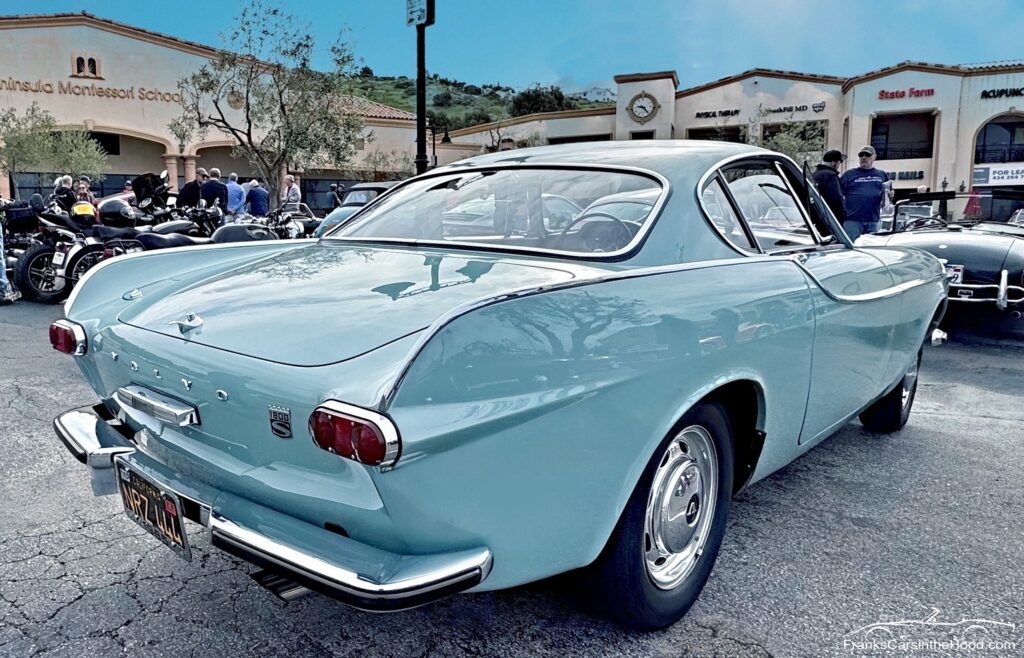
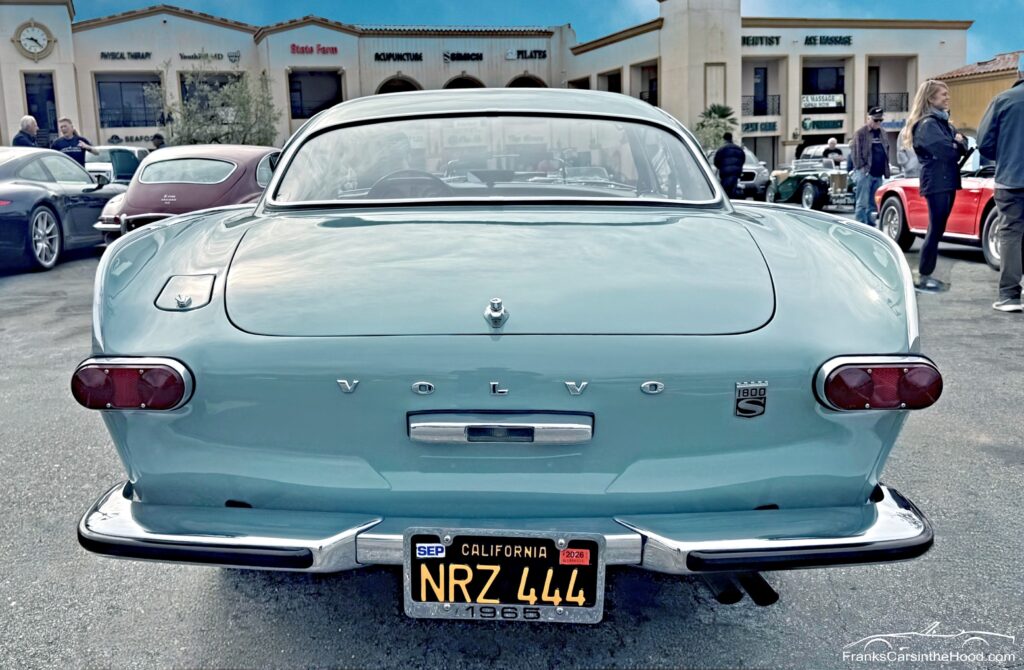
David’s car wears the color well, a shade offered for only a short period in the mid-1960s. Against the chrome trim, egg-crate grille, and delicate bumpers, the light blue paint highlights the flowing curves of the body, especially the long hood and gently sloping fastback rear glass. It’s elegant without being flashy, perfectly suited to the character of the car.
Volvo was founded in 1927 in Gothenburg, Sweden, by Assar Gabrielsson and Gustaf Larson, two engineers who believed automobiles built for the rugged Scandinavian climate needed to be stronger, safer, and more reliable than most cars of the day. Their philosophy was simple: build a car that could withstand rough roads, long winters, and many miles of use. That focus on durability and safety quickly became Volvo’s calling card. By the 1950s the company had earned a reputation for producing solid, dependable sedans and wagons, but it had yet to build a true sports coupe that could appeal to a younger generation of drivers.
The elegant shape of the Volvo 1800 is often credited to the Italian design house Carrozzeria Frua, but the real story is a little more interesting. The car was actually designed by Pelle Petterson, a young Swedish designer who at the time was working under Pietro Frua in Turin, Italy. Petterson blended Italian styling influence with the clean, purposeful look that Volvo was known for, resulting in a coupe with a long hood, graceful roofline, and subtle curves over the rear fenders that gave the car a sporty presence without losing the restrained Scandinavian character Volvo valued. The design manages to feel both Italian and Scandinavian at the same time, elegant yet restrained. For many years Frua himself received most of the public credit for the design, but it has since been widely recognized that the styling was largely Petterson’s work. It proved to be a successful collaboration, producing a car that looked elegant, modern, and distinctive while still fitting comfortably within Volvo’s reputation for practicality and durability.
The elegant Volvo coupe gained worldwide recognition when it was chosen as the car driven by Simon Templar, played by Roger Moore, in the popular 1960s television series The Saint. The sleek Swedish coupe appeared weekly on television screens, introducing the Volvo 1800 to audiences around the world and helping cement its image as a stylish grand touring car. The model would later gain another kind of fame for durability when New York school teacher Irv Gordon set the world record for the highest mileage on a personal vehicle, driving his 1966 Volvo 1800S more than 3.26 million miles by 2013.
Between 1961 and 1973, Volvo produced 47,492 examples of the 1800 series, including the Jensen-built P1800 (6,000), the Swedish-built 1800S (24,563), the fuel-injected 1800E (8,778), and the later 1800ES shooting brake (8,078). Of those, 24,563 were 1800S coupes built in Sweden between 1963 and 1969, with approximately 4,000 produced during the 1965 model year, which includes David’s car. In 1965, the Volvo 1800S carried a base price in the United States of about $3,995, placing it among the popular European sports coupes of the era from MG, Triumph, and Alfa Romeo. Performance was respectable for the time, with the dual-carbureted B18B engine, which received higher-compression tuning by the mid-1960s, capable of pushing the car to a top speed of around 115 miles per hour, while acceleration from 0 to 60 mph took roughly 10.5 to 11 seconds depending on gearing and road conditions. While it wasn’t the fastest sports coupe of the 1960s, the Volvo 1800 earned its reputation for something just as important, long-term dependability, a trait later made famous when New York schoolteacher Irv Gordon drove his 1966 Volvo 1800S more than 3.2 million miles by . More than half of all Volvo 1800s built were exported to the United States, which helps explain why so many surviving examples are still found today in California and other dry-climate states.
David is the second owner of this 1965 Volvo 1800S, having purchased the car in 1994 from the original owner in Riverside, California. Over the years he has carefully maintained the car while preserving the character that makes these Volvos so appealing. Like many 1800 owners, David appreciates the car’s combination of elegant styling, solid engineering, and dependable performance. It remains a car that can still be driven and enjoyed on the open road, more than half a century after it first left the Volvo factory.
Standing there at Golden Cove, it’s easy to understand why the Volvo 1800S has always been one of those cars that quietly draws people in. It doesn’t shout for attention like an Italian exotic, and it doesn’t rely on massive horsepower to make an impression. Instead, it wins you over with clean lines, balanced proportions, and that unmistakable Scandinavian confidence that says this car was built to last. It would be at home at any Concours d’Elegance, a European or sports car show, drawing a crowd at a local Cruise-In or Cars & Coffee, or taking a leisurely cruise through the Malibu Mountains, enjoying the canyon curves and becoming one with the car.
Thank you for riding along with me and for being part of the Frank’s Cars in the Hood community.
Frank