Last updated on June 4, 2026
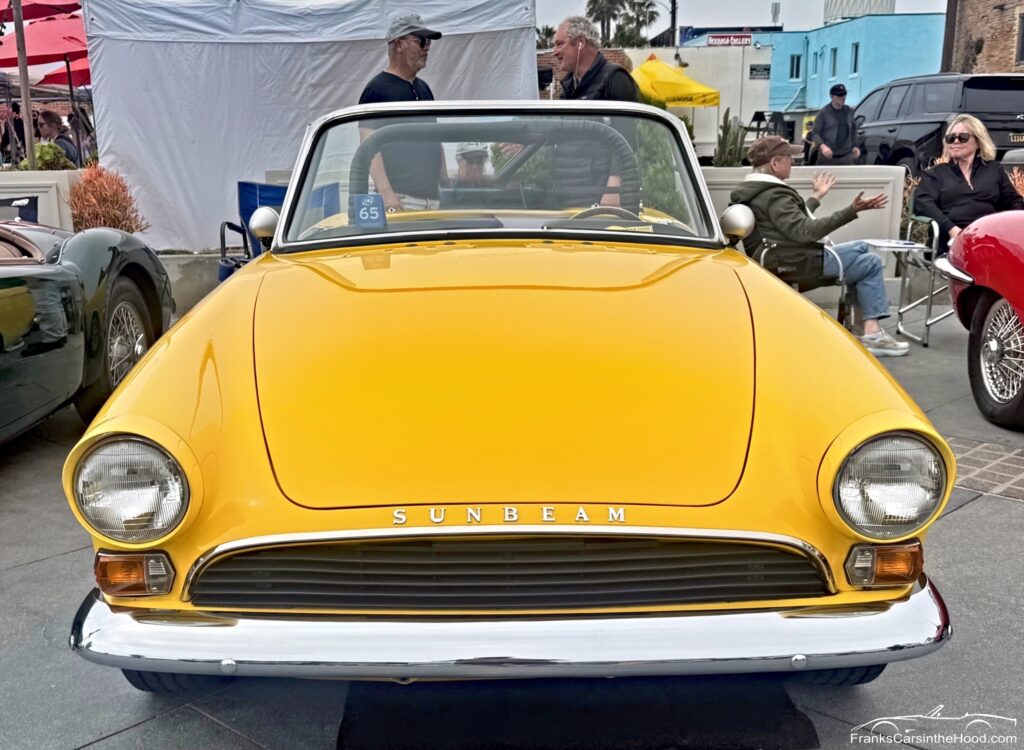
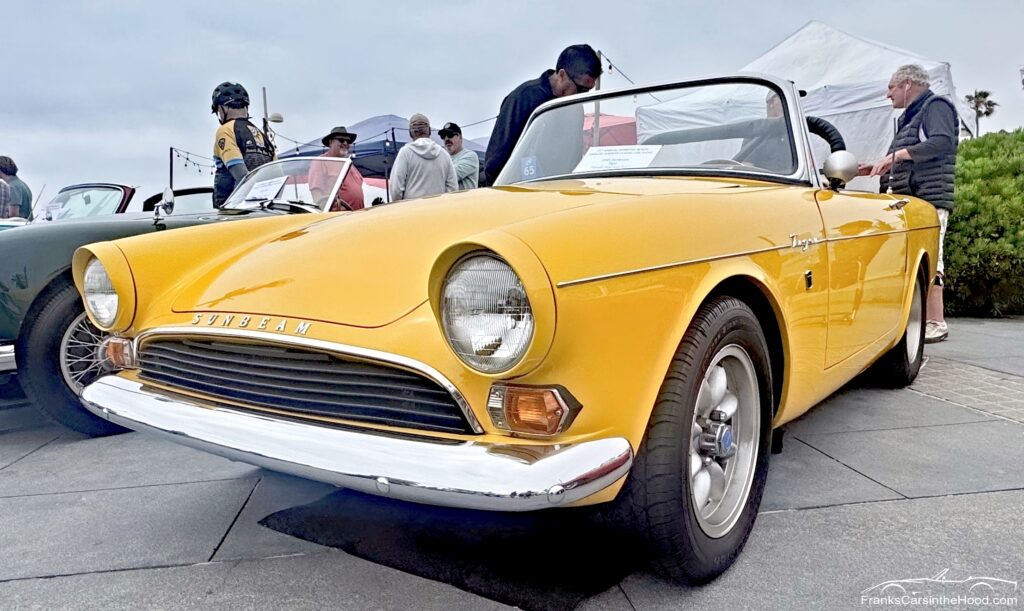
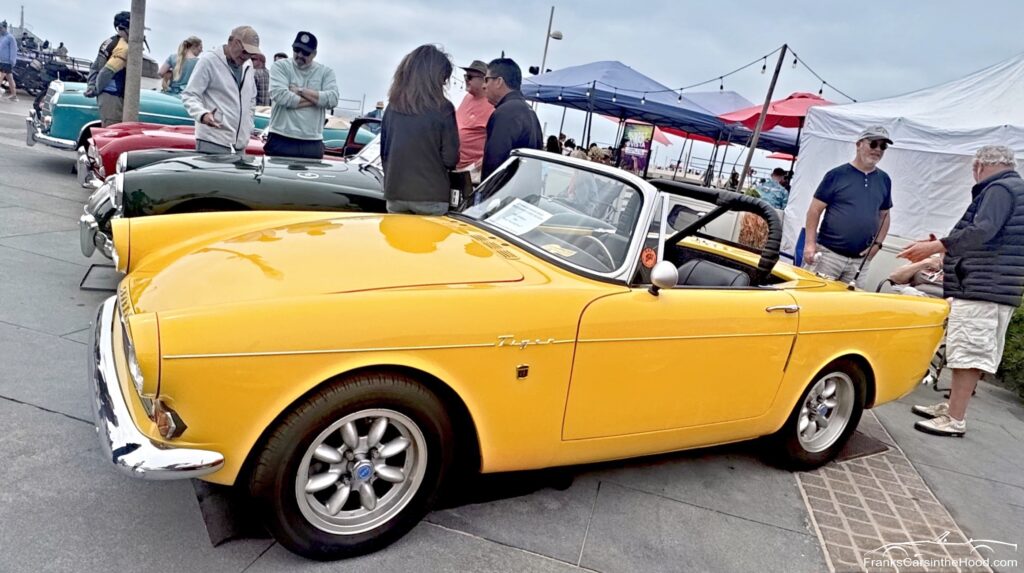
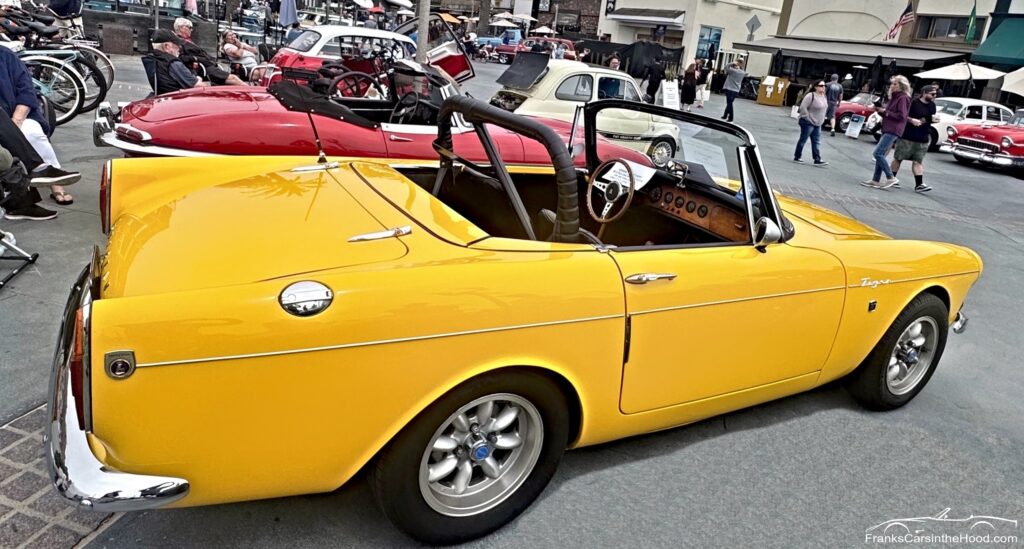
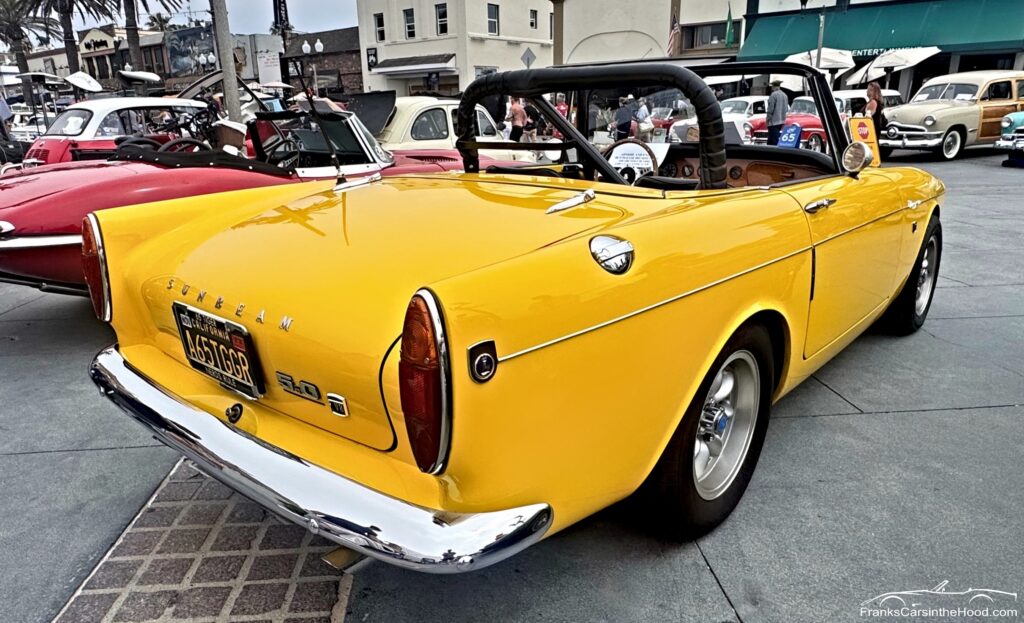
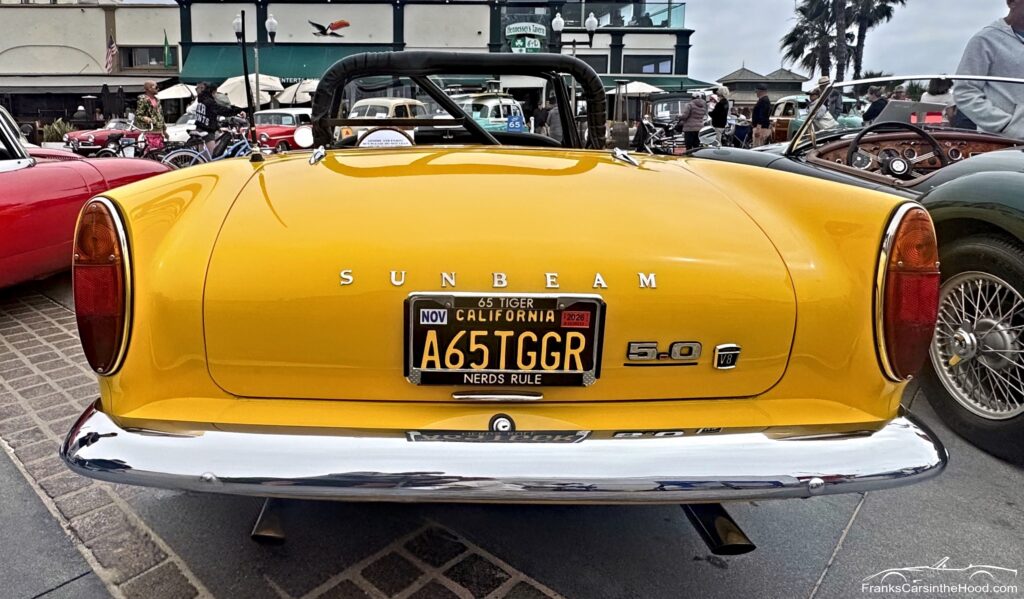
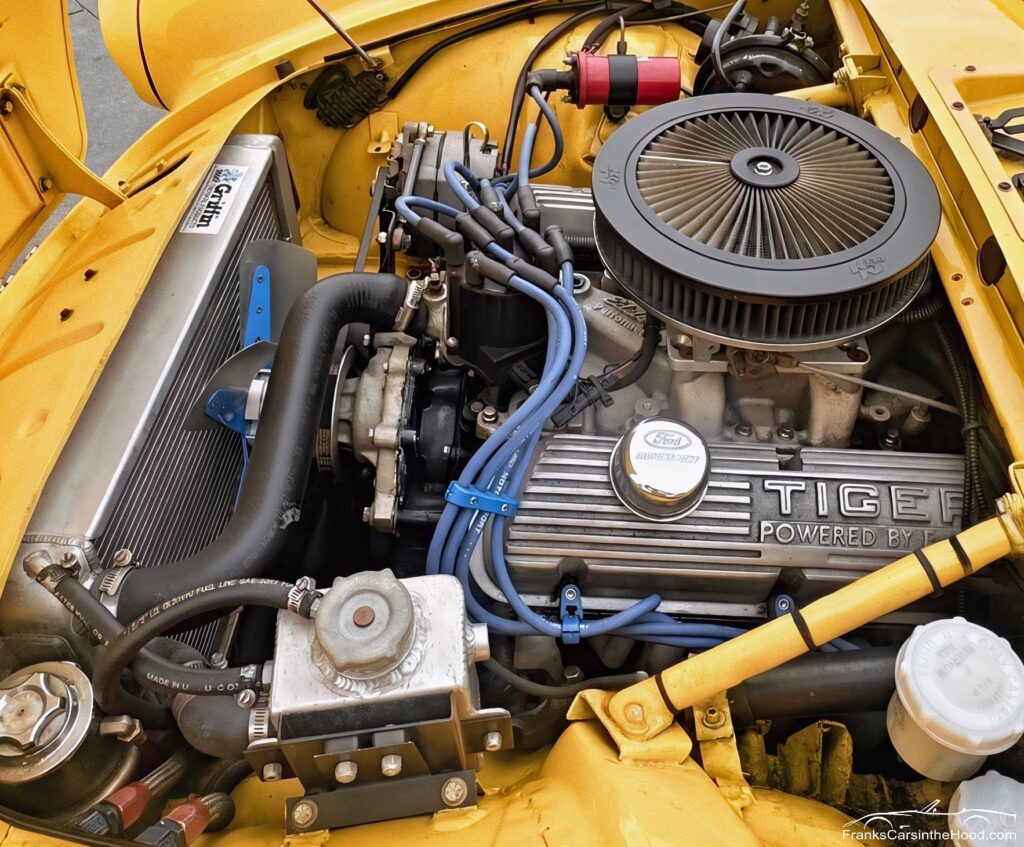
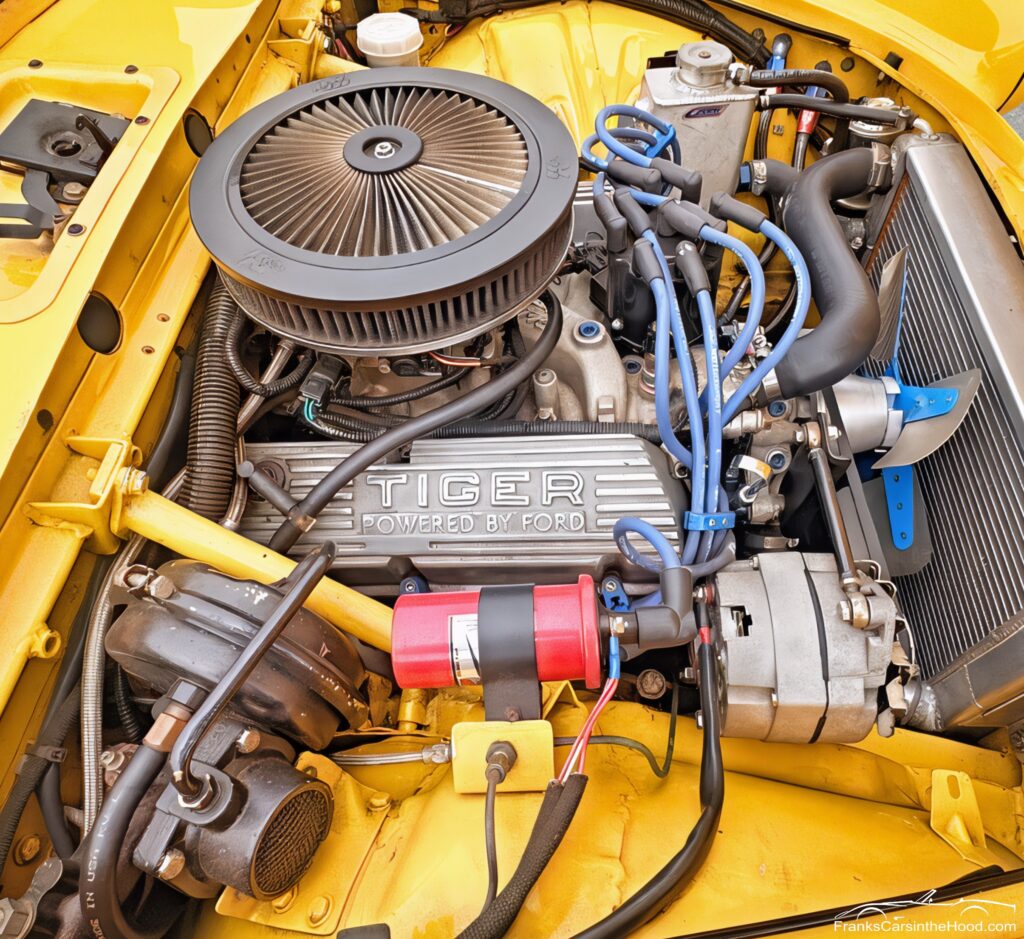
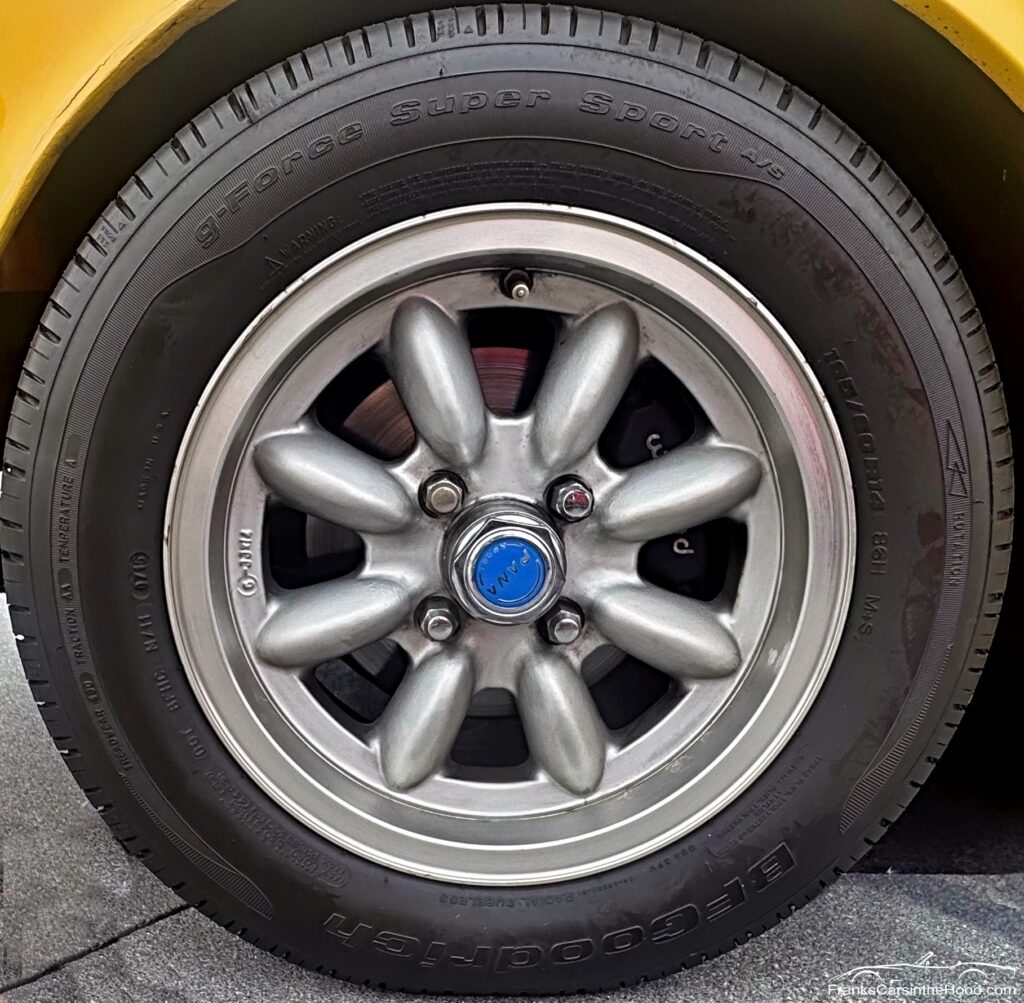
Today’s car is a 1965 Sunbeam Tiger Roadster owned by Dennis and Debi Pumphrey, which I photographed at the 27th Annual Hermosa Beach Endless Summer Classic Car Show in Hermosa Beach, California. Finished in Ferrari Yellow with a black interior, this Anglo-American sports car blends British roadster charm with Ford V8 muscle. Under the hood sits a Ford 302 cubic-inch V8 upgraded with throttle-body fuel injection, backed by the original Ford Toploader four-speed manual transmission and a Dana rear axle carrying a 3.07:1 gear ratio. Stopping power comes from four-wheel disc brakes, while the suspension retains the Tiger’s traditional independent front suspension with coil springs and a live rear axle located by leaf springs.
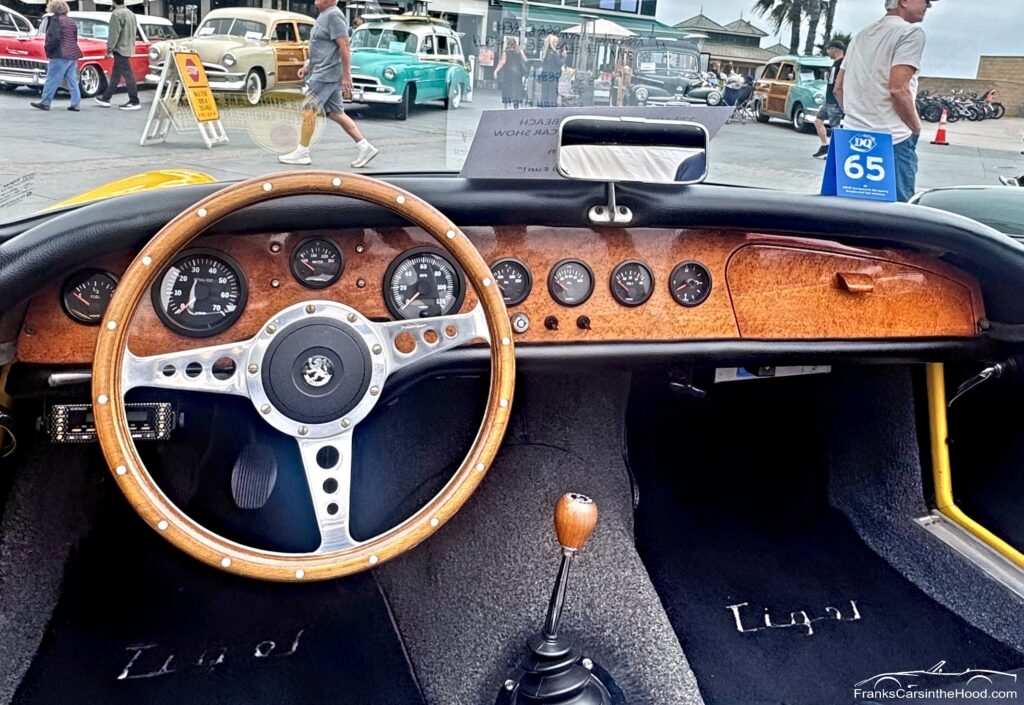
Dennis and Debi purchased the Tiger in late 1999 from an owner who was apparently convinced the Y2K computer bug would bring the world to an end. At the time, the car ran well enough and had already been painted its distinctive yellow color, but it was far from finished. The interior was largely missing, it carried only a single seat, and the dashboard housed a collection of mismatched gauges, most of which no longer functioned. Electrically, the car was a mess and required a complete rewiring. One of their first projects was designing and wiring an entirely new dashboard, a task they completed together at their kitchen table before installing it in the car. Since then, their goal has been simple: transform the Tiger into a reliable, enjoyable street car that can be driven anywhere without worry.
The story of the Sunbeam Tiger began when Rootes Group competition manager and motorsports enthusiast Ian Garrad recognized that the lightweight Sunbeam Alpine chassis could accommodate Ford’s new 260 cubic-inch V8 engine. After Rootes rejected the idea internally, Garrad enlisted the help of Carroll Shelby, whose success with the AC Cobra had already proven the formula of combining British handling with American V8 power. Shelby assigned engineer and development driver Ken Miles to the project, and together with Shelby American’s engineering team they developed the prototype and worked out the modifications necessary to fit Ford’s V8 into the Alpine chassis. Once the concept proved successful, Rootes approved the project for production. Assembly was handled by Jensen Motors in England, where Tigers were modified from Alpine bodies before receiving their V8 drivetrains.
While the Tiger looked very similar to the Alpine, substantial engineering changes were required to accommodate Ford’s 260 cubic-inch V8, and later the 289 cubic-inch V8. The firewall and transmission tunnel were redesigned, the steering system was reengineered, and structural reinforcements were added throughout the unitized body to handle the additional power and torque. Suspension upgrades included heavier-duty front springs, revised shock absorber settings, and a larger front anti-roll bar, while the braking system retained front discs but was upgraded for improved stopping performance. A larger radiator and stronger rear axle completed the transformation. The result was far more than an Alpine with a bigger engine—it was a thoroughly engineered sports car that combined British handling with American V8 performance while retaining much of the Alpine’s everyday drivability.
Like many Tigers, Dennis and Debi’s car has evolved beyond its original factory specifications. Before they acquired the car, the original 260 cubic-inch Ford V8 had been replaced with a 1978 302 cubic-inch Ford small-block V8, backed by the original-style Ford Toploader four-speed manual transmission, scatter-shield bellhousing, and Dana rear axle. During more than 25 years of ownership, they completely rewired the car, replaced the instrument panel and gauges, converted the engine to throttle-body fuel injection, upgraded the braking system to four-wheel discs. The fuel system was also completely redesigned, featuring a larger fuel cell, a low-pressure scavenger pump, and a high-pressure fuel injection pump. Much of the custom plumbing was laid out with assistance from Earl’s Performance Plumbing, creating a clean and functional system tailored specifically to the Tiger.
Sunbeam built approximately 7,100 Tigers between 1964 and 1967. The original Mark I models, including Dennis and Debi’s 1965 example, were produced from 1964 through early 1965 and were powered by Ford’s 260 cubic-inch V8 rated at 164 horsepower. The Mark IA followed from 1965 into 1966, featuring a number of cosmetic and trim revisions while retaining the 260 V8. The final and rarest version, the Mark II, arrived in 1967 with Ford’s larger 289 cubic-inch V8 producing 200 horsepower and several detail changes to accommodate the more powerful engine. Throughout its production run, the Tiger was offered exclusively as a two-seat roadster. Original base pricing was approximately $3,500 when new. With its factory-rated 164 horsepower 260 V8, a stock Mark I Tiger could accelerate from 0-60 mph in about 8.6 seconds and reach a top speed approaching 120 mph, impressive performance figures for a mid-1960s British sports car.
Today, the Sunbeam Tiger remains one of the most desirable British -American sports cars of its era. Dennis and Debi’s Tiger perfectly reflects why these cars have earned such a loyal following. It retains the character and simplicity that made the Tiger famous while incorporating thoughtful upgrades that make it reliable and enjoyable in modern traffic. Whether cruising through town, heading to a local Cars & Coffee event, or stretching its legs on the highway, this bright yellow Tiger continues to do exactly what Dennis and Debi intended it to do—start every time, stop every time, and bring a smile to its owners every time they drive it.
Thank you for riding along with me and for being part of the Frank’s Cars in the Hood community.
Frank