Last updated on July 16, 2026
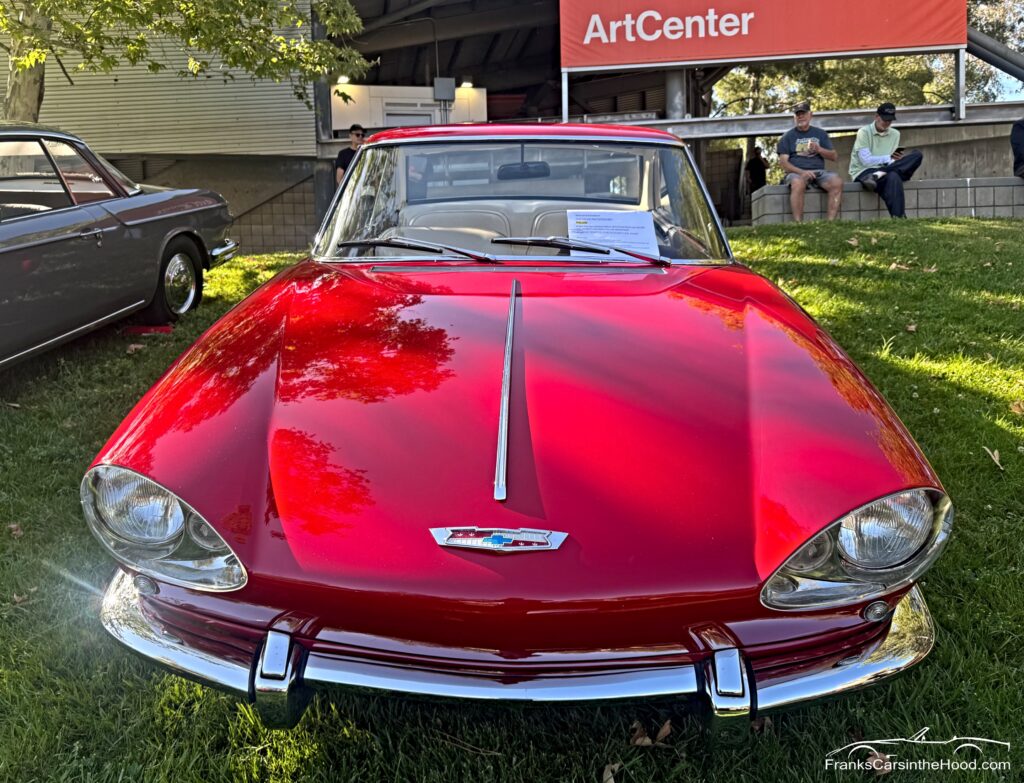
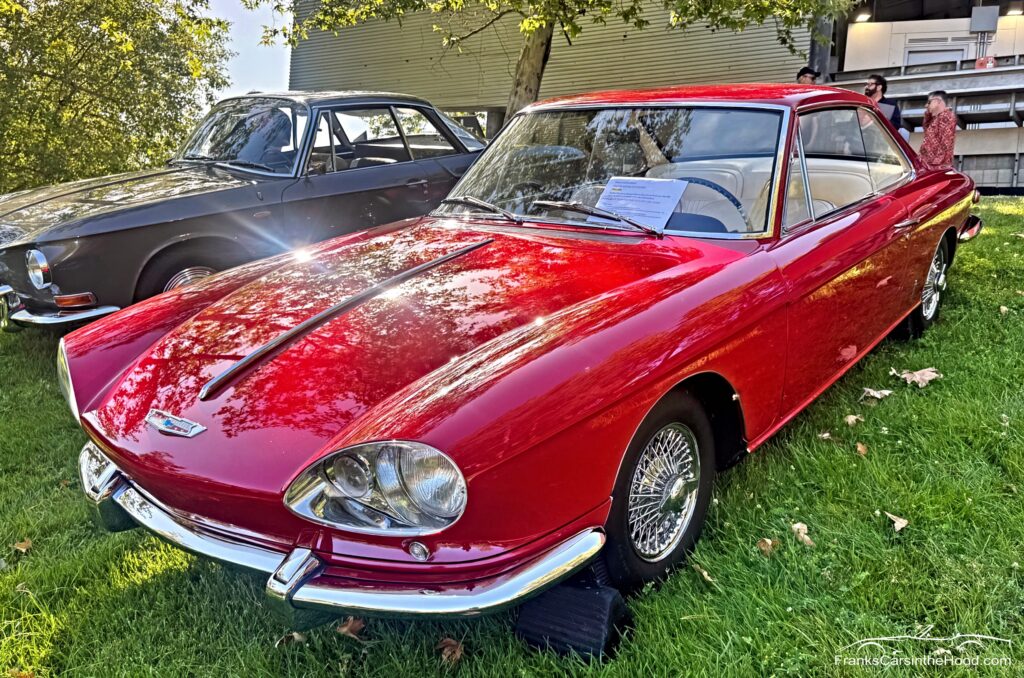
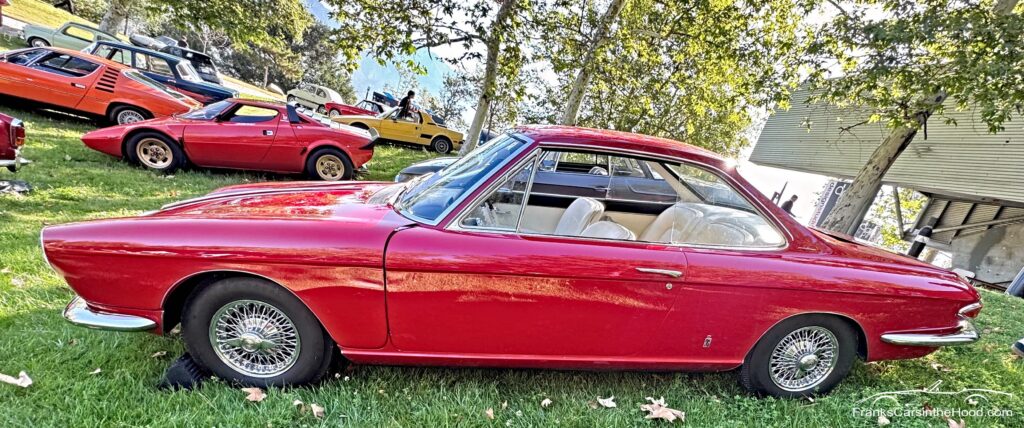
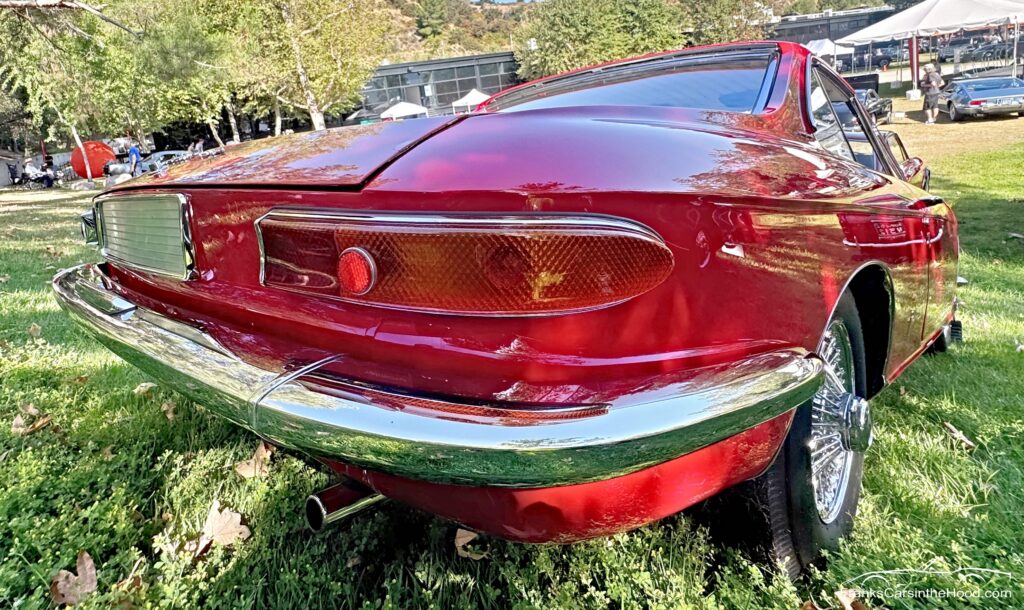
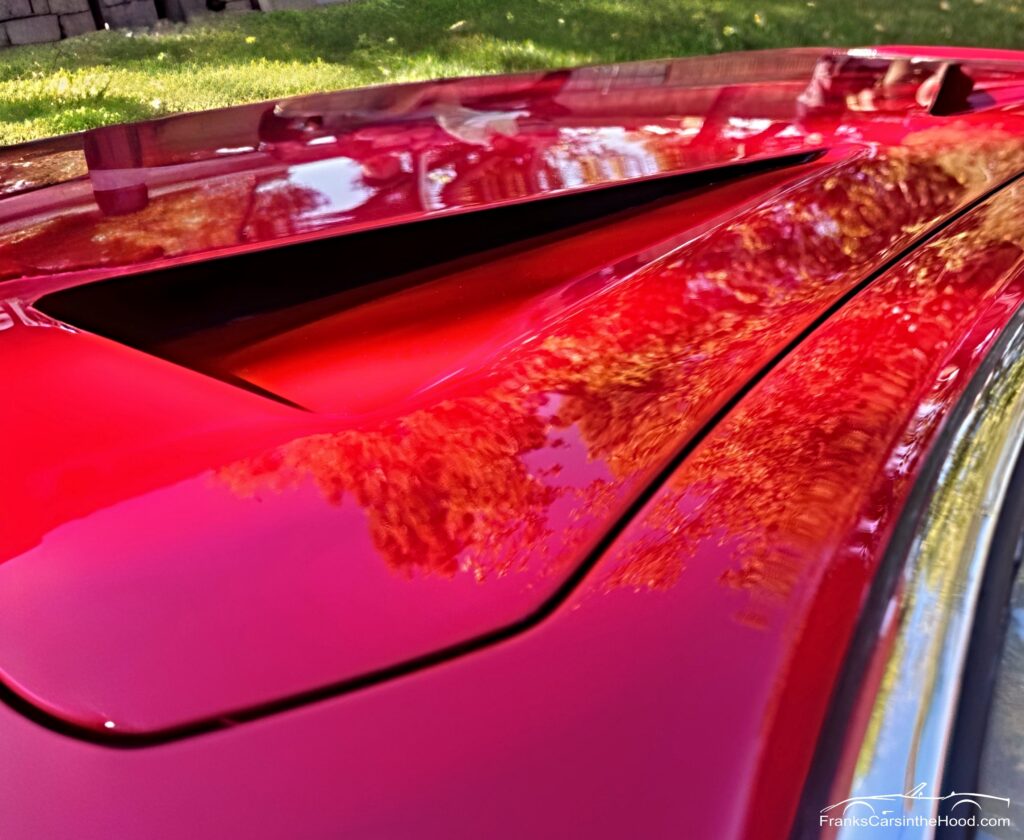
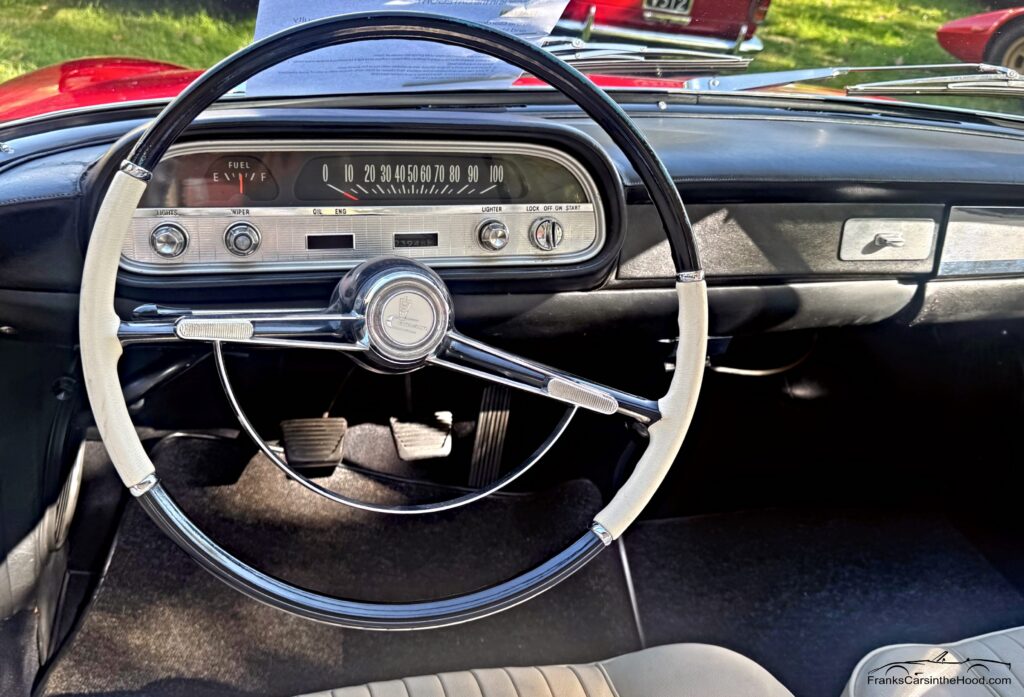
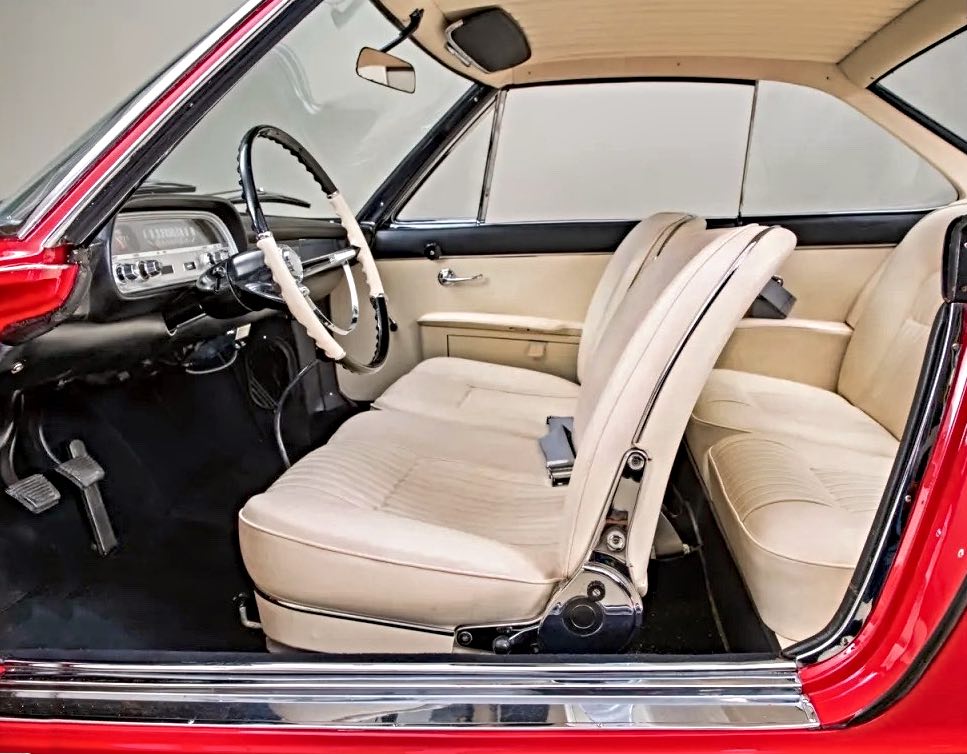
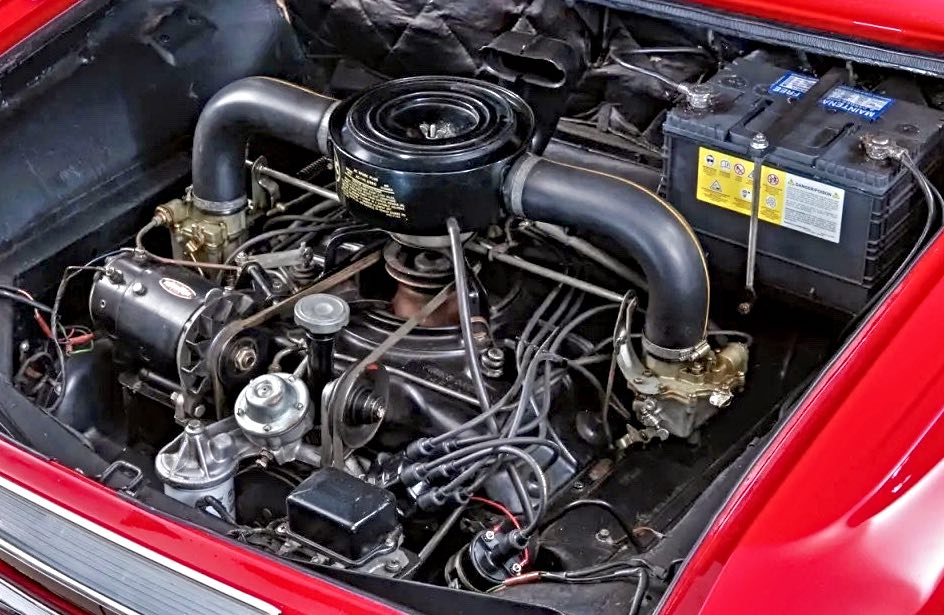
Today’s car is a 1963 Chevrolet Pininfarina Corvair Coupe Speciale Concept owned by Phillip Sarofim, which I photographed at the 2026 ArtCenter Design Invitational. This one-of-one concept is finished in brilliant red over a white leather interior and wears a hand-built steel body crafted by Pininfarina, built on the stock Chevrolet Corvair floor pan with a 108-inch wheelbase. Power comes from a rear-mounted 145 cubic-inch (2.4-liter) air-cooled flat-six engine with twin single-throat Rochester carburetors, producing 80 horsepower, paired with a four-speed manual transaxle and a 3.55:1 rear axle ratio. It retains the Corvair’s fully independent coil spring suspension and four-wheel hydraulic drum brakes while weighing approximately 2,300 pounds.
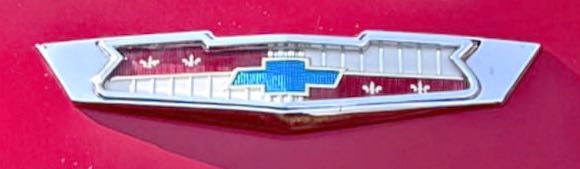
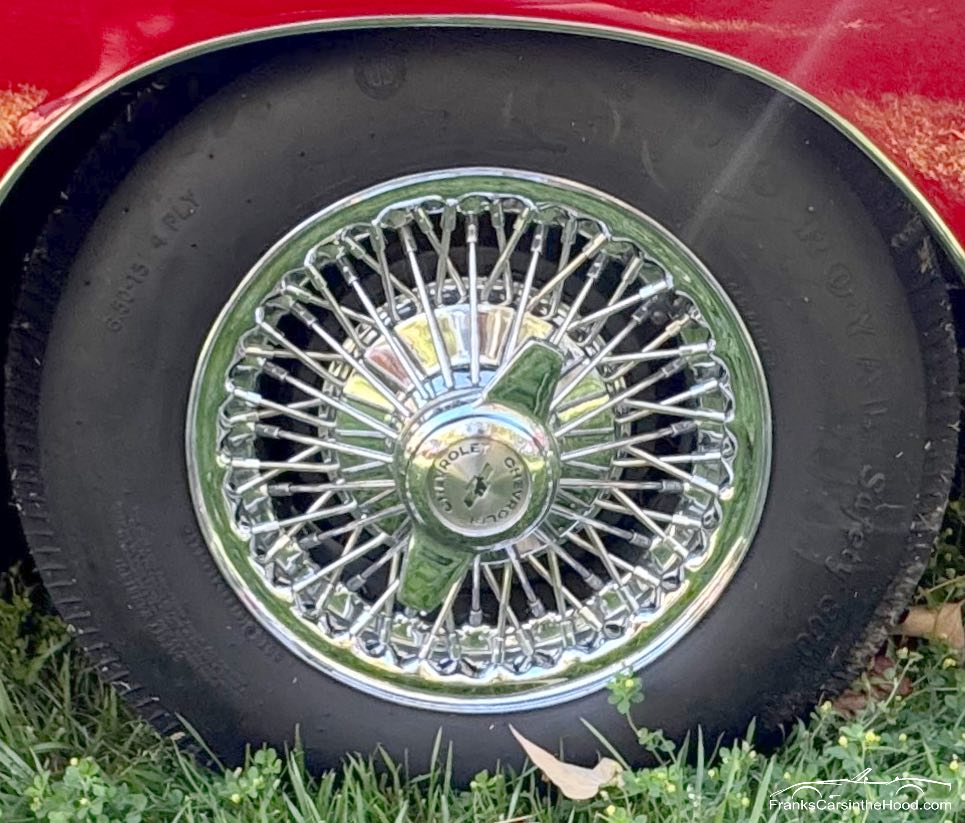
Until that moment, I had no idea this car even existed. After spending some time photographing and talking with the owner of another car, I started walking back up the row of cars when I looked up and was surprised to see what I thought was a Chevrolet hood emblem. It seemed completely out of place among some of Italy’s most celebrated automobiles, and my curiosity got the better of me. As I got closer, I realized it really was a Chevrolet. I certainly wasn’t expecting to discover one of the rarest Corvairs ever built, and to my eye, one of the most beautiful. It turned out to be one of the biggest surprises of the entire show.
When Chevrolet introduced the Corvair for the 1960 model year, it represented one of the boldest engineering departures in the company’s history. Designed to compete with the growing popularity of imported European cars, especially the Volkswagen Beetle, the Corvair gave American buyers something unlike anything else on the road. Its innovative engineering was later overshadowed by the controversy surrounding Ralph Nader’s Unsafe at Any Speed. Although a 1972 National Highway Traffic Safety Administration study later concluded that the early Corvair’s handling and rollover characteristics were comparable to other compact cars of the era, by then the damage to the Corvair’s public image had already been done.
Recognizing the Corvair’s unique potential, General Motors, under the direction of Vice President of Styling Bill Mitchell, commissioned Italy’s legendary automotive design house and coachbuilder Pininfarina to create a design proposal that reimagined Chevrolet’s innovative compact through the lens of Italian styling. Rather than redesigning the car mechanically, Pininfarina transformed its appearance into an elegant grand touring coupe.
The project was assigned to a young American designer named Tom Tjaarda, who was then working as a staff designer at Pininfarina. Although still early in his career, Tjaarda would later become one of the most respected automotive designers of his generation, whose later designs included the Fiat 124 Spider, De Tomaso Pantera, and Ferrari 330 GT 2+2. He created a new hand-built steel body that shared no exterior sheet metal with the production car. His design transformed Chevrolet’s unconventional compact into a graceful European grand touring coupe that looked unlike anything else Chevrolet had ever produced.
Tjaarda’s design completely changed the Corvair’s personality. The production car’s American styling gave way to graceful European proportions with a low, aerodynamic nose, distinctive slanted quad headlights, a sweeping fastback roofline, and generous glass that gave the Coupe Speciale an elegant, airy appearance. At the rear, crisp triangular engine cooling vents and slim horizontal taillights reinforced the Coupe Speciale’s European character, completing Tjaarda’s elegant reinterpretation of the Corvair.
Unlike many concept cars that disappear after a season on the auto show circuit, the Coupe Speciale remained with Pininfarina after its debut. Because the car belonged to Pininfarina rather than General Motors, it became part of the company’s corporate collection, where it remained for the next 33 years before eventually passing into private ownership in 1996.
Today, the Chevrolet Pininfarina Coupe Speciale stands as one of the most remarkable collaborations between an American manufacturer and an Italian coachbuilder. It represents a rare moment when General Motors looked beyond its own design studios and invited one of Europe’s most respected automotive design houses to reinterpret an American automobile. More than sixty years later, the result remains as striking today as it was when it debuted in Geneva, a timeless reminder that great design can transcend national borders and generations.
When I first spotted that Chevrolet hood emblem among some of Italy’s finest automobiles, I never imagined it would lead me to one of the most fascinating design collaborations of the 1960s. This Chevrolet Pininfarina reminds us that great automobiles sometimes come from unexpected partnerships. More than sixty years after it first turned heads in Geneva, it still has the power to surprise, inspire, and make us stop for a closer look. Whether attending an all-Chevrolet show, an Italian marque event, or pulling into a local Cars & Coffee gathering, this Chevrolet Pininfarina is right at home. It draws admiration in every setting, a fitting tribute to one of the most unique collaborations in automotive history.
Thank you for riding along with me and for being part of the Frank’s Cars in the Hood community. Frank