Last updated on September 17, 2026
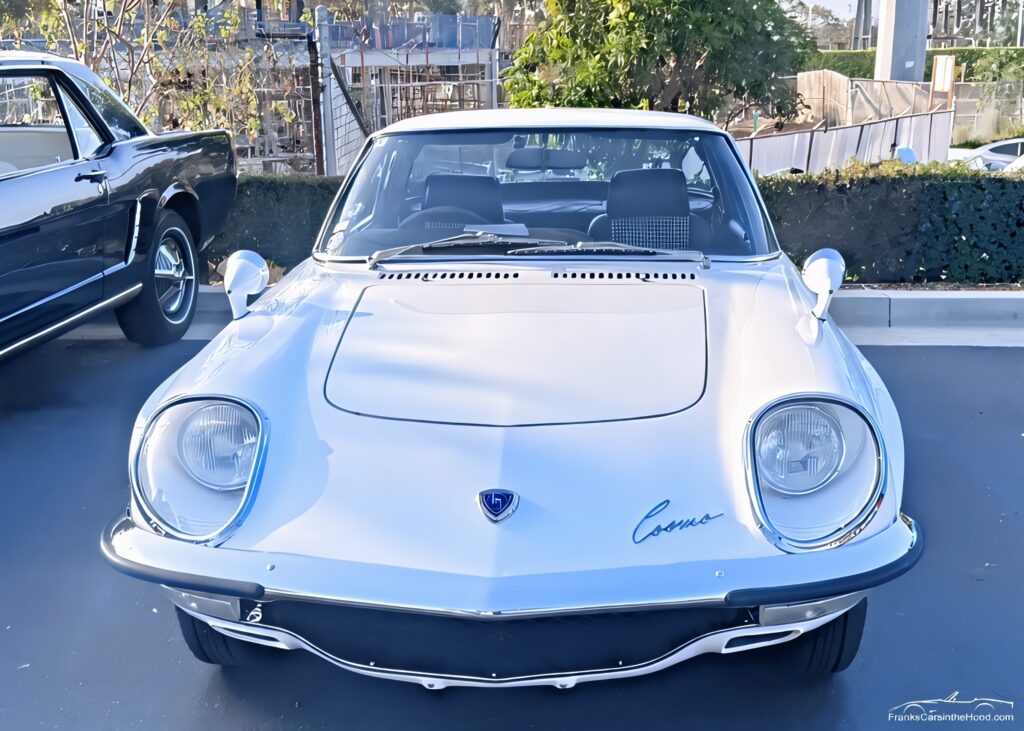
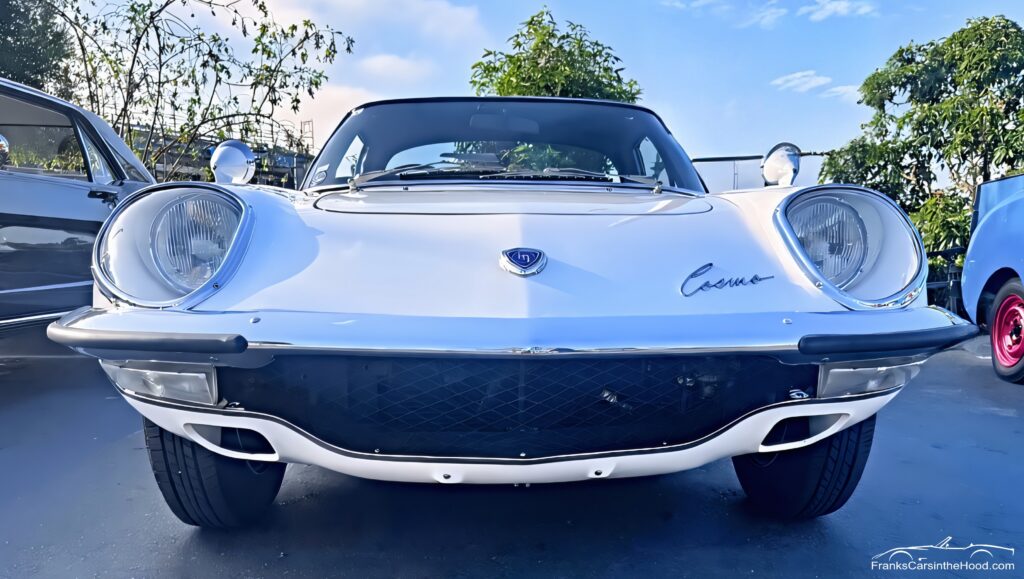
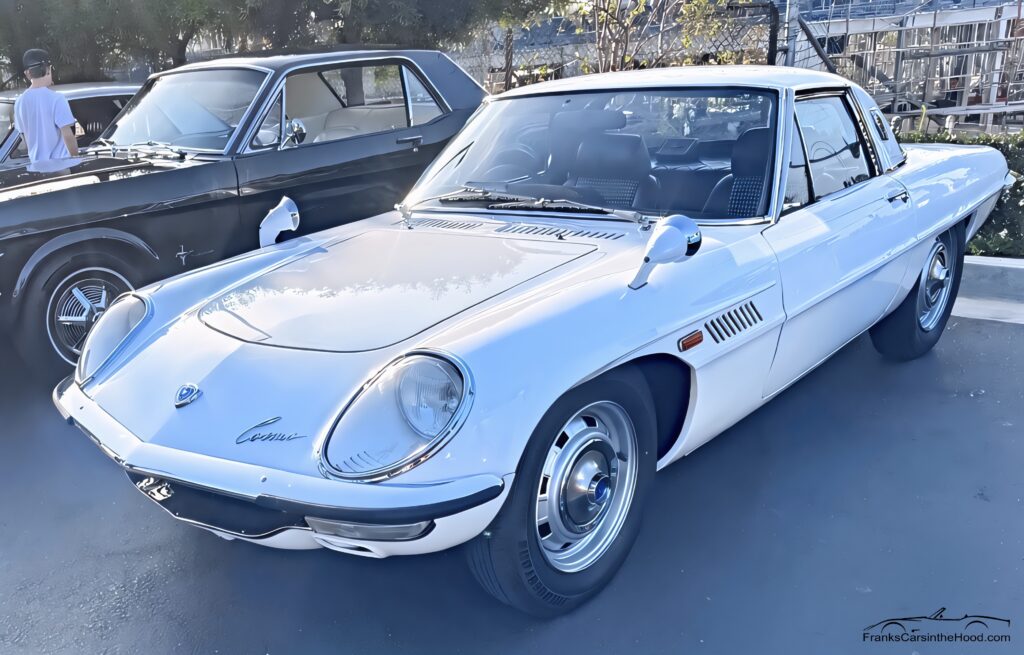
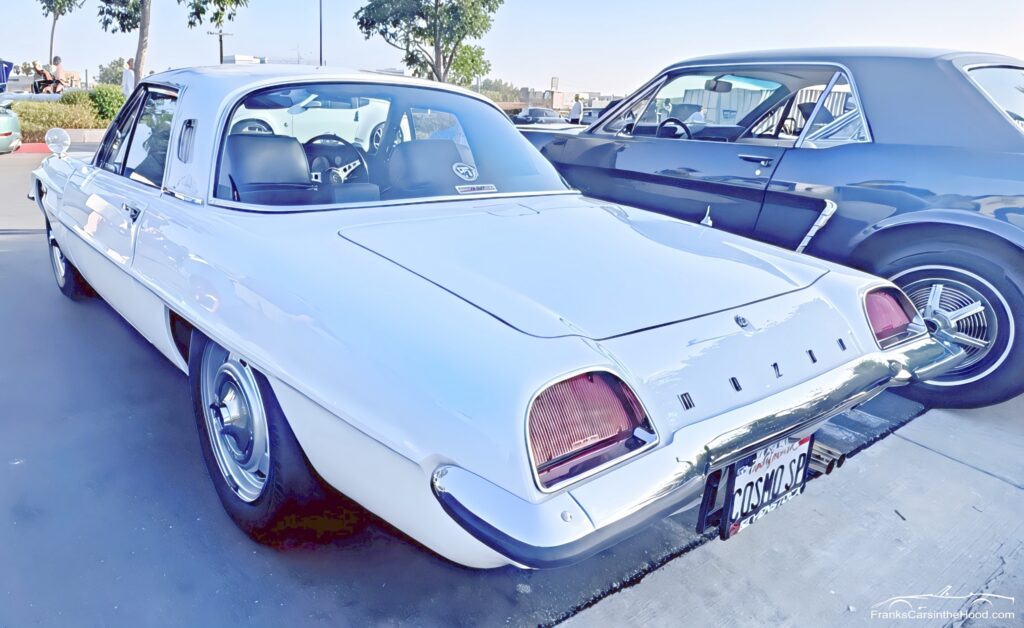
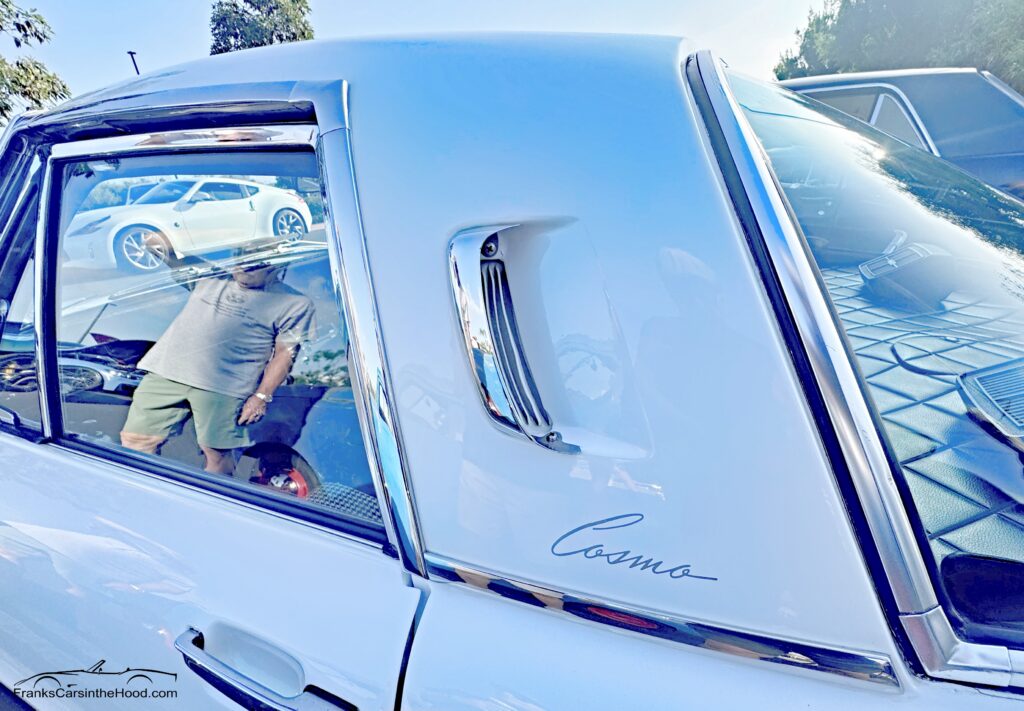
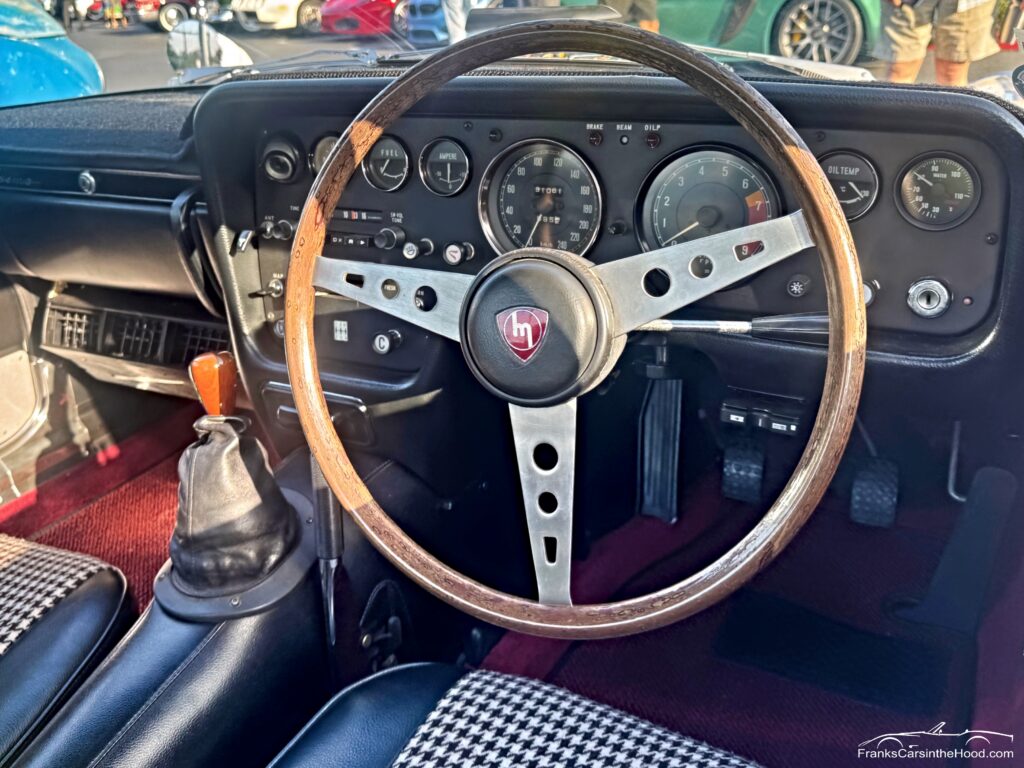
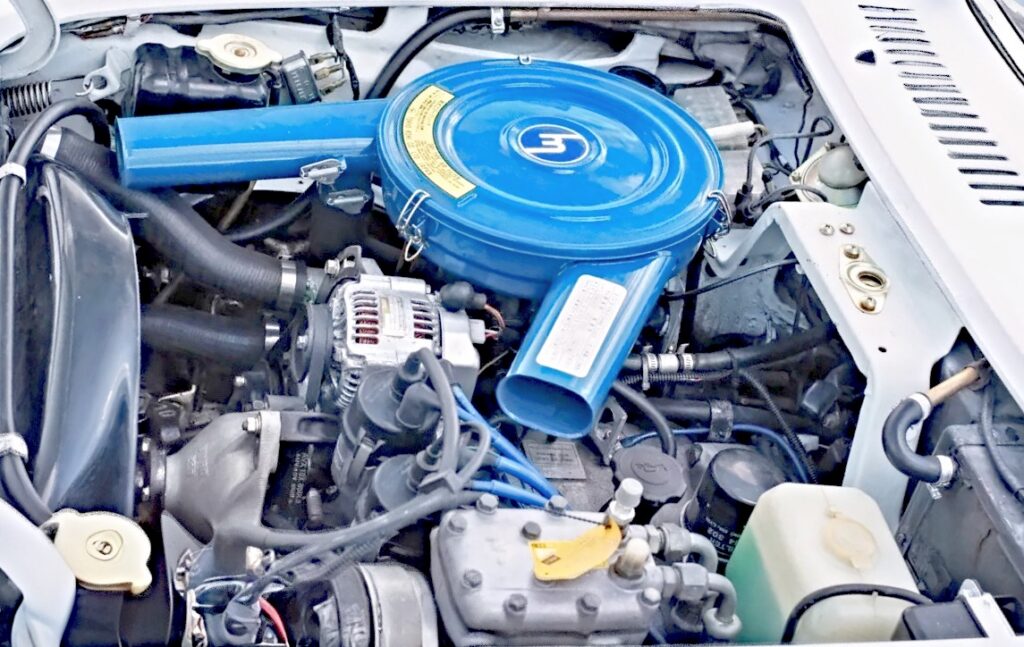
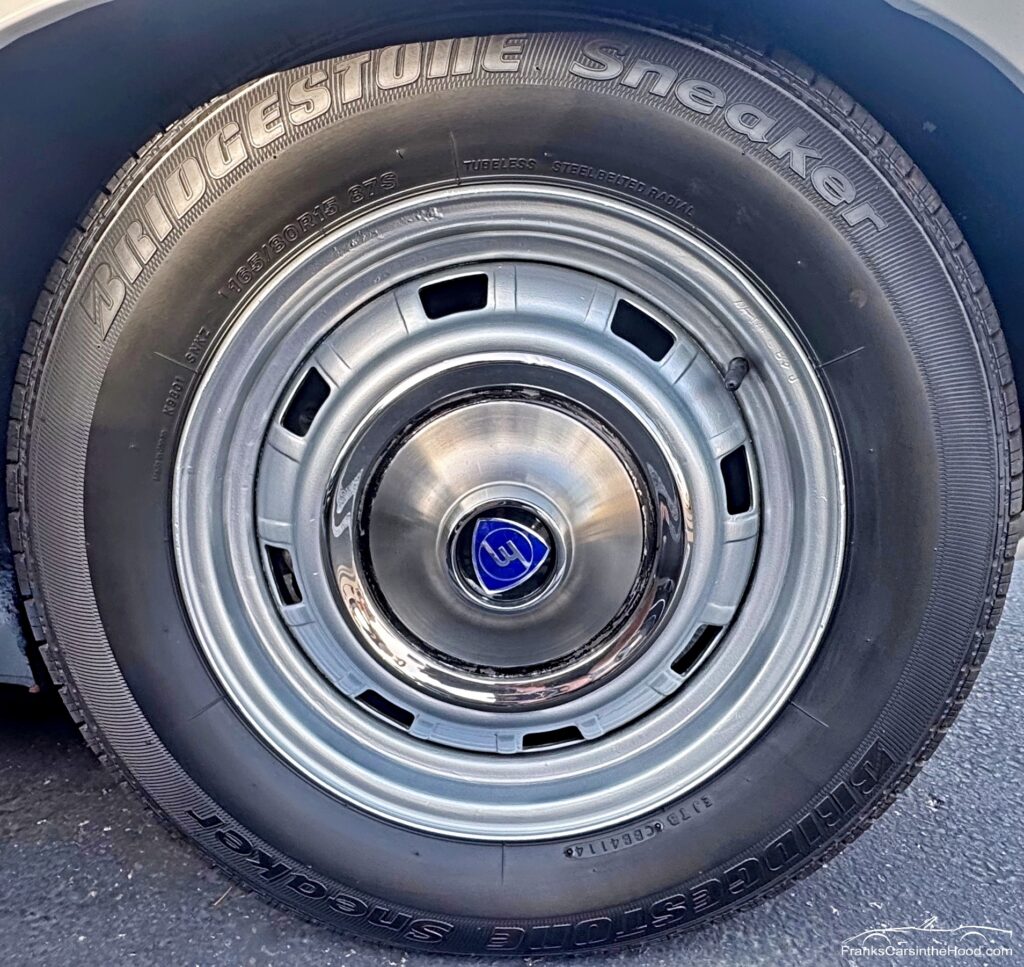
Today’s car is a Mazda Cosmo Sport Series II (L10B), built sometime between July 1968 and September 1972, which I photographed at Manhattan Beach Cars & Coffee in Manhattan Beach, CA. Finished in white with a black interior featuring black-and-white houndstooth seat inserts, it is powered by Mazda’s 982 cc 10A two-rotor Wankel rotary engine producing approximately 126 horsepower, fed by a single Hitachi four-barrel carburetor and backed by a five-speed manual transmission with a 4.11:1 rear axle ratio. The suspension consists of an independent double-wishbone front suspension with coil springs and a De Dion rear axle with semi-elliptic leaf springs, while power-assisted front disc brakes and rear drums provide the stopping power. Riding on 15-inch wheels, the Cosmo weighs approximately 2,100 pounds.
Mazda’s path to the Cosmo Sport began long before the car appeared. Founded in Hiroshima in 1920 as Toyo Cork Kogyo, the company initially manufactured cork products before moving into machinery and eventually vehicles. By the early 1960s, the company, then known as Toyo Kogyo, was looking for a technology that would distinguish it from Japan’s larger automakers. That opportunity came with the rotary engine developed by German engineer Felix Wankel. In 1961, Toyo Kogyo entered into a technical agreement with NSU Motorenwerke AG of West Germany to develop the rotary engine, beginning an engineering program that would ultimately become closely associated with the Mazda name.
Making the rotary engine reliable proved far more difficult than acquiring the rights to develop it. Mazda engineers encountered severe wear inside the rotor housing that left chatter marks nicknamed the “nail marks of the Devil.” Kenichi Yamamoto, who led Mazda’s rotary-engine development team, and his engineers spent years searching for a solution, eventually developing durable carbon apex seals (lightweight sealing strips impregnated with aluminum). Before the Cosmo Sport reached production, Mazda subjected its rotary engines to extensive testing, including approximately 435,000 miles (700,000 kilometers) of road testing, helping transform the promising but troublesome Wankel design into an engine Mazda believed was ready for everyday use.
With the rotary engine finally becoming viable, Mazda needed a car that could showcase the new technology. Mazda designer Heiji Kobayashi was responsible for the styling of the Cosmo Sport, which was first shown as a prototype at the 1963 Tokyo Motor Show. Its low roofline, long hood, flowing fenders, and distinctive rear styling gave the Cosmo a sporty appearance unlike anything else in Mazda’s lineup. Rather than rush the car into production, Mazda continued development for several more years, building 80 pre-production cars in 1965 and placing most of them with dealers for extensive real-world testing. The production Cosmo Sport finally went on sale in Japan on May 30, 1967, becoming the world’s first production sports car powered by a twin-rotor rotary engine.
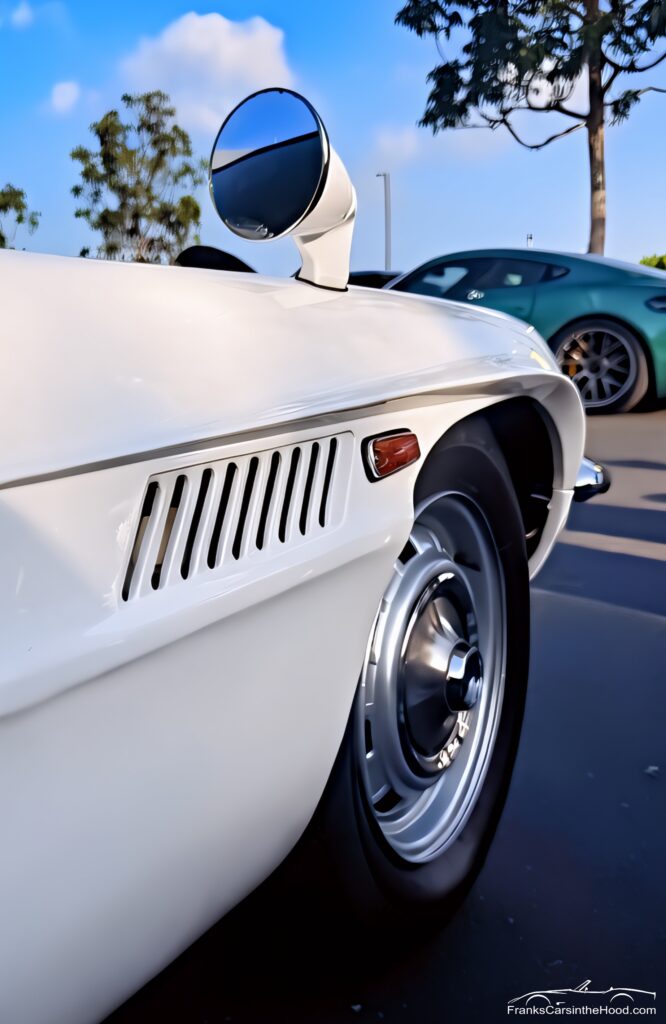
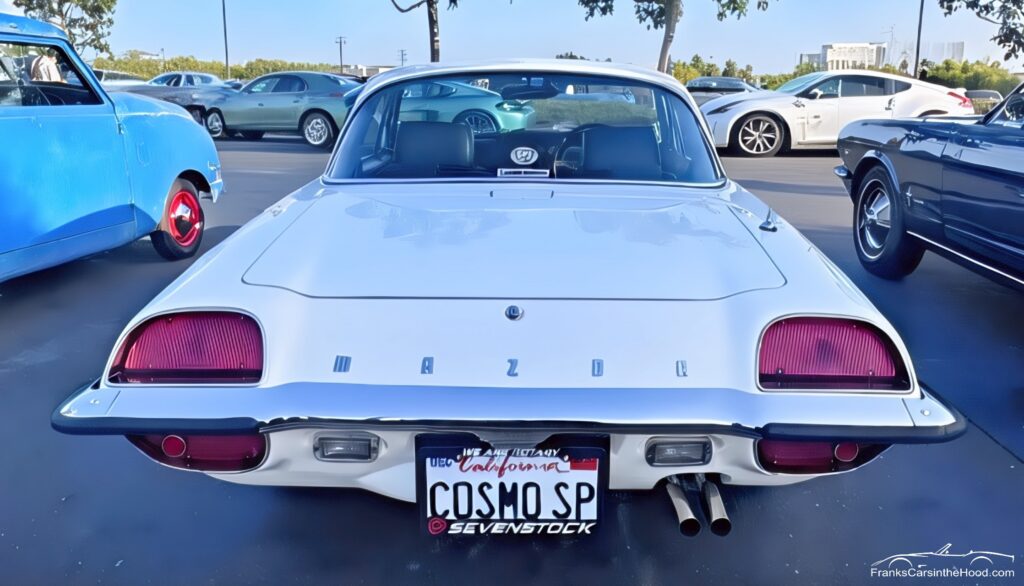
The first production Cosmo Sport was designated L10A, followed in July 1968 by the improved Series II L10B. The wheelbase was stretched nearly six inches to 92.5 inches for improved high-speed stability, while top speed increased from approximately 115 mph to 124 mph (185 km/h to 200 km/h). The larger opening below the front bumper and additional cooling vents on the Cosmo I photographed identify it as an L10B. The Cosmo I photographed was originally built for the Japanese Domestic Market (JDM). With no discernible year-to-year styling differences among L10Bs, we can only determine that this car was built sometime between July 1968 and September 1972.
Mazda built only 1,176 Cosmo Sports, including just 833 L10B Series II models. With each car largely hand-built, that works out to an average of only 16 to 17 L10Bs per month, helping explain why they are so rarely seen today.
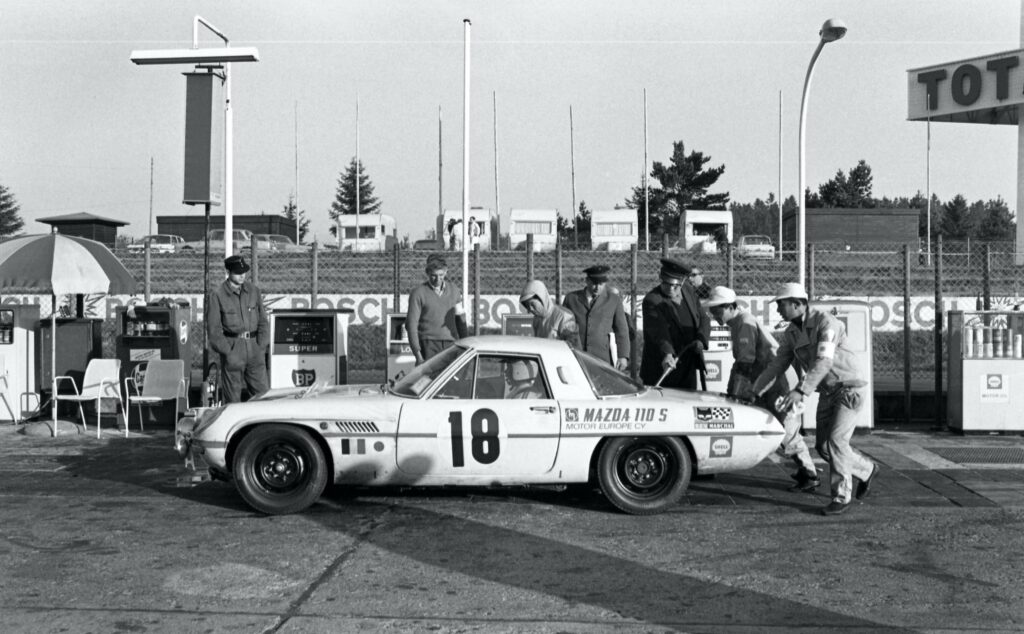
In August 1968, Mazda set out to prove the performance and durability of its rotary engine by entering two Cosmo Sports in the Marathon de la Route, an 84-hour endurance race held at Germany’s Nürburgring. The event ran for three and a half days around the 17.5-mile (28-kilometer) circuit, with 59 cars taking part. Both Cosmos ran strongly, but one retired after 82 hours. The remaining car completed more than 6,000 miles (9,700 kilometers) and finished fourth overall behind Porsche and Lancia, demonstrating the durability Mazda had spent years developing into its rotary engine.
The Cosmo Sport marked the beginning of Mazda’s long connection with the rotary engine, an association with RX-8 production ending in 2012. Fuel consumption, however, remained one of the rotary engine’s weaknesses. EPA testing in the early 1970s found Mazda rotary-powered cars had significantly poorer fuel economy than comparable piston-engine cars. That disadvantage became increasingly important following the 1973 oil crisis, when sharply rising gasoline prices made fuel economy a much greater concern for buyers. The rotary returned in 2023, this time serving as a generator in Mazda’s MX-30 e-Skyactiv R-EV plug-in hybrid rather than directly driving the wheels.
Seeing a Cosmo Sport at Manhattan Beach Cars & Coffee was an unexpected find. With so few L10Bs built and this one originally intended for the Japanese market, it is easy to understand why they are rarely seen in the U.S. More than half a century after it was built, its low roofline, long hood, fender-mounted mirrors, and distinctive taillights give the Cosmo a sporty appearance that still stands out today.
The Cosmo Sport remains an important part of Mazda’s history and a reminder of the engineering gamble the company took more than half a century ago when it committed itself to the rotary engine. Whether at a JDM car show, a local Cars & Coffee, or out on the road, this rare Cosmo Sport is sure to draw a crowd.
Thank you for riding along with me. Frank.