
Last updated on November 25, 2026
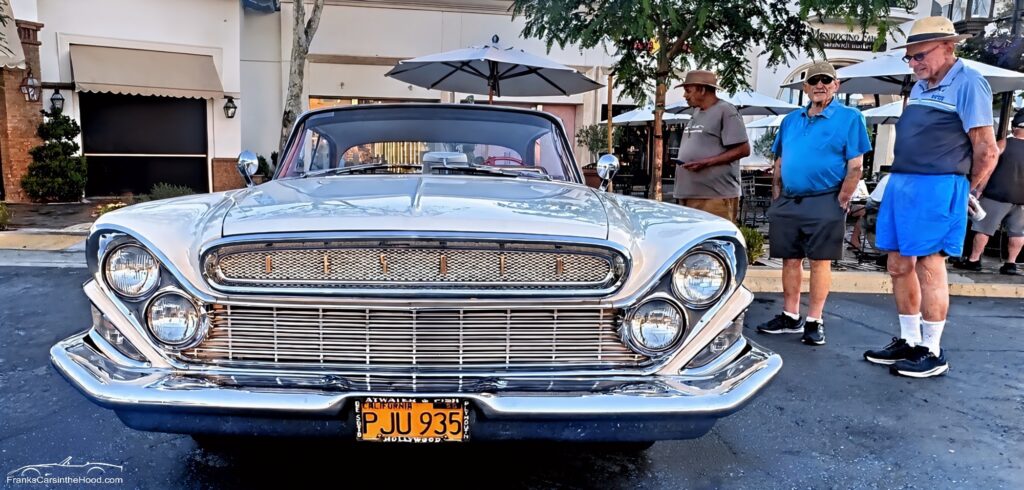
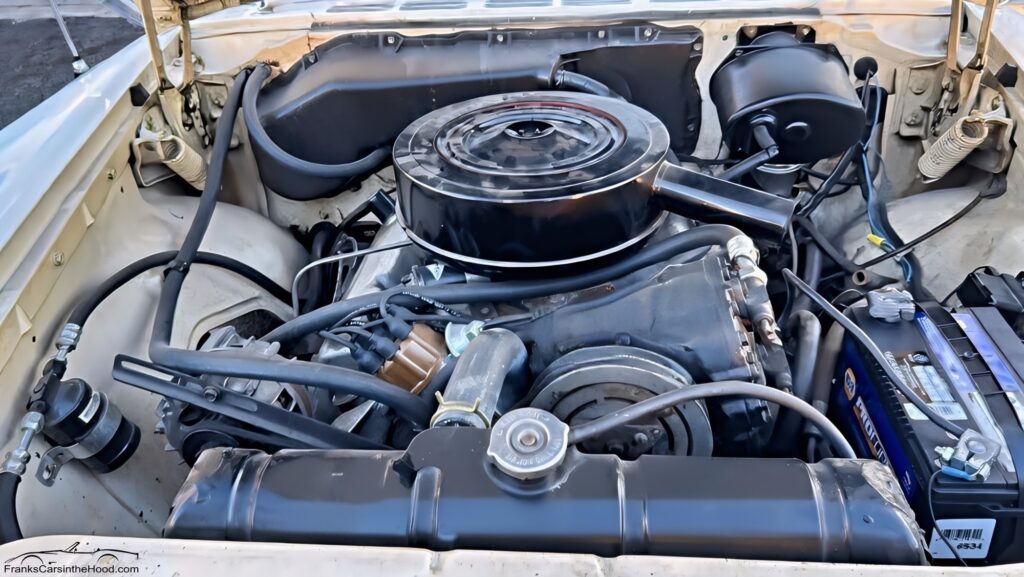
Today’s car is a 1961 DeSoto four-door hardtop owned by Frank Wetzel, which I photographed at the Million Dollar Breakfast Club in Marina del Rey, CA. Finished in Glacier White with a red interior accented in white and black, it is powered by a 361 cu in Turboflash V8 fitted with a Carter two-barrel carburetor. The factory rated the engine at 265 horsepower at 4,400 rpm and 380 lb-ft of torque at 2,400 rpm. The engine is paired with a push-button TorqueFlite three-speed automatic transmission. With the TorqueFlite, the factory supplied a 2.93:1 rear end as standard and offered 3.23:1 gears as an option. Four-wheel drum brakes provide stopping power. The front suspension is independent with torsion bars, ball joints, and shock absorbers, while the rear uses a live axle with tapered leaf springs and shock absorbers.
Chrysler Corporation introduced DeSoto in August 1928 for the 1929 model year. Named for the Spanish explorer Hernando de Soto, the new make gave buyers a step up from the low-priced Plymouth while keeping the price below that of a Chrysler. The company had introduced Plymouth and acquired Dodge Brothers that same summer, and DeSoto became its fourth automotive division.
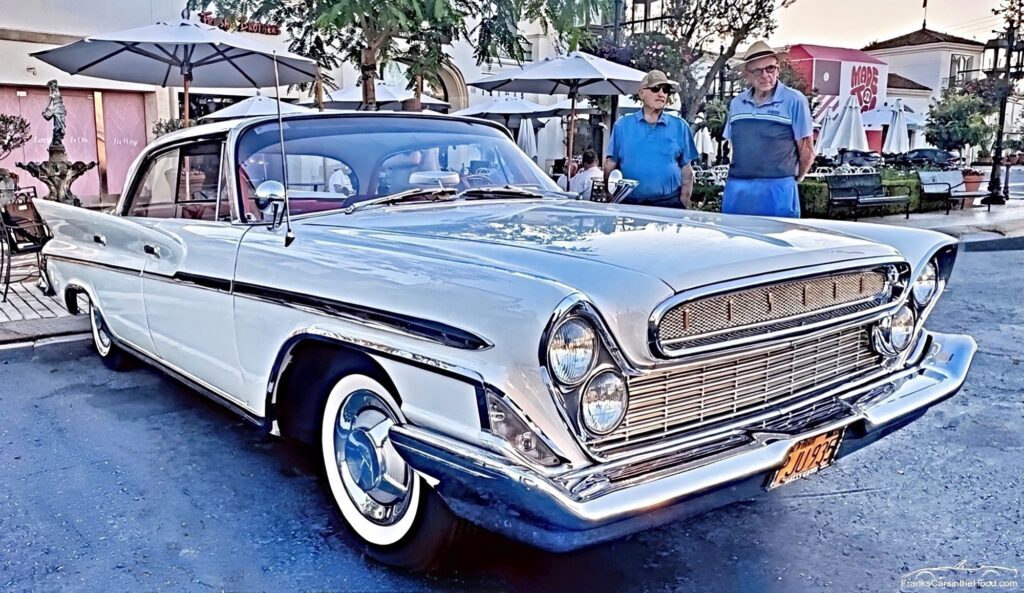
DeSoto took on a new shape for 1955 under Chrysler styling chief Virgil Exner. His “Forward Look” gave the cars lower, sleeker bodies and wraparound windshields. On cars ordered with the sweeping two-tone paint treatment, the contrasting color drew the eye along the body, helping the DeSoto look as though it was moving even when parked. As the styling evolved, taller tailfins gave DeSoto a distinctive look of its own.
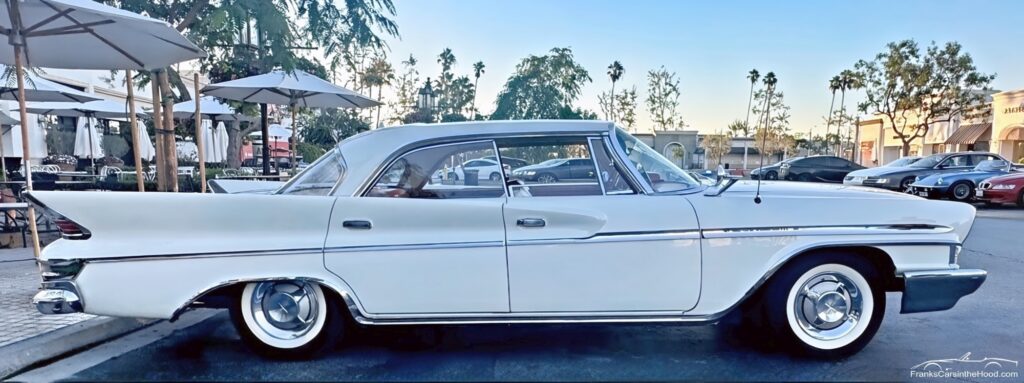
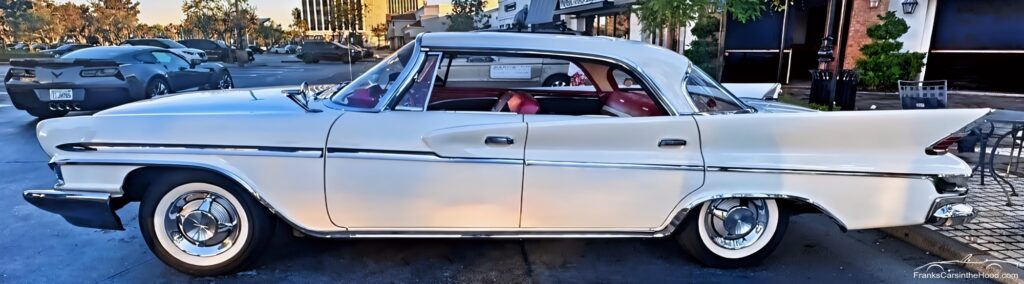
DeSoto adopted unibody construction for 1960, when the lineup had already narrowed to the Fireflite and Adventurer. Both names disappeared for 1961, leaving a single DeSoto series offered as either a two-door or a four-door hardtop. The final model was easy to pick out from the front. Two grille openings, each with a different pattern, sat between diagonally stacked pairs of headlights. At the rear, the long fins swept outward and ended in chrome-trimmed taillights.
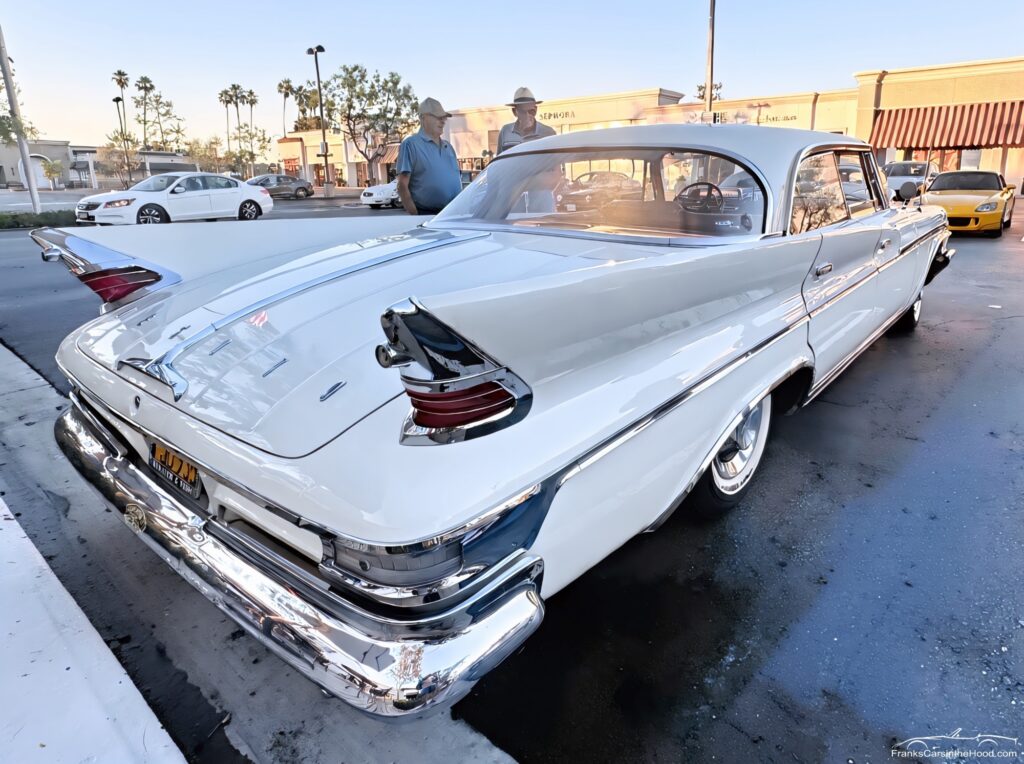
Chrysler notified DeSoto dealers on November 18, 1960, that it was discontinuing the 1961 DeSoto. Twelve days later, on November 30, the last DeSoto rolled off the assembly line in Detroit, just 47 days after the ’61s went on sale. From its launch in 1928 through the 1961 model year, DeSoto built more than 2 million cars. Of those, 3,034 were 1961 models, including 911 two-door hardtops and 2,123 four-door hardtops. The four-door hardtop, like Frank’s, had a base price of $3,166 and a shipping weight of 3,820 lbs. It had an estimated 0–60 mph time of 9.1 seconds and an estimated top speed of 115 mph.
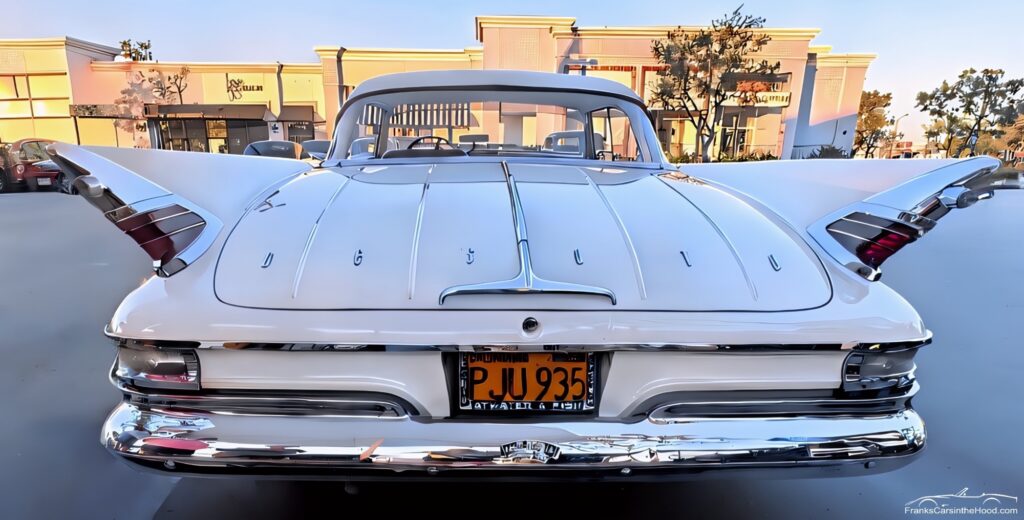
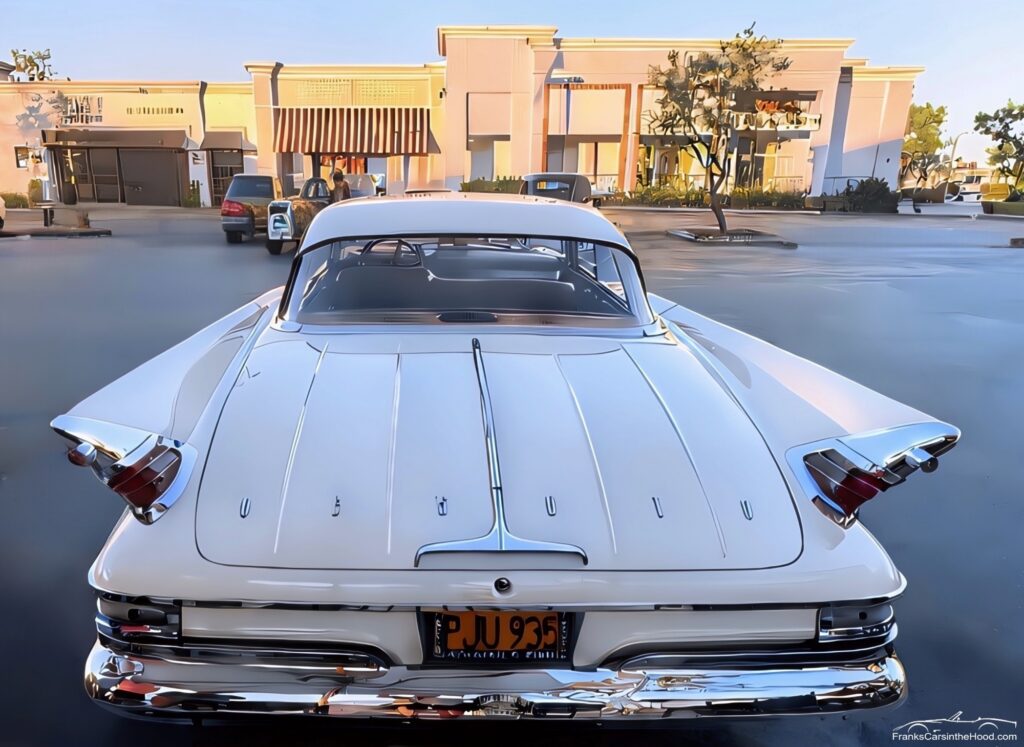
Frank Wetzel’s mother had owned a 1960 DeSoto, and he’d always wanted one with similar lines. The collector who owned this ’61 had 82 cars when Frank first met him. Frank bought 10 cars from him over the years, but the DeSoto was the one he kept coming back to. The collector saw his cars as works of art, and for 15 years he refused to part with this one.
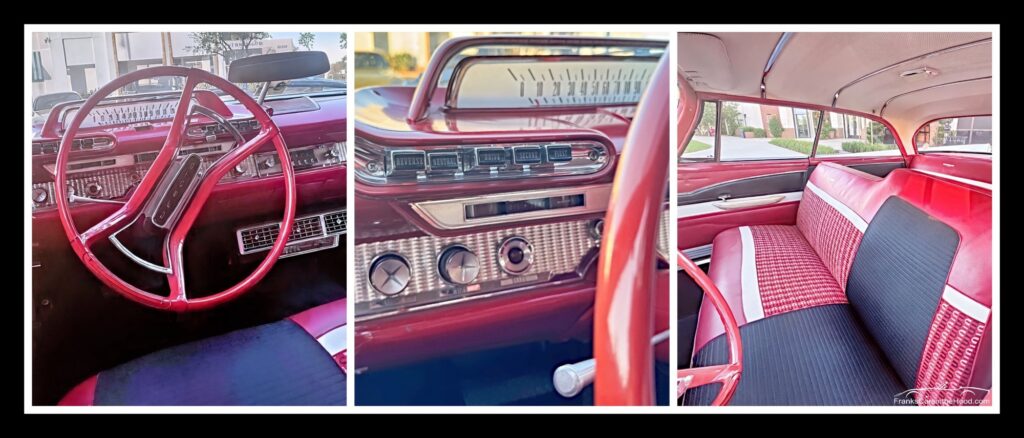
After the collector died, Frank went back to see which cars were still available. The estate had already sold about 20 and offered him a deal on the remaining 41. Frank and his business partner bought them all. Getting the cars out was a job in itself. At one garage on a hillside in Granada Hills, the tires had sunk into the asphalt. Frank used a tow dolly to bring the cars down the hill. They sold 20 of the cars, and Frank finally had his DeSoto.
Standing beside Frank’s DeSoto, I could see why he loved its lines. I could picture this land yacht pulling into a classic Mopar show, showing up at Cars and Coffee events, or just cruising around Marina del Rey. It would draw a crowd wherever it went. Frank summed it up best. “It’s unusual, but it’s classic.”
Thank you for riding along with me. I will see youn down the road.
Frank