Last updated on November 4, 2026

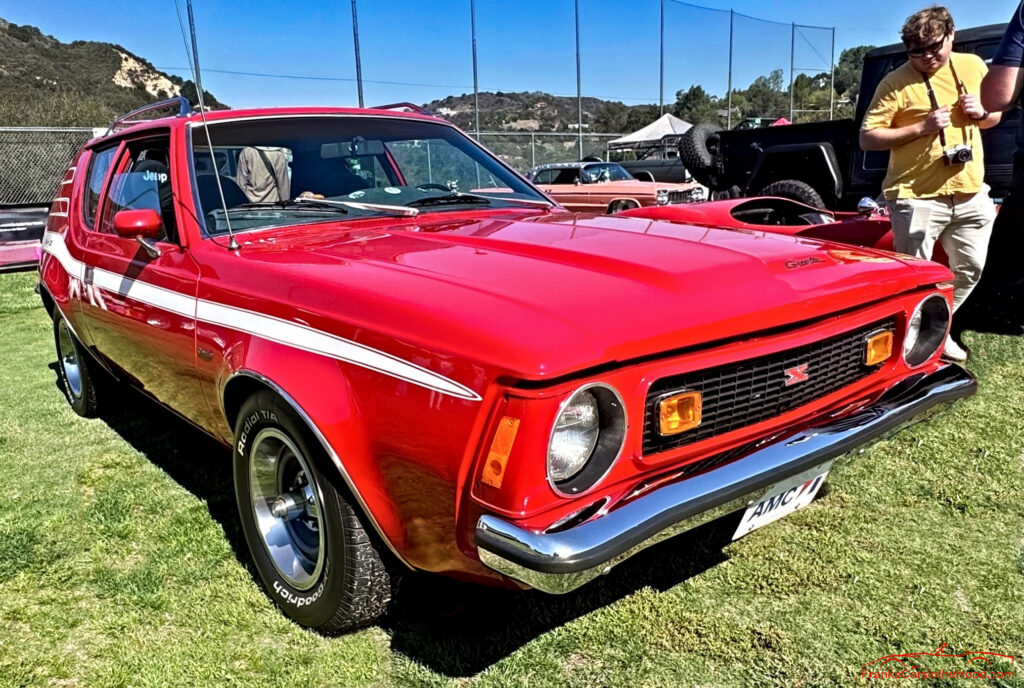
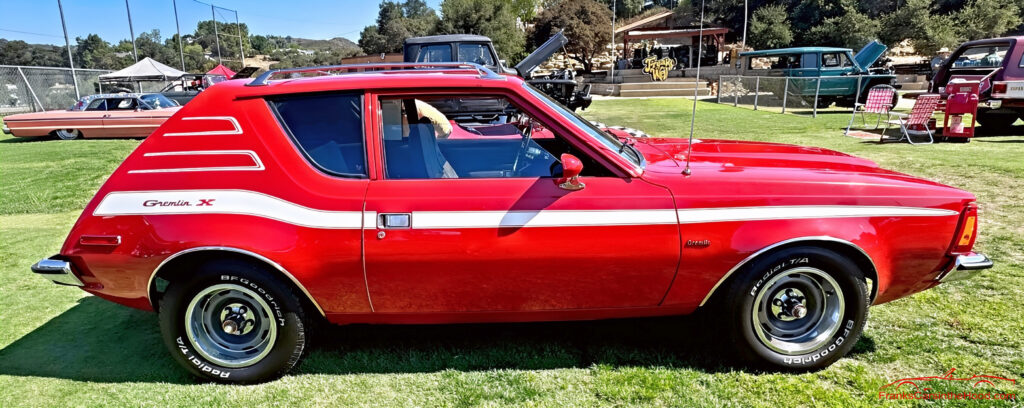
Today’s car is a 1973 AMC Gremlin X owned by Michael Lynch, which I photographed at Amelia Dalgaard’s 2nd Annual Freak of the Week Car Show in Topanga, CA. Finished in its original Trans-Am Red color with a largely original black vinyl interior and reupholstered bucket seats featuring gray cloth inserts, it is powered by a 304 cubic inch V8 equipped with an Autolite 2100 two-barrel carburetor producing 150 horsepower. The engine is paired with a Torque-Command three-speed automatic transmission and a Twin-Grip limited-slip rear end with 3.15:1 gears. Power front disc brakes and rear drum brakes provide stopping power, while the suspension consists of an independent front suspension with heavy-duty coil springs, shock absorbers, and a sway bar, and a rear suspension consisting of a live rear axle with heavy-duty leaf springs and shock absorbers.
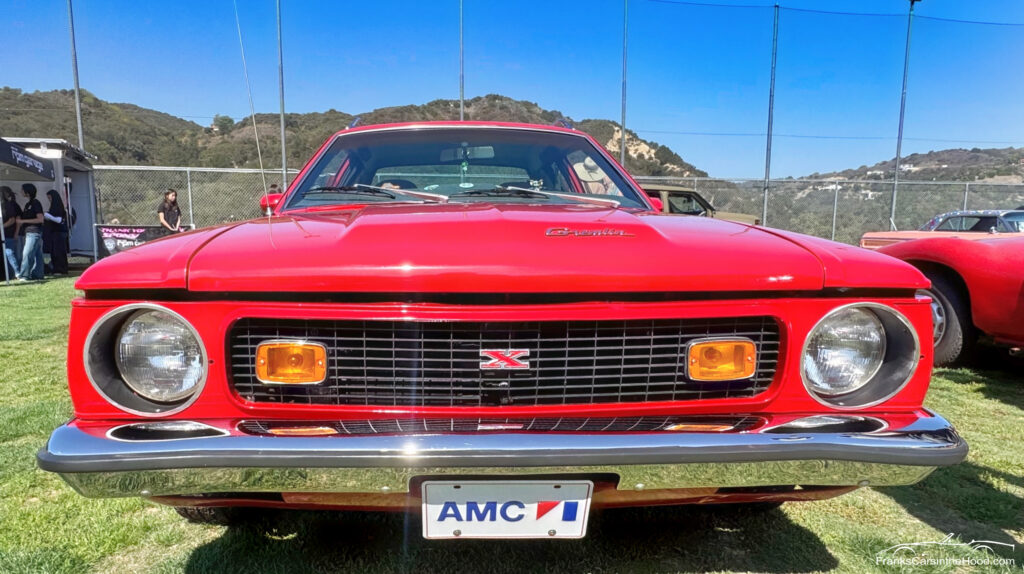
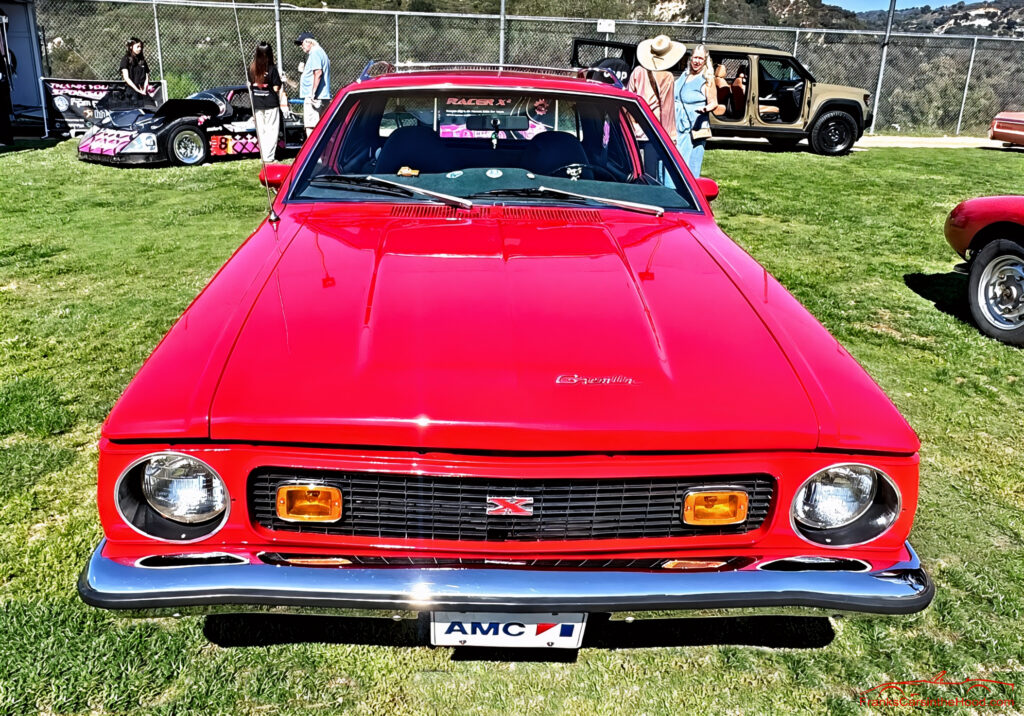
This is the last in a series of cars I photographed at Amelia Dalgaard’s 2nd Annual Freak of the Week Car Show in Topanga, CA, co-sponsored by Scott Martin and Caruso Classics. The event brings together cars with character and people with personality, celebrating the weird, the wacky, and the wonderfully original. While Michael Lynch’s 1973 AMC Gremlin X is a factory-built original rather than a custom creation, its unconventional design was just as unusual when it was new as it is today, making it a great fit for the show.
American Motors Corporation (AMC) was formed on May 1, 1954, through the merger of Nash-Kelvinator Corporation and Hudson Motor Car Company. The merger was led by Nash president George W. Mason, who believed the independent automakers needed to join forces to compete with General Motors, Ford, and Chrysler. Following Mason’s death in October 1954, George W. Romney took over as president and shifted the company’s focus toward smaller, more economical cars. By 1957, AMC had discontinued the Nash and Hudson nameplates, concentrating on its increasingly popular Rambler models. This approach helped establish AMC as an alternative to the larger cars offered by Detroit’s Big Three.
The Gremlin’s design began in 1966 under AMC vice president of styling Richard A. “Dick” Teague and designer Bob Nixon, who were exploring ways to develop a smaller, affordable car using existing AMC components. According to a well-known story, Teague sketched the proposed design on the back of an airline airsickness bag while discussing the idea with AMC executive Gerry Meyers. Nixon and his design team developed the initial drawings and a half-scale clay model. The project was then transferred to designer Vince Geraci’s studio, where his team completed a full-size clay model and refined the grille, taillights, and trim. The resulting design featured a long hood and sharply cut-off rear end, giving the Gremlin an appearance unlike anything else on American roads.
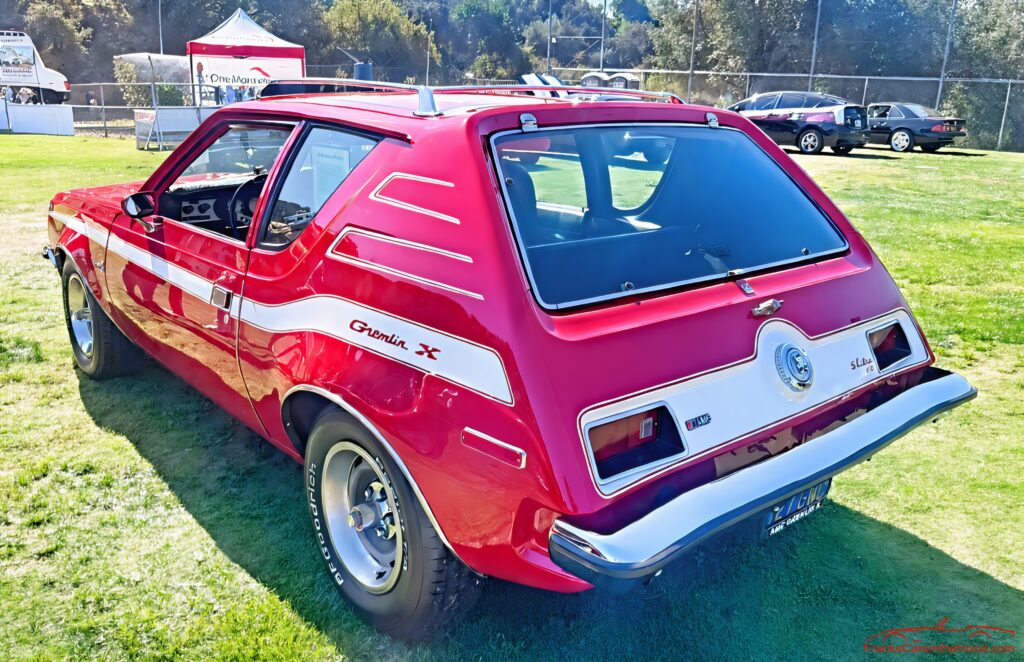
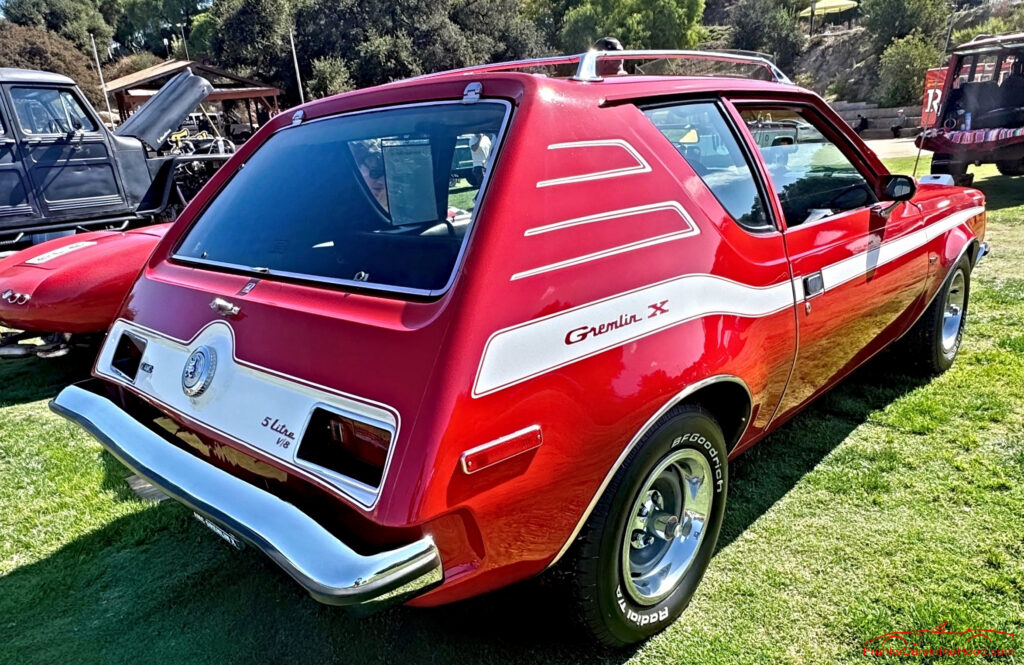
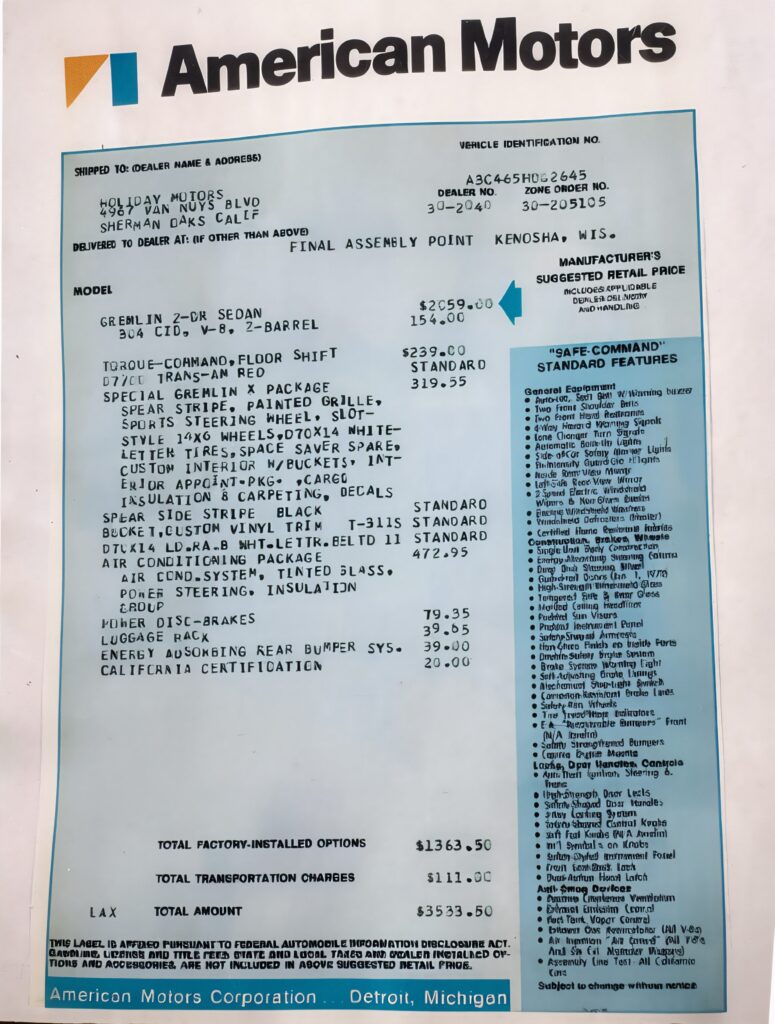
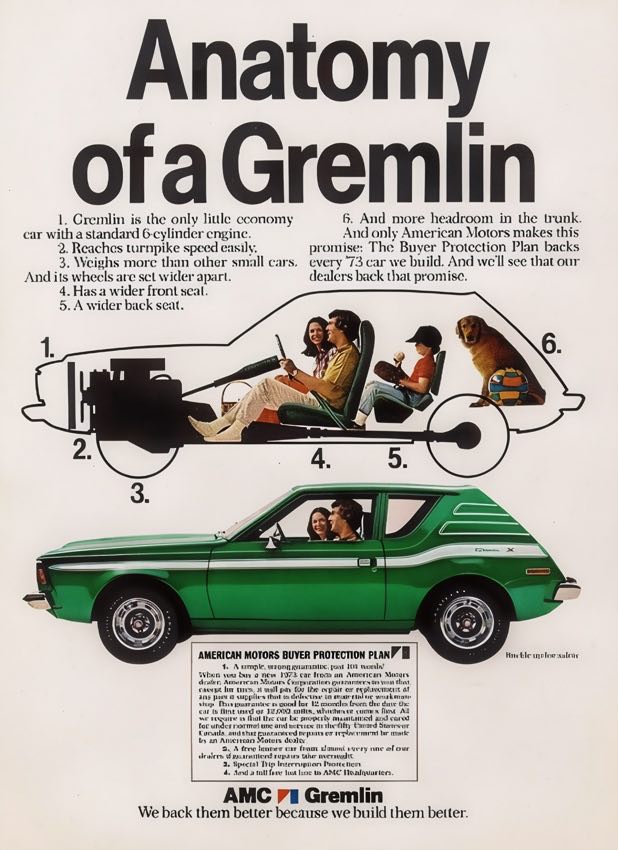
AMC introduced the Gremlin on April 1, 1970, as an American-built alternative to imported subcompacts such as the Volkswagen Beetle. Built on a shortened Hornet platform, it was initially offered in two- and four-passenger versions, with a starting MSRP of $1,879. The Gremlin X was primarily an appearance package rather than a separate high-performance model. Available with either a six-cylinder or V8 engine, the X package gave the Gremlin a sportier look without necessarily adding more horsepower. The Gremlin remained in production through 1978, with 671,475 built during its nine-year run. For 1973, AMC produced 122,844 Gremlins, including approximately 11,672 equipped with the optional 304 cubic inch V8. Michael’s Gremlin X had a base MSRP of $2,059, but with factory options and shipping, its original window sticker totaled $3,533.50. The 304 cu in V8-equipped Gremlin X had an as-tested weight of 2,850 pounds and could accelerate from 0 to 60 mph in 9.6 seconds and reach a reported top speed of 105 mph.
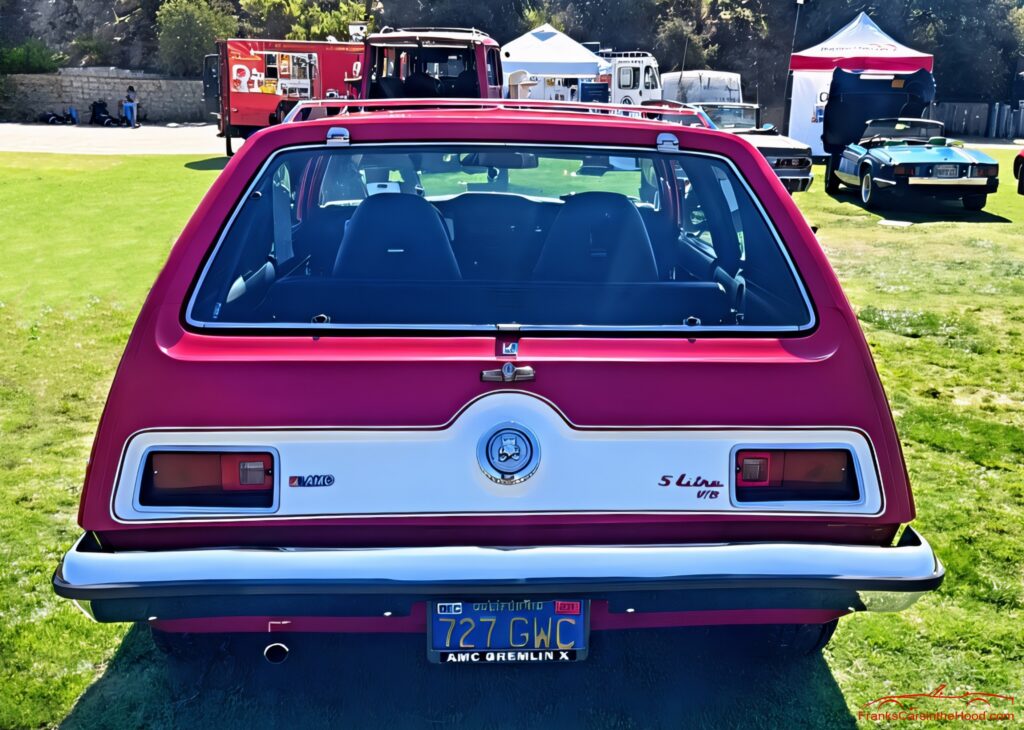
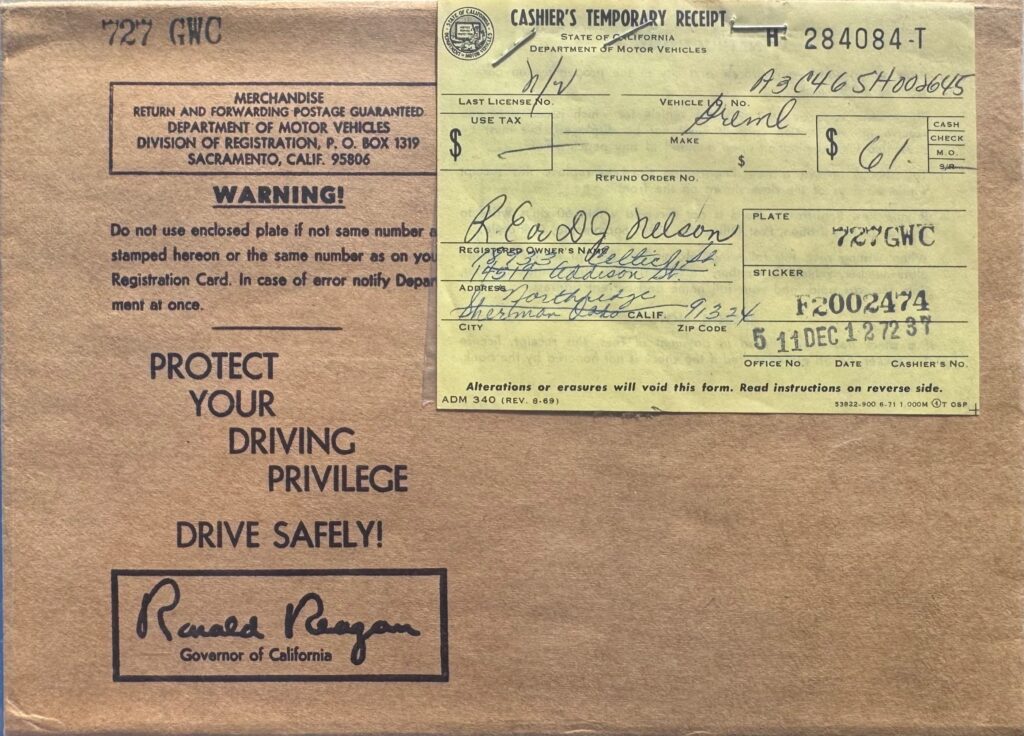
Michael Lynch is the second owner of the Gremlin, which was originally purchased new by Roger Nelson, an engineer at Rocketdyne, from Holiday Motors in Sherman Oaks, CA, on November 15, 1972. Roger had spotted the Gremlin on the showroom floor and decided to buy it, despite friends joking that he was buying half a car. Following Roger’s passing, Michael helped Roger’s wife by occasionally driving the Gremlin to keep the battery charged. Roger’s grandchildren had also driven the car before it was eventually parked. When Roger’s widow offered Michael the Gremlin, she had one condition. As Michael recalled, “So she said, ‘If you want the car, I’ll give it to you. But you can’t turn around and sell it.’” Michael agreed.
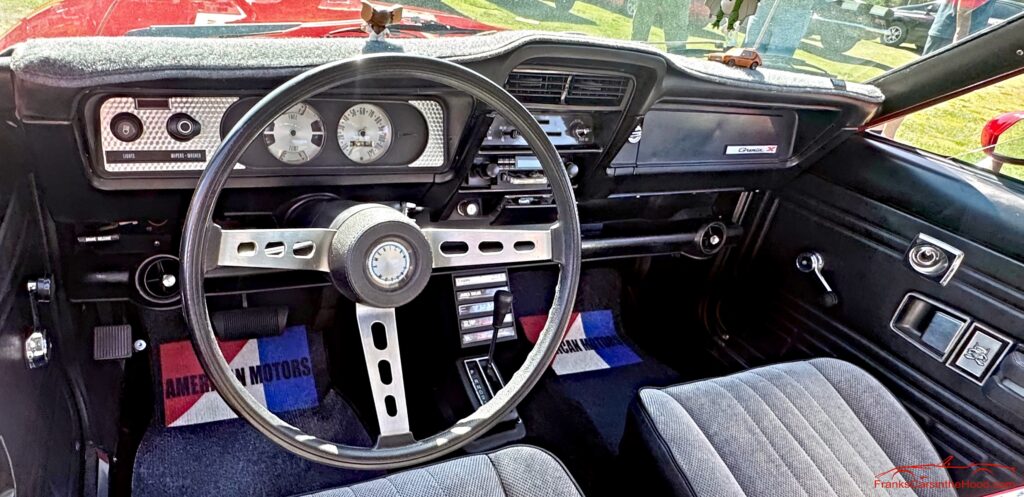
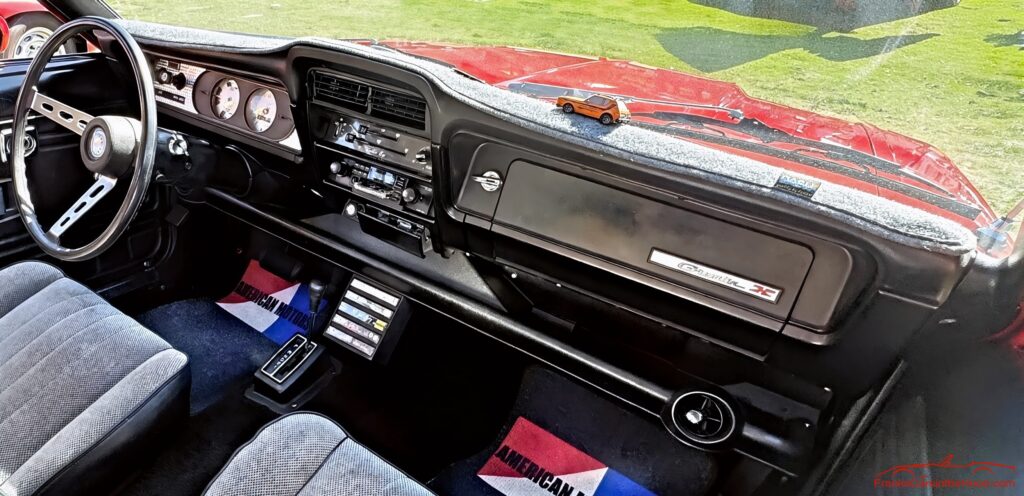
When Michael took possession of the Gremlin, it had been sitting for some time and wouldn’t start. After installing a new battery and replacing a relatively inexpensive component, he got the engine running again. Years of limited use had taken their toll, however, and Michael began replacing deteriorated rubber parts and addressing other mechanical issues. He then had the Gremlin repainted in its original Trans-Am Red at a shop in Van Nuys, CA, followed by the application of the factory stripes. The bumpers and wheels were restored, and the bucket seats were reupholstered. Michael’s goal was to preserve the Gremlin’s original character rather than modify it, keeping it much as it appeared when Roger first purchased it.
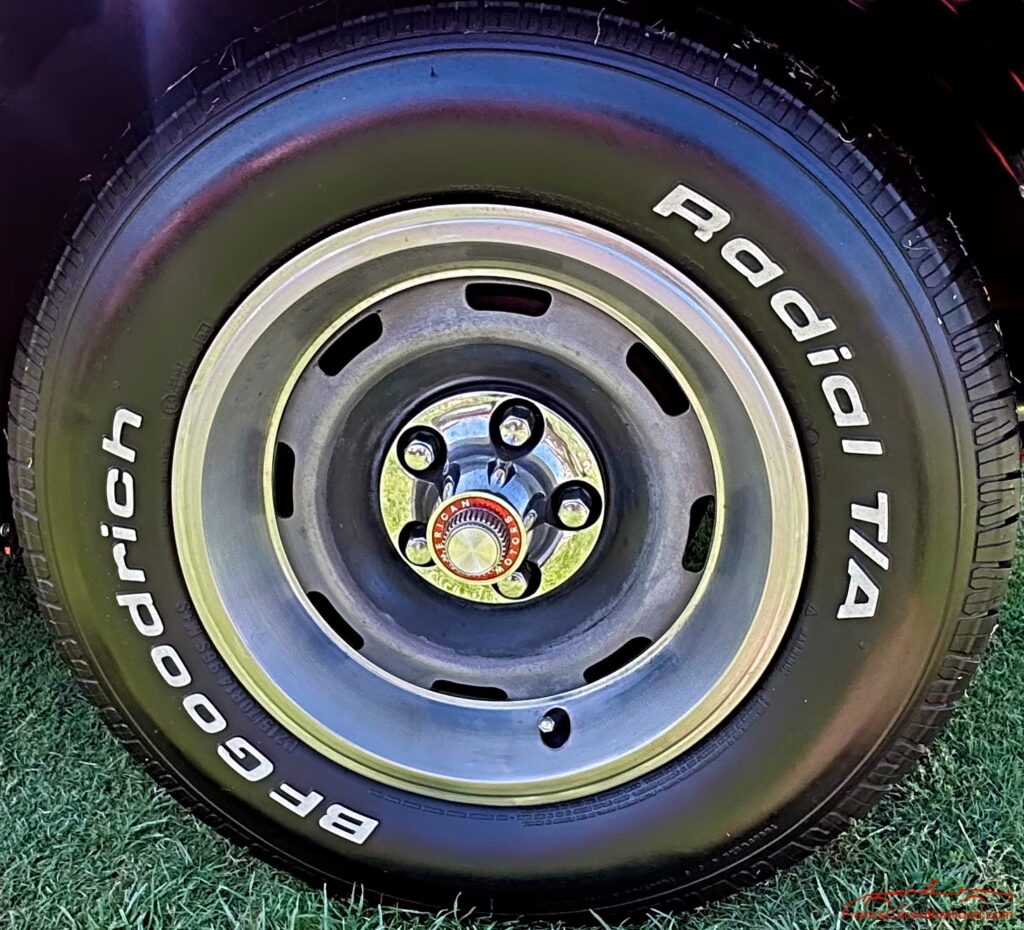
Looking at Michael’s 1973 AMC Gremlin X today, it’s hard not to appreciate how well this unusual little car has survived. Its bright red finish, factory stripes, and restored details make it a real standout, while its largely original interior adds to its 1970s character. Michael has done a wonderful job bringing the Gremlin back to life without losing what made it special in the first place. Whether at a Freak of the Week show, an orphan car show, a local Cars & Coffee, or taking a Sunday ride along the coast, Michael’s Gremlin is sure to attract attention and spark conversations. More than 50 years after Roger Nelson drove it home from Holiday Motors, this Gremlin remains a reminder of a time when American Motors wasn’t afraid to do something different.
Thank you for riding along with me and for being part of the Frank’s Cars in the Hood community.
Frank