Last updated on August 26, 2026
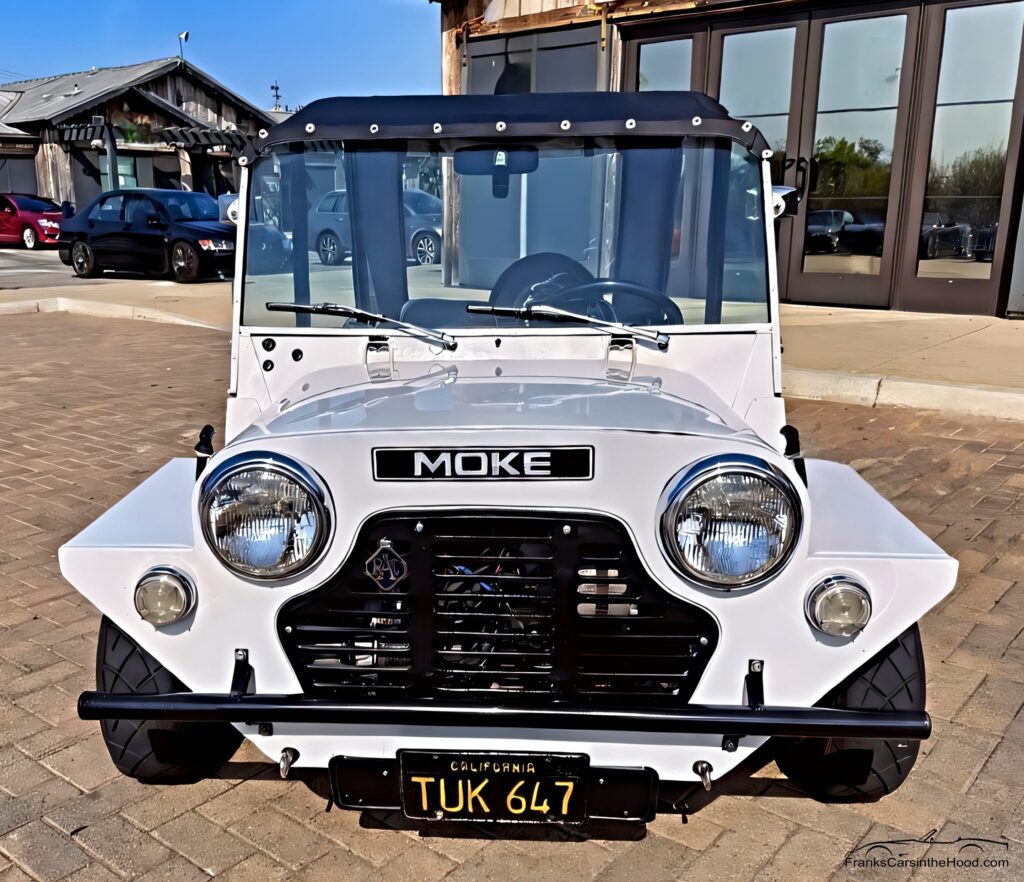
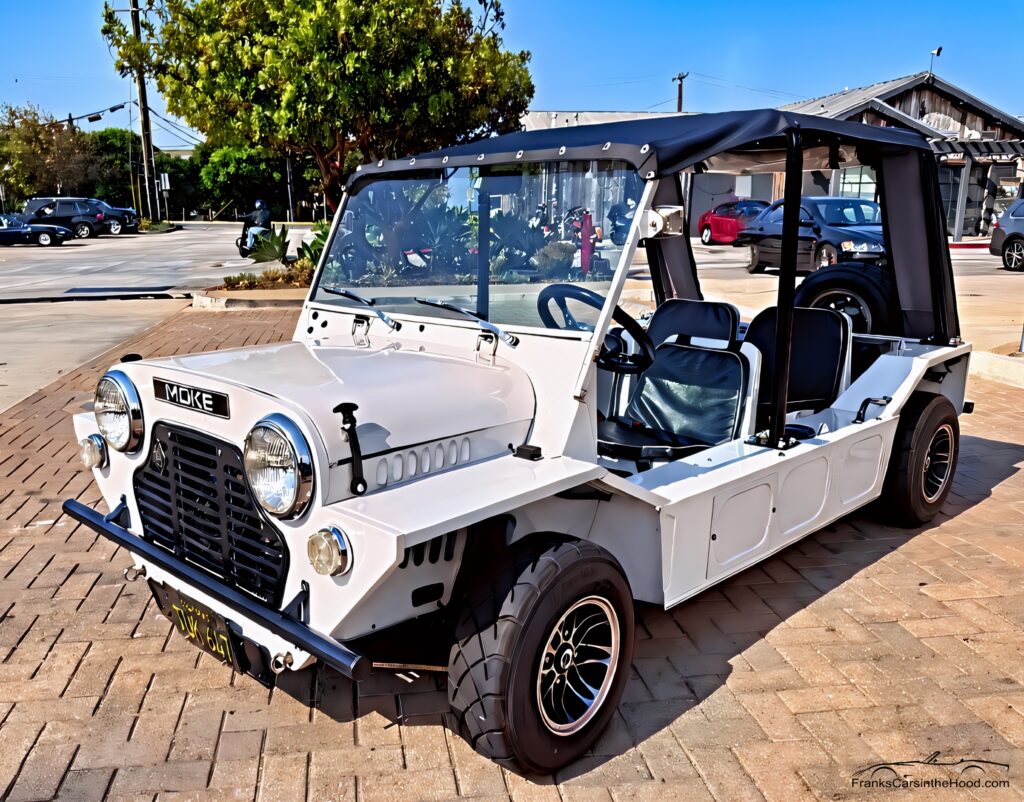
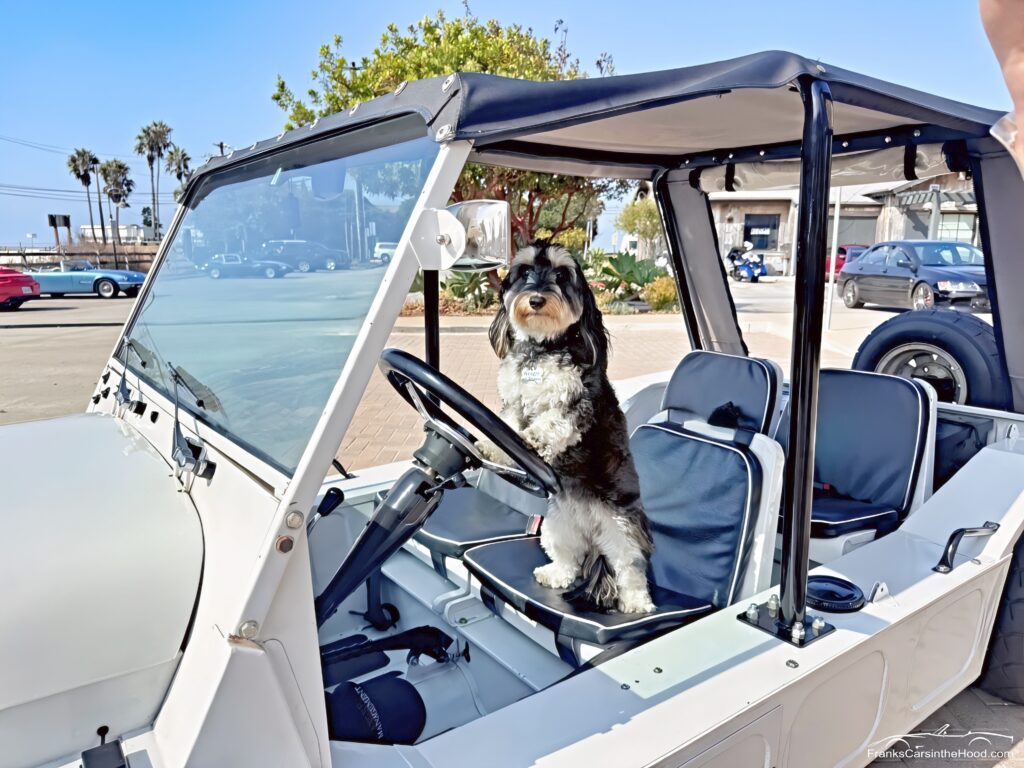
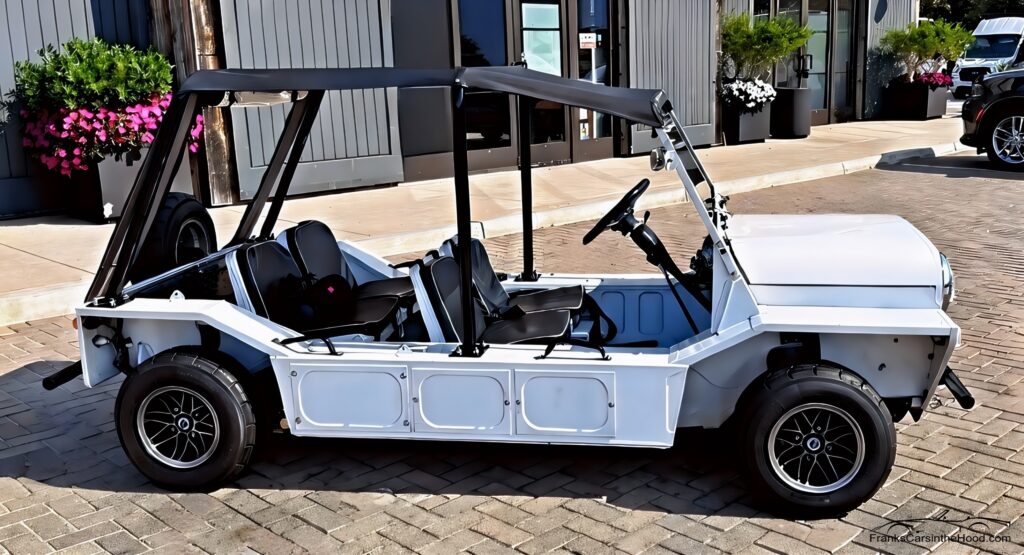
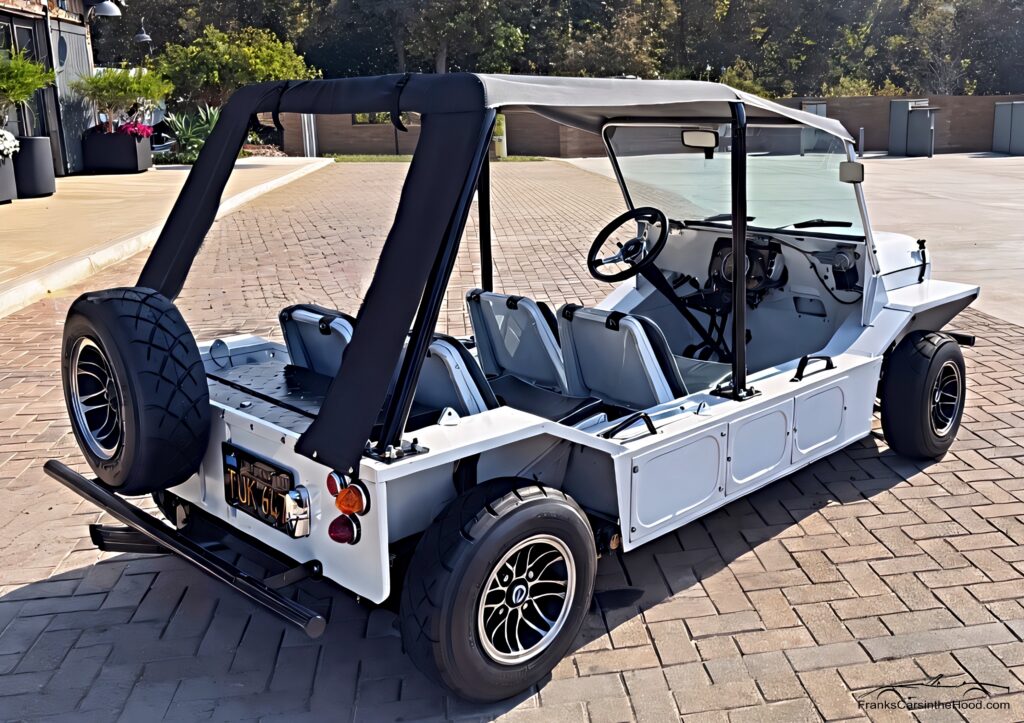
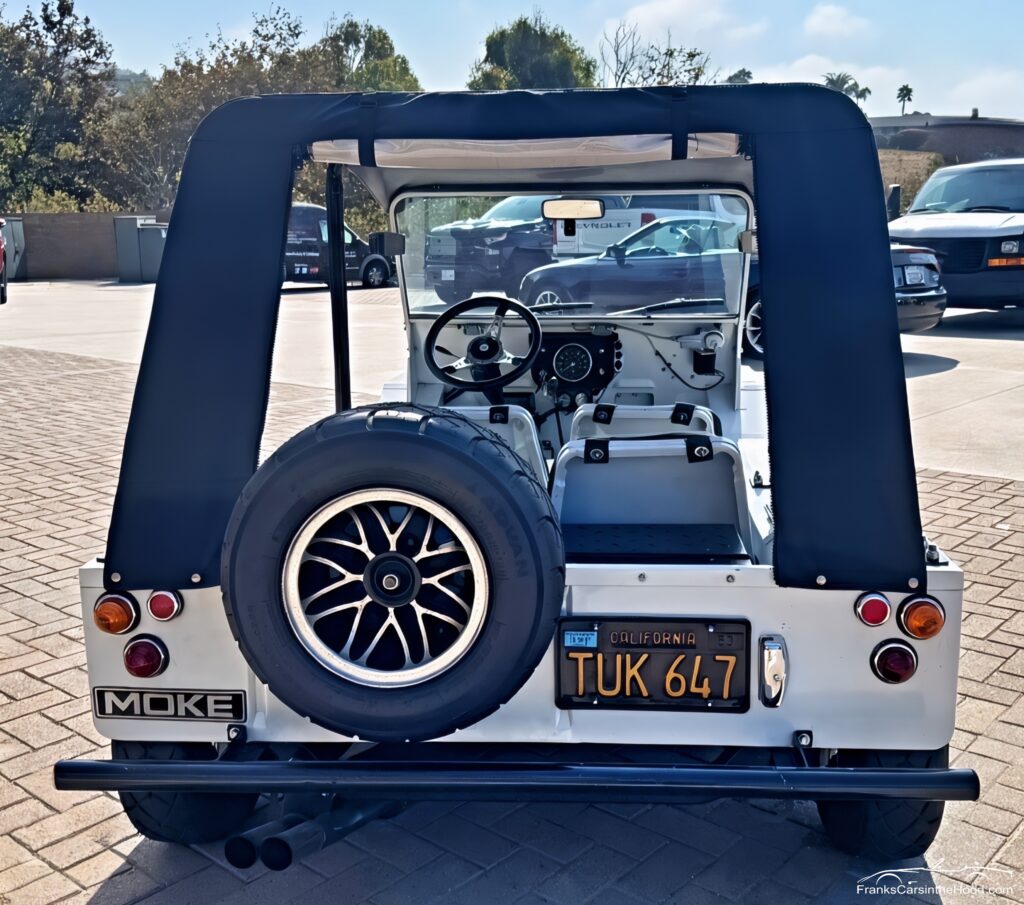
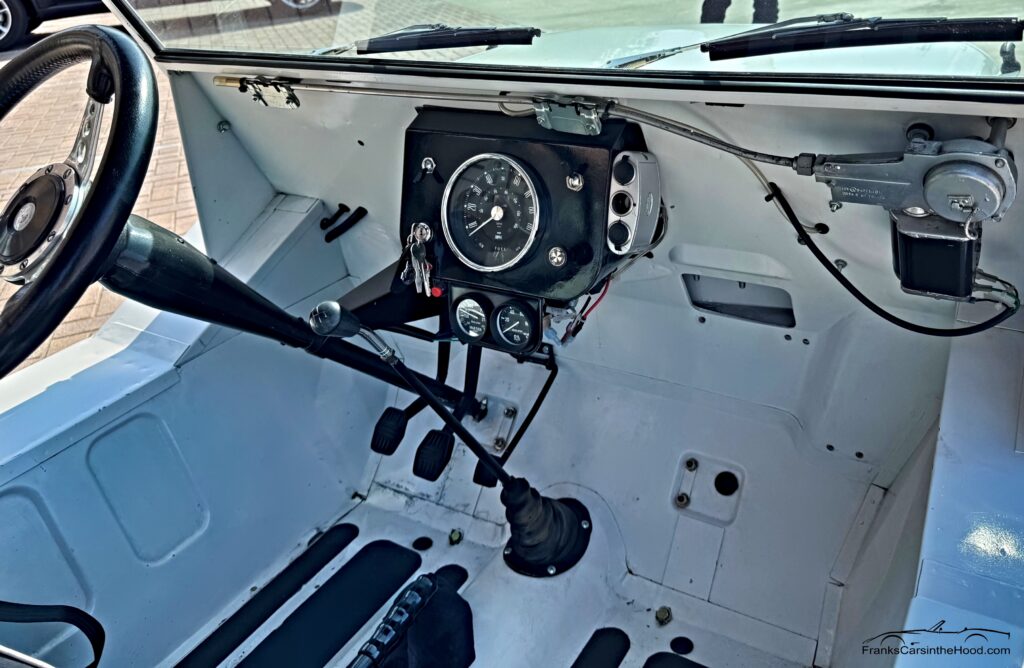
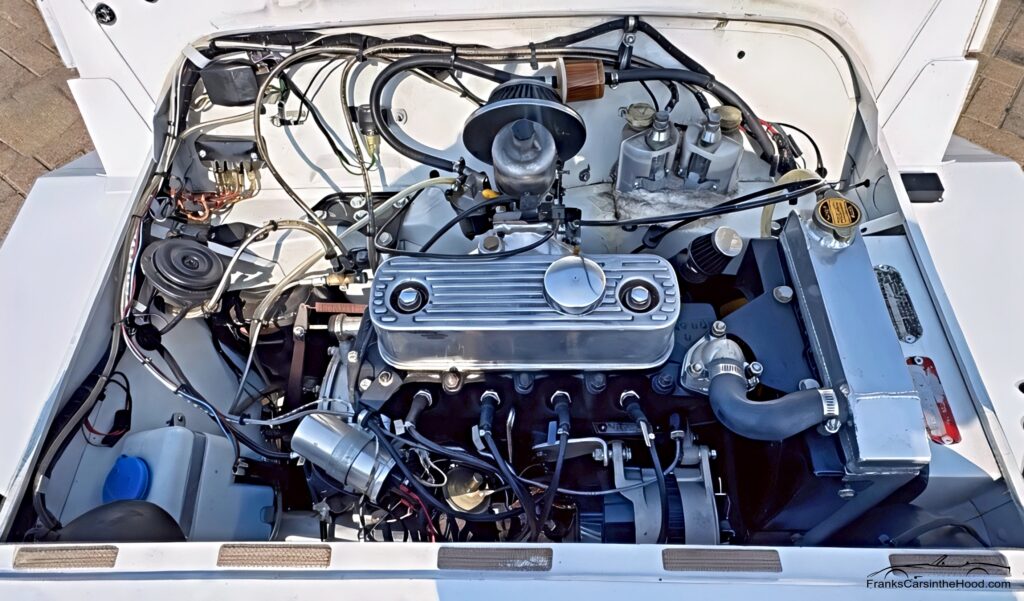
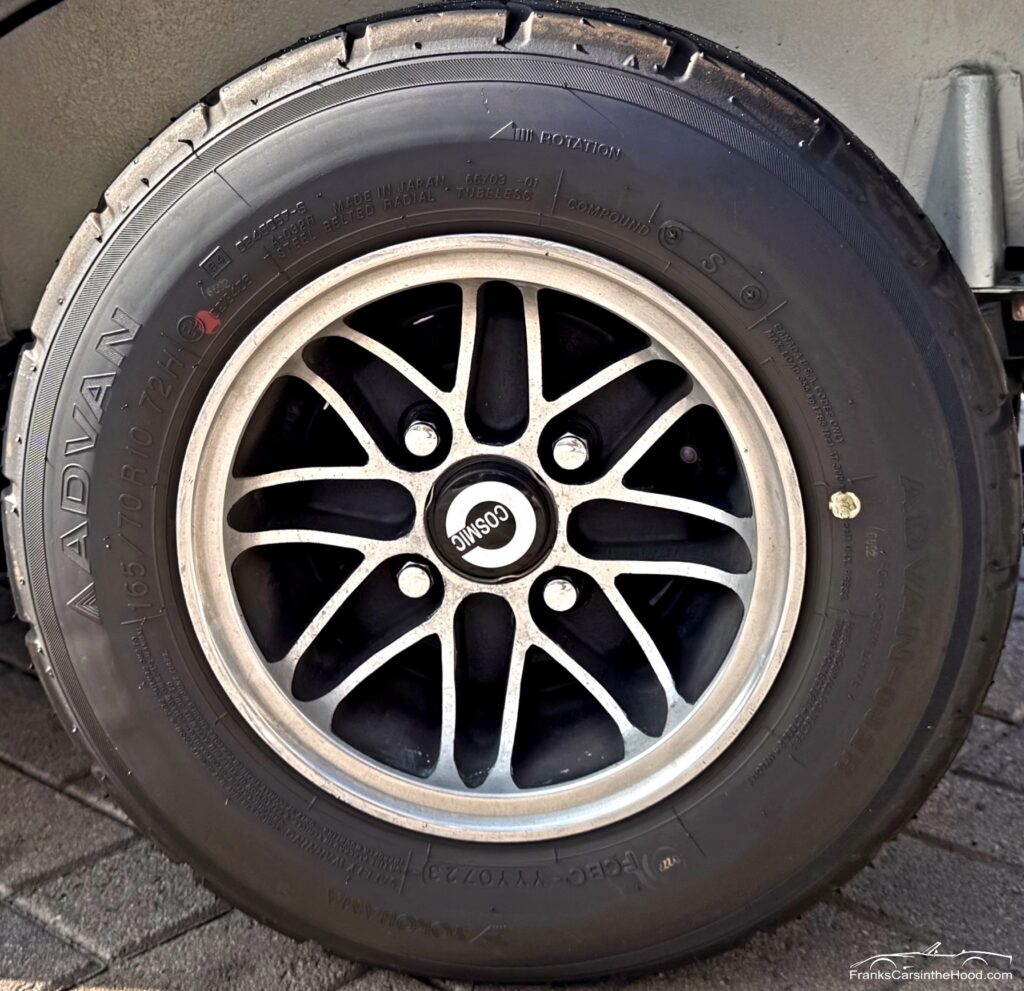
Today’s car is a 1967 Morris Mini Moke owned by Alan Wertheimer, which I photographed at the destination of our Bacon Run at Trancas Country Market. Finished in Old English White inside and out, with black seats with white piping and a black convertible top, it is powered by a 998 cc A-series inline-four fitted with a 1275 cylinder head. Power is sent to the front wheels through a four-speed all-synchromesh manual transmission. Riding on 10-inch Cosmic wheels, it has four-wheel drum brakes and retains its Mini-based independent suspension with rubber cone springs at all four corners. Originally powered by an 848 cc engine, Alan’s Moke remains otherwise largely stock.
The Mini Moke began not as a recreational vehicle, but as an attempt to create a lightweight military vehicle using the proven mechanical components of the Mini. Designed by Alec Issigonis and John Sheppard at the British Motor Corporation (BMC), the project began in the late 1950s under the name “Buckboard.” Light enough to be transported by aircraft and dropped by parachute, its simple open body used the Mini’s transverse engine, front-wheel-drive layout, transmission, suspension, and small 10-inch wheels, creating a remarkably compact and lightweight vehicle that BMC hoped would interest the British military.
Although the Moke looked the part of a small military vehicle, its Mini-based mechanicals ultimately worked against it. The 10-inch wheels and low ground clearance limited its ability to travel over rough terrain, and the British military rejected it for serious off-road use. BMC continued experimenting with the concept, even developing the four-wheel-drive “Twini Moke,” which used two engines and two transmissions, one powering the front wheels and the other the rear. Despite being demonstrated to the U.S. Army, the added complexity did little to overcome the Moke’s fundamental limitations, and the military version never entered production.
With its military ambitions behind it, BMC saw another opportunity for the Moke and introduced it to the public in 1964 as a simple, inexpensive civilian vehicle. Built at BMC’s Longbridge plant in England, the Moke was about as basic as a car could be, with an open-sided steel body, removable canvas top, minimal interior, and much of its mechanical equipment shared with the Mini. What had been shortcomings in a military vehicle became part of its appeal as a lightweight recreational car, and the Moke soon began developing an identity very different from the one originally intended.
Production of the Moke expanded beyond Britain when Australian manufacturing began in 1966. While the early Australian Mokes remained similar to their British counterparts, they were gradually adapted for local conditions, most noticeably with larger 13-inch wheels that provided greater ground clearance. British production ended in 1968, while Australia continued building the Moke until 1982. Production later moved to Portugal, where it continued until 1993. Alan’s 1967 Moke was built in Britain, identifiable by its British chassis number and consistent with its original 848 cc engine and 10-inch wheels.
In its original 1967 British specification, the Moke was powered by an 848 cc A-series inline-four producing approximately 34 horsepower, paired with a four-speed manual transmission driving the front wheels. With an 80-inch wheelbase, an overall length of just 120 inches, and a curb weight of approximately 1,323 pounds, it was both small and remarkably light. With the original 848 cc engine, top speed was about 70 mph, while 0-to-60 mph was estimated at roughly 26 seconds. Performance was modest, but speed was never really what the Moke was about.
Before Alan acquired the Moke, it had been restored by a builder in Texas who, according to Alan, had obtained the last new replacement body shipped from England. That new body became the foundation for the restoration.
Alan’s interest in owning a Moke goes back about 20 years, when he bought a car from famed orchestra leader Ray Conniff. Conniff also owned a Moke, but after buying the other car, Alan simply didn’t have enough money left to buy it too. The Moke stayed in the back of his mind for years until his friend Jeremy Thorpe of Jet Motors in Oregon, whom Alan calls “the Mini whisperer,” told him about this one. Alan made the deal, finally getting the Moke he had wanted for two decades.
What began as an unsuccessful attempt to create a lightweight military vehicle ultimately found its place in an entirely different world. Simple, lightweight, open, and unmistakably different, the Mini Moke became a vehicle built more for fun than function. Nearly 60 years later, Alan’s 1967 Moke still captures that same carefree spirit and reminds us that sometimes the most enjoyable cars are also the simplest.
Whether at a British car show, a local Cars & Coffee, or cruising up the coast on a Bacon Run, this Moke is at home wherever it goes.
Thank you for riding along with me and for being part of the Frank’s Cars in the Hood community.
Frank